Slate & Sod
What do you want to build outside?
Start with the project you have in mind, then learn the basics before you spend money. We’ll help you see what’s involved, what affects cost, and how to find a local builder when you’re ready.
Get matched with a local builder — free
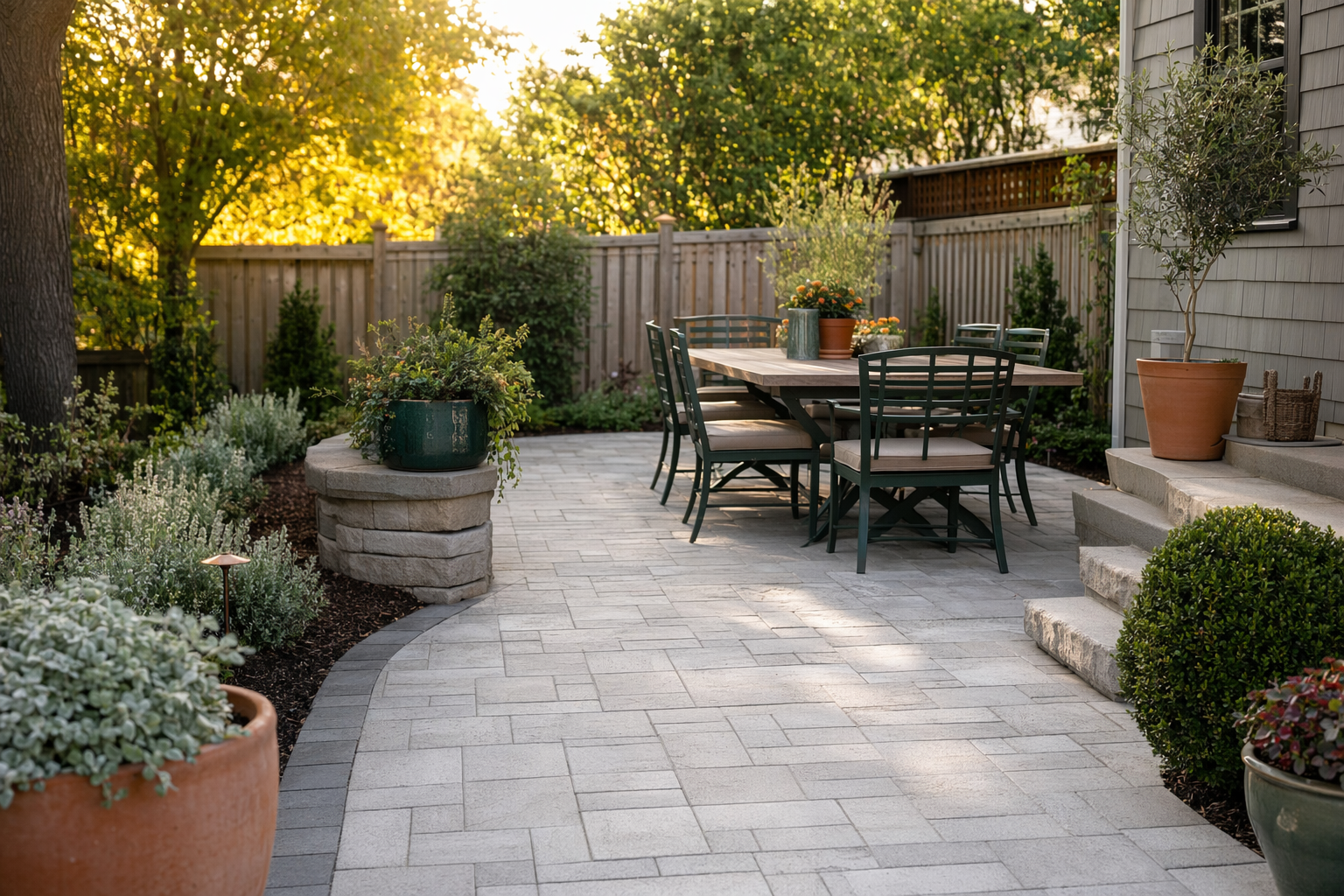
Planning a paver patio? See how the project works, paver vs concrete vs stone choices, honest cost ranges by size, and how to get matched with a local patio builder.
Open → Outdoor kitchen — from grill island to full buildDreaming of an outdoor kitchen? Learn what goes into one — counters, grill, storage, utilities — design choices, honest cost ranges, and how to find a builder who does them.
Open → Fire pit and outdoor fireplace ideas & costsWant a fire pit or outdoor fireplace? Learn gas vs wood, built-in vs prefab, safety and clearances, honest cost ranges, and how to get matched with a local builder.
Open → Retaining wall — function, materials & costNeed a retaining wall? Learn when one is structural vs decorative, block vs natural stone vs poured, drainage, honest cost ranges, and how to find a qualified builder.
Open → Walkways and garden paths — materials & costAdding a walkway or garden path? Compare pavers, flagstone, gravel, and poured concrete, see honest cost ranges, and get matched with a local hardscape builder.
Open → Paver and stone driveways — what to knowConsidering a paver or stone driveway? Learn the base and drainage that matter, material choices, honest cost ranges, and how to find a builder who does driveways right.
Open → Pool decks and patio surrounds — cool, safe surfacesPlanning a pool deck or patio surround? Learn slip-resistant, cool-to-touch materials, layout, honest cost ranges, and how to get matched with a local builder.
Open → Pergolas, pavilions and shade structuresWant shade outside? Compare pergolas, pavilions, and covered structures — materials, attached vs freestanding, honest cost ranges, and how to find a builder.
Open → Full outdoor living spaces — design-buildPicturing a whole backyard living space? Learn how design-build works for patios, kitchens, fire, and seating together, honest cost ranges, and how to find a builder.
Open → Water features — fountains, ponds & costThinking about a fountain, pond, or water wall? Learn the options, upkeep, honest cost ranges, and how to get matched with a builder who installs water features.
Open →Pick the space you want to enjoy
Most backyard projects start with a simple goal: a place to sit, cook, gather, or make the yard easier to use. Some homeowners want a quiet patio for coffee. Others want a full outdoor kitchen, a fire feature, safer walking paths, or a backyard that works better for kids and guests.
A few popular projects are paver patios, outdoor kitchens, fire pits or fireplaces, retaining walls, walkways, pool decks, pergolas, and full backyard makeovers. Each one has different costs, upkeep, space needs, and permit questions depending on where you live.
If you are early in the process, that is normal. You do not need a perfect plan yet. It helps to start with two things: what you want the space to do, and what budget feels realistic for your household.
Think about use first, then materials
Before choosing colors or patterns, picture a normal day outside. Will you eat dinner there? Need room for a grill? Want a spot for a small fire pit? Need a walkway that feels safer in rain? The best project usually starts with how you will actually use the space.
Then compare material options. For example, a patio might be built with concrete pavers, natural stone, brick, or poured concrete. An outdoor kitchen can be simple and compact or large with built-in appliances, counters, lighting, and seating. Better-looking materials often cost more up front, and some need more upkeep over time.
Site conditions matter too. Slope, drainage, soil, tree roots, tight access, demolition, and how far materials must be carried can all change the price and the way a project is built. This is why online ranges are helpful for planning, but they are not quotes.
What outdoor projects usually cost
Costs vary a lot by project size, materials, site conditions, and your area in the US. A small patio may cost a few thousand dollars, while a large patio with borders, lighting, drainage work, or steps can cost much more. Outdoor kitchens often start in the several-thousand-dollar range and can rise quickly when you add utilities, appliances, stone veneer, refrigeration, or custom storage.
Fire pits, walkways, retaining walls, pergolas, and pool decks also have wide ranges. A simple feature on a flat, easy-access yard usually costs less than a custom build on a sloped yard with drainage issues or permit requirements. Natural stone often costs more than basic concrete pavers. Demolition, hauling, grading, and finish details can raise the number too.
The honest way to use cost ranges is as a planning tool, not a promise. Real pricing depends on your exact project and local labor and material costs. Always ask for written quotes that clearly show the scope, materials, allowances, and what is not included.
How to plan without overpaying
A little planning can save stress and expensive changes later. Start with your must-haves, then separate them from nice-to-haves. That makes it easier to compare quotes fairly and keep control of the budget.
- Pick the main project: patio, kitchen, fire pit, wall, walkway, pool deck, pergola, or full backyard.
- Set a rough budget range you are comfortable with.
- Save a few photos that show the look you like.
- Measure the area roughly or note the size you want.
- Check basic HOA rules if your neighborhood has them.
- Ask each builder for a written quote with the same scope.
- Compare a few quotes before choosing.
Watch for red flags: large cash-only deposits, no license or insurance, vague pricing, no written contract, or pressure to decide right away. The homeowner stays in control. You set the budget, compare written quotes, choose who to hire, and confirm the scope and price before work starts.
When permits and licensed pros matter
Some outdoor projects are straightforward, but others involve permits, inspections, utility lines, gas, electricity, drainage, or structural concerns. What is allowed varies by city, county, HOA, and state. Gas and electrical work should be handled by licensed professionals, and permits are commonly required.
Retaining walls, major grading, drainage changes, footings, and taller structures may need engineering or additional approvals in some areas. This page is general information only, not construction, engineering, structural, or legal advice. Your builder and local building department can explain what applies where you live.
It is smart to verify that any builder you consider is licensed and insured where required. Ask questions in plain language and get the answers in writing.
How Slate & Sod helps
Slate & Sod is a free matching service for homeowners. We are not a contractor, builder, or design firm, and we do not perform construction work. Our job is to help you get started, understand your options, and connect with licensed, insured local outdoor-living builders.
If you want help taking the next step, you can get matched. We only collect basic contact and project-intent details: your name, phone number, optional email, project type, ZIP code, rough budget, and preferred language. It is always free for the homeowner.
You can also explore specific project guides like paver patios and outdoor kitchens to learn what affects design, materials, upkeep, and price before you talk with a builder.
Pick the outdoor project you want, learn the basics and costs, then compare local licensed builders when you’re ready.
Thinking about an outdoor-living project?
Plan the budget and materials first. Then get matched, free, with licensed, insured local builders. You compare quotes and choose who to hire — and confirm the scope and price in writing before work starts.