Projects
Paver and stone driveways — what to know
A paver or stone driveway can make the front of your home feel finished, custom, and easier to maintain than plain concrete in some climates. The part you do not see underneath matters just as much as the surface on top.
Why homeowners choose a paver or stone driveway
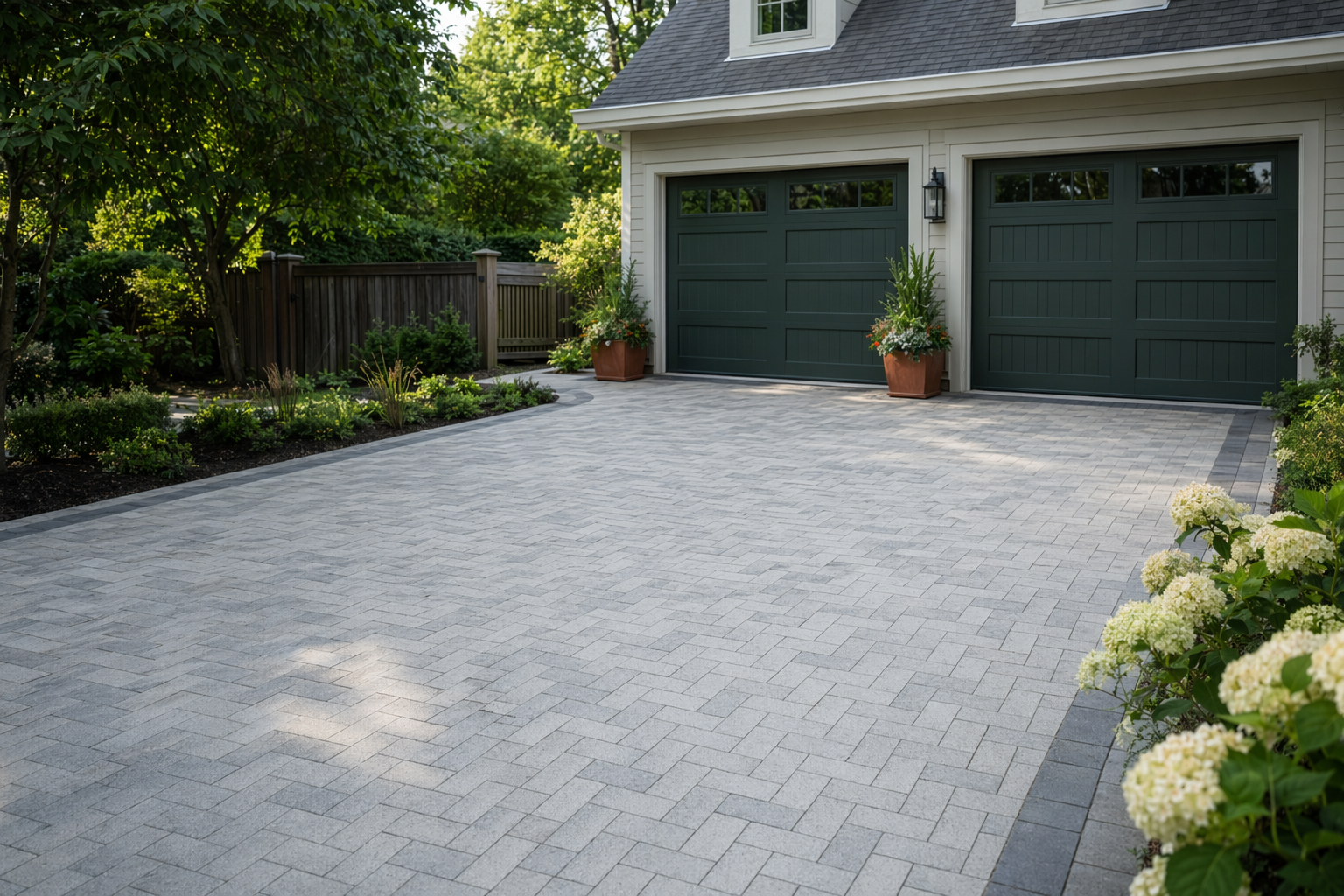
A paver driveway gives your home a more detailed, higher-end look than a basic poured surface. Many homeowners like the pattern options, the color choices, and the way pavers can tie the driveway to a front walkway, patio, or entry. If you want the front of the house to feel more welcoming and more "finished," this project can make a big visual difference.
Stone and paver driveways also appeal to people who want a surface made from smaller individual pieces instead of one large slab. In some situations, that can help with repairs because a damaged area may be addressed section by section rather than replacing a whole driveway. The trade-off is that the installation quality matters a lot. A beautiful surface will not stay beautiful for long if the base, edge restraint, grading, and drainage are poor.
This is one project where it helps to think past the top layer. Homeowners often compare colors and patterns first, but the long-term performance usually comes down to what is below the pavers and how water moves across the site. That is why driveway work is different from a small garden path or decorative sitting area.
Design choices that change the look
Start with the shape and use of the driveway. Is it a simple straight run from the street, a curved approach, a circular drive, or a wider area for turning around? Do you need room for two cars side by side, extra parking, or easier backing out? These decisions affect cost and how comfortable the driveway feels every day.
Then think about the visual style. Concrete pavers come in many shapes, textures, and colors. Natural stone can look more organic and varied. Some homeowners choose a simple field pattern with a contrasting border. Others want a more formal pattern that matches the home's architecture. A border, soldier course, or accent band can make the driveway look more custom without changing the whole surface.
You should also decide how the driveway connects to nearby spaces. If you may later add a walkway, patio, or other backyard project, it helps to choose materials that can coordinate now. Matching does not have to mean identical. A driveway can complement your front path or patio with similar tones and textures while still being strong enough for vehicle traffic.
For homes in neighborhoods with design rules, check HOA requirements early. Some areas limit materials, colors, width, drainage details, or how much hard surface you can add. Local rules and permits vary by area, and your builder should help explain what applies where you live.
Materials, base, and drainage: the parts that matter most
For a driveway, not every paver is the right paver. Vehicle traffic needs a system designed for that load, not just a pretty surface. Ask whether the material is rated and commonly used for driveways in your area. Some stone options are better for foot traffic than cars, and some products hold up better in freeze-thaw climates than others.
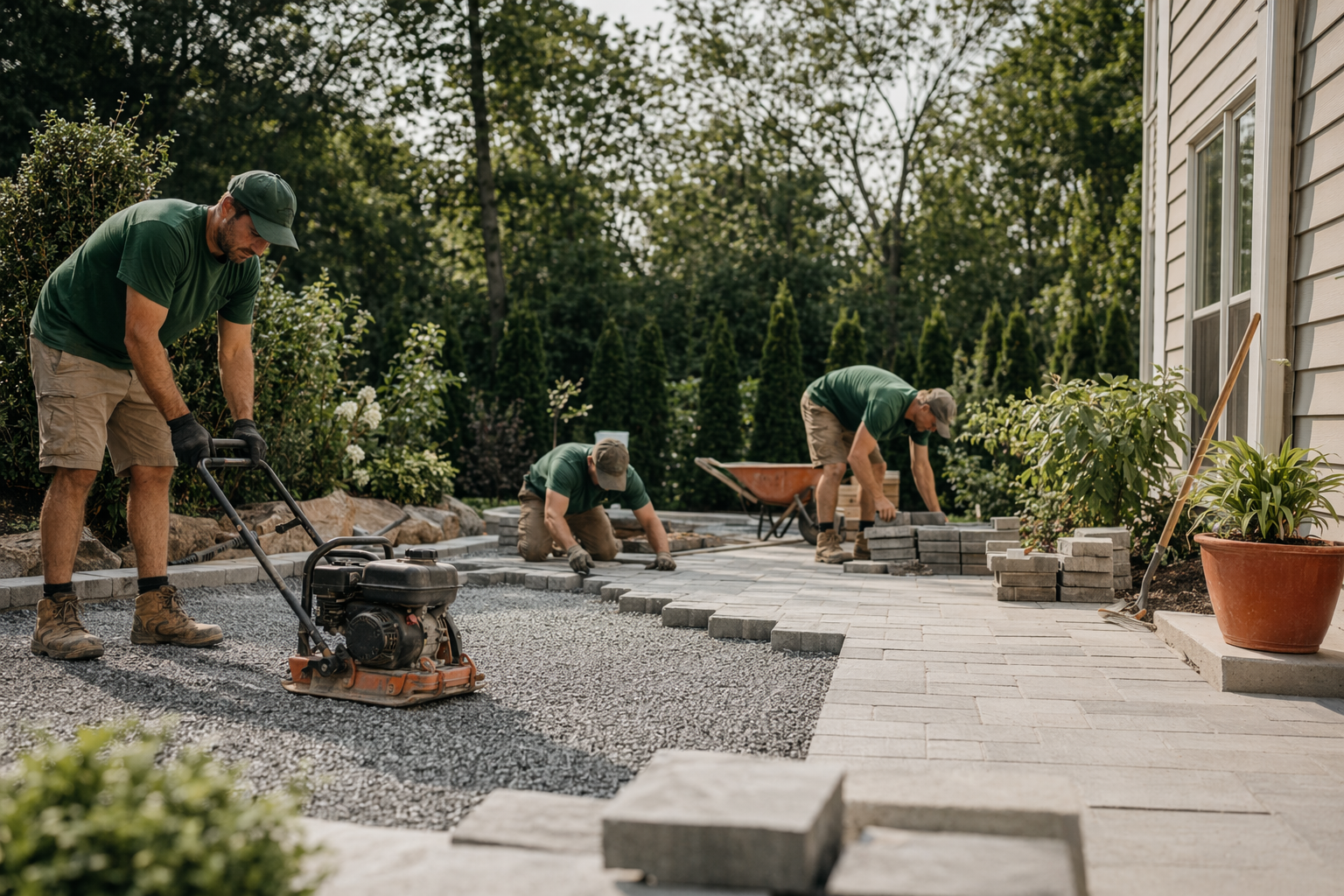
The base below the driveway is a big deal. Depth, compaction, soil conditions, slope, drainage, and access all affect what the builder may recommend. If the ground stays wet, if the site has soft spots, or if water currently runs toward the garage, those issues should be addressed in the plan. General rule: drainage problems do not fix themselves by covering them.
Edge restraint and transitions also matter. The driveway needs clean, durable edges and sensible transitions to the street, garage apron, walkway, or existing hardscape. Without that, pavers can shift, spread, or look uneven over time. If the project includes retaining walls, major drainage changes, or unusual grading, a licensed engineer may be required depending on local rules.
This is general information only, not engineering or construction advice. A licensed, insured local builder should evaluate the site conditions and explain the system they propose. For any drainage structure, and for gas or electrical work tied to lighting or gates, use licensed pros and required permits.
What a paver or stone driveway usually costs
In many US markets, a paver driveway often starts around $20 to $40 per square foot, with many projects landing roughly in the $12,000 to $35,000+ range. Higher-end materials, larger layouts, difficult access, thicker base needs, border details, curves, drainage work, demolition, and premium finishes can push the total well above that. Natural stone driveways are often at the higher end or beyond it depending on the stone and the installation method.
These are general cost ranges, not quotes. The real price depends on size, materials, site conditions, slope, drainage, soil, access, local labor costs, and what already exists on the property. A short, flat driveway with easy access may cost much less than a steep or failing driveway that needs excavation, removal, and drainage correction before the new surface goes in.
The biggest cost drivers are usually:
- Square footage and layout complexity
- Material type, thickness, and pattern
- Demolition and haul-away of an old driveway
- Base preparation and compaction needs
- Drainage fixes, grading, or water management
- Borders, aprons, lighting, or custom details
- Site access for equipment and materials
- Your region and local labor costs
If you are early in planning, it helps to set a realistic range before falling in love with a very specific material. Our cost guides can help you think through budget questions, but written estimates from local licensed builders are what matter for your home.
Common mistakes to avoid
One common mistake is shopping by surface appearance alone. A low price can look attractive until the driveway starts settling, holding water, or spreading at the edges. Ask builders to explain the scope in writing, including removal, excavation, base prep, drainage, edge details, bedding layer, paver type, joint material, cleanup, and warranty terms. If the quote is vague, ask for clarity.
Another mistake is skipping drainage conversations because they feel technical. You do not need to become an expert, but you do want clear plain-language answers. Where will water go? How will runoff be handled near the garage, foundation, sidewalk, and street? If the property has a slope or a history of standing water, make sure that is discussed before work begins.
Also watch for contractor red flags:
- Large cash-only deposits
- No proof of license or insurance
- Pressure to sign right away
- No written contract
- A quote that is much lower than everyone else's without a clear reason
The homeowner stays in control. Compare a few written quotes, verify license and insurance, confirm permits where needed, and make sure the scope and total price are clear before work starts.
How Slate & Sod can help you get matched
Slate & Sod is a free matching service for homeowners. We are not a contractor, builder, or design firm, and we do not perform construction work. We help you plan the project clearly enough to have better first conversations with licensed, insured local outdoor-living and hardscape builders.
If you want help getting started, you can get matched with local builders who handle projects like driveways. We collect basic contact and project intent only: your name, phone, optional email, project type, ZIP code, rough budget, and preferred language. The service is free for the homeowner.
A simple way to prepare before you ask for quotes:
1. Decide your rough budget range and how important the driveway is compared with other outdoor upgrades.
2. Save a few photos that show the look you like: color, border, pattern, and overall style.
3. Write down known site issues such as pooling water, cracking, steep slope, or narrow access.
4. Ask each builder for a written scope, material details, timeline estimate, and permit expectations.
5. Compare more than one quote so you can see differences in approach, not just price.
If you are planning several outdoor projects together, our planning guide for patios can still help you think through sequencing, priorities, and budget in plain language: how to plan a patio.
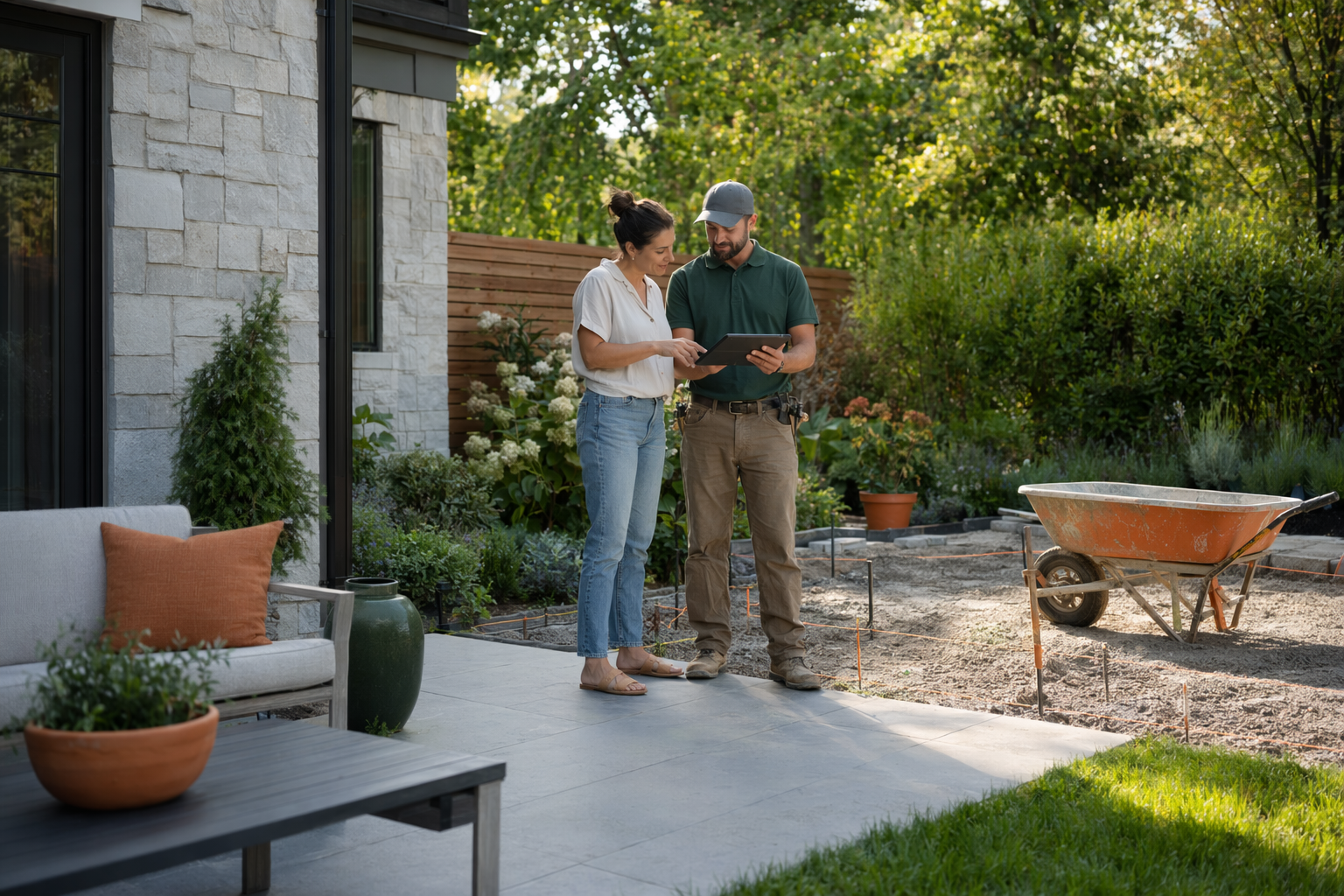
A good-looking driveway starts with the hidden base and drainage, not just the pavers you see on top.
Common questions
Is a paver driveway better than concrete?
It depends on your goals, climate, budget, and the condition of the site. Many homeowners choose pavers for the look and the design flexibility, but long-term performance depends heavily on proper base work, drainage, and installation quality.
How long does a paver driveway last?
A well-built driveway can last a long time, but there is no one number that fits every home. Material quality, traffic, weather, soil movement, drainage, and upkeep all affect how it performs over the years.
Do I need a permit for a paver or stone driveway?
Maybe. Permits, drainage rules, curb-cut rules, and HOA requirements vary by city, county, and neighborhood. Your builder and local building department can tell you what applies in your area.
Why do quotes vary so much for the same driveway size?
The surface area is only part of the price. Quotes can differ because of demolition, excavation depth, base prep, drainage work, material quality, pattern complexity, access, and what each builder includes in the written scope.
Can Slate & Sod build my driveway?
No. Slate & Sod is a free matching service, not a contractor or construction company. We help connect homeowners with licensed, insured local builders so you can compare options and choose who to hire.
What information do I need to get matched?
Just basic contact and project intent: your name, phone, optional email, project type, ZIP code, rough budget, and preferred language. You stay in control and can compare written quotes before deciding.