Projects
Full outdoor living spaces — design-build
A full outdoor living space brings the patio, cooking, fire, shade, lighting, and seating together so your yard feels like part of the house. The key is planning the layout, materials, and budget before anyone starts building.
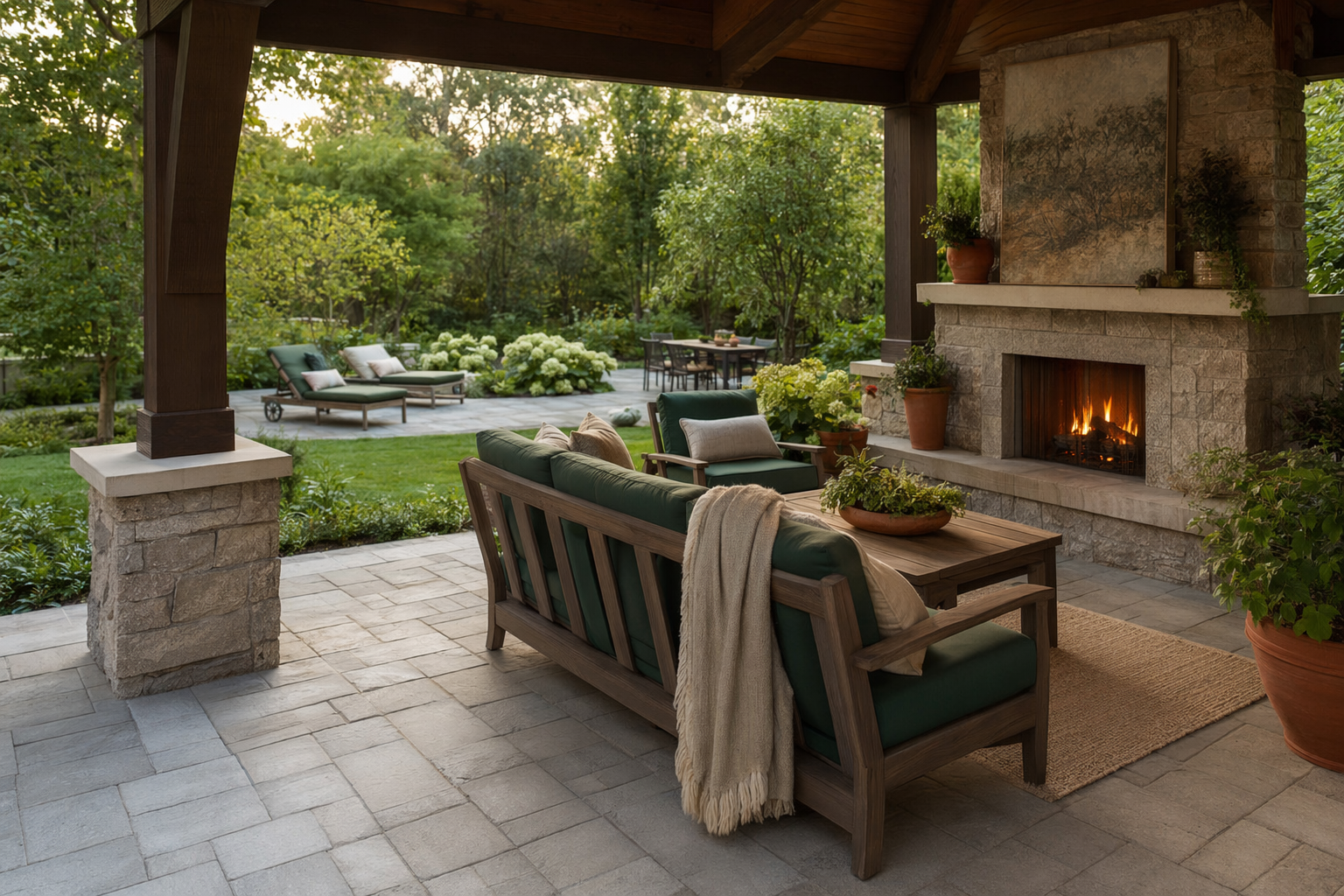
What a full outdoor living space really means
A full outdoor living space is not just one feature. It is a backyard plan where the main pieces work together: maybe a patio for dining, a grill or outdoor kitchen, a fire pit or fireplace, a walkway, a retaining wall, a pergola, landscape lighting, or even a pool deck area. People love this kind of project because it makes the yard easier to use, easier to host in, and more comfortable for everyday life.
The biggest difference between a simple patio and a full outdoor-living build is coordination. You are not only choosing what looks nice. You are deciding how people move through the space, where they sit, where smoke goes, how much sun you want, how close cooking is to the house, and how water drains when it rains.
This is why many homeowners think in phases, even if they want one finished backyard in the end. It helps to start with the must-haves, then the nice-to-haves, then build around a budget you can live with. If you are still comparing project types, our project ideas hub can help you narrow it down.
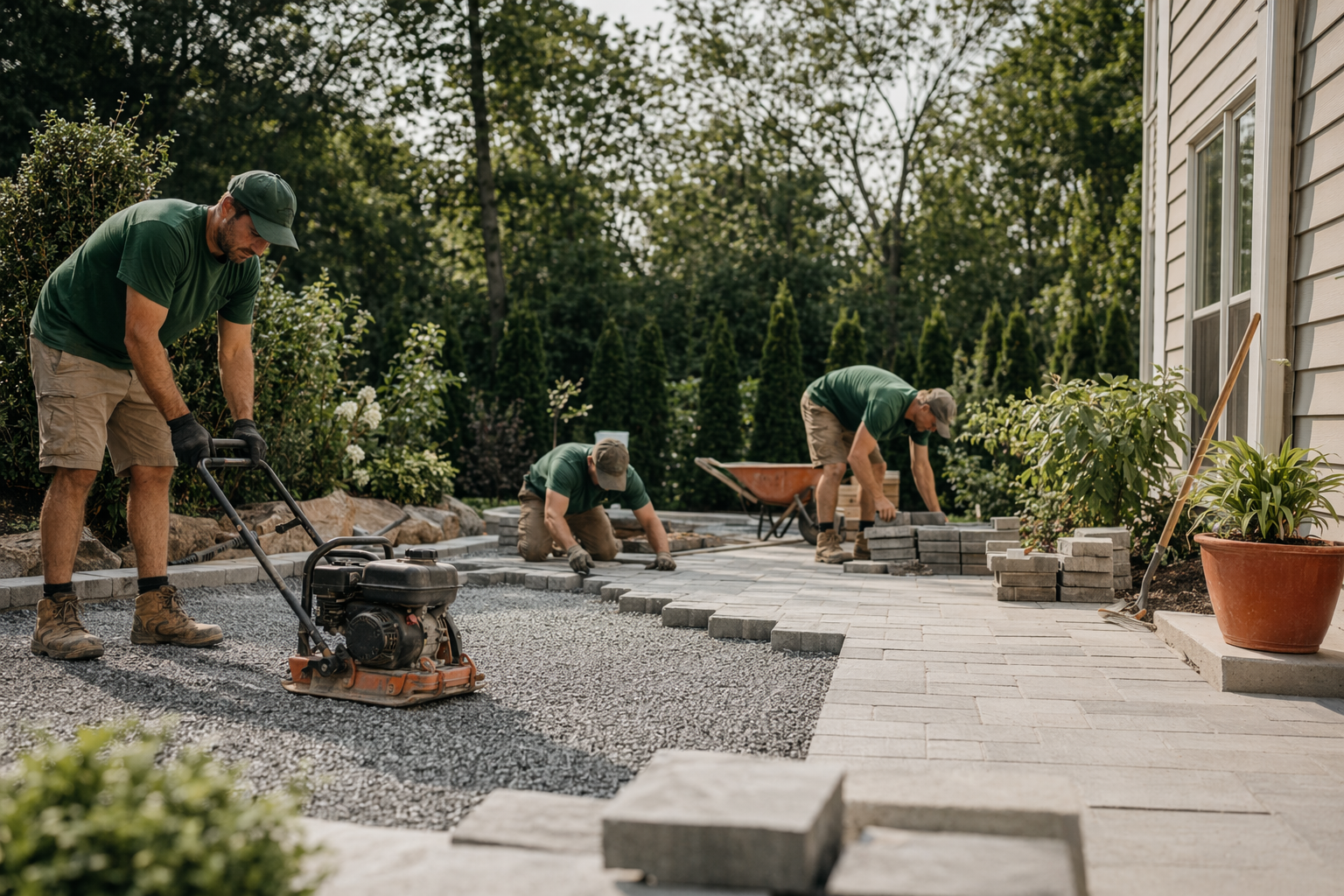
Start with layout and how you want to use the yard
Before you pick pavers or appliances, think about the yard like a set of outdoor rooms. Most successful backyards have clear zones: cooking, dining, lounging, fire, play, pool, or garden. Even a smaller yard can feel bigger when each zone has a purpose and enough space to move around comfortably.
A good early question is: what happens here on a normal week, and what happens here when guests come over? A family that grills twice a week needs something different than someone who wants a quiet coffee corner and low upkeep. A retired couple may want smooth walkways and easy access. A family with kids may care more about durable materials and open space.
Helpful planning questions:
- Do you want dining near the house, or deeper in the yard?
- Is the fire feature for occasional use or a main gathering spot?
- Will you need shade during hot afternoons?
- Do you want a full kitchen, or just grill space and a counter?
- Does the yard slope, stay wet, or have tight access?
- Are there HOA rules, setback rules, or permit needs in your area?
Those site details matter more than many homeowners expect. Slope, drainage, tree roots, soil, and equipment access can change both design choices and cost. Local codes also vary by area, and what is allowed in one city or HOA may not be allowed in another.
Design and material choices that shape the whole project
Most full backyard builds start with the ground surface, because that sets the tone for everything else. Pavers are popular because they come in many colors and patterns and can work well for patios, walkways, and some pool areas. Natural stone has a beautiful, high-end look, but cost and upkeep can be higher. Concrete can be more budget-friendly in some cases, though appearance and repair options differ.
Then come the vertical and comfort elements: seat walls, retaining walls, steps, pergolas, privacy screens, planters, lighting, and built-in benches. These pieces can make the space feel finished, but they also add labor, materials, and design complexity. A backyard that looks simple in a photo may actually include many separate built items.
Outdoor kitchens are one of the biggest budget swing factors. A simple grill island with basic counter space is very different from a full setup with sink, refrigerator, storage, bar seating, gas, and electrical. Fire features also vary a lot. A basic wood-burning fire pit costs much less than a custom gas fireplace with stone veneer and seating walls. Any gas and electrical work should be handled by licensed pros, and permits are typically required.
If you are early in planning, it can help to read a simpler patio guide first, because the same layout and material decisions often carry into a larger backyard project. See how to plan a patio for a good starting point.
What a full outdoor living space can cost
For a professionally built outdoor living space, many homeowners end up somewhere around $25,000 to $120,000+, with some simpler projects below that and some large, high-end backyards going well beyond it. These are general US ranges, not quotes. The real number depends on size, materials, site conditions, access, drainage needs, the number of features, and your local market.
A more modest design-build project might include a mid-size paver patio, a simple fire pit area, basic lighting, and one or two small built-in features. A mid-range project may add a pergola, seating walls, upgraded stone or pavers, better lighting, drainage work, and a more finished planting plan. A higher-end project can include a full outdoor kitchen, large custom patio areas, retaining walls, a fireplace, multiple elevations, premium stone, and more extensive utility work.
What usually drives the price up:
- Larger square footage
- Natural stone and premium finishes
- Outdoor kitchens and appliance packages
- Fireplaces, seating walls, steps, and retaining walls
- Drainage corrections, grading, or difficult soil
- Tight access for materials and equipment
- Gas, water, and electrical runs
- Custom lighting, shade structures, and built-ins
What can help control the budget:
- Start with one strong patio area and add features later
- Choose a simpler layout with fewer levels and curves
- Use one or two materials consistently instead of many finishes
- Do a grill station instead of a full outdoor kitchen
- Focus spending on the features you will actually use
If budget is your first question, our cost guides can help you compare categories before you talk with builders.
What is involved in building one
A full outdoor living build usually starts with planning, measuring, and deciding scope. After that, the work may include demolition, excavation, grading, base preparation, drainage improvements, utility rough-ins, patio or wall installation, finish work, lighting, and cleanup. The exact order depends on the project.
This is one reason it helps to hire a licensed, insured local builder who regularly does multi-part hardscape projects. When several features connect to each other, mistakes in layout, elevations, drainage, or utility planning can be expensive to fix later. For taller retaining walls, drainage-sensitive sites, or areas where engineering is required, a licensed engineer may also be needed depending on local rules.
General build sequence:
1. Set the scope, budget, and rough layout.
2. Confirm materials, features, and any utility needs.
3. Check permits, HOA requirements, and local code rules.
4. Prepare the site, grading, and drainage plan.
5. Build the base structures, patio, walls, and steps.
6. Install kitchen, fire, lighting, and finish details.
7. Walk the project, confirm the written scope, and review upkeep.
Timelines vary a lot. Weather, permit timing, material availability, inspections, and site surprises can all affect the schedule. A simple build may move quickly, while a larger yard transformation can take much longer. No one should promise an exact timeline before they understand the site and scope.
Common mistakes to avoid — and how Slate & Sod helps
A common mistake is trying to choose every feature before deciding the budget. That often leads to a design that looks great on paper but costs far more than expected. It usually works better to choose your spending limit first, then decide what matters most: cooking, shade, fire, seating, low upkeep, or a big entertaining area.
Another mistake is comparing quotes that do not cover the same scope. One builder may include drainage, base prep, lighting, and cleanup, while another leaves those out. Ask for the scope and price in writing, and compare a few written quotes carefully. Watch for red flags like large cash-only deposits, no license or insurance, vague pricing, no written contract, or pressure to sign on the spot.
Slate & Sod is a free matching service for homeowners. We are not a contractor, builder, or design firm, and we do not perform construction work. We share general information and help connect you with licensed, insured local outdoor-living and hardscape builders so you can compare options.
You stay in control the whole time. You set the budget, review written quotes, choose who to hire, and confirm the scope and price before work starts. To get started, you can get matched by sharing basic project details like your name, phone, optional email, project type, ZIP code, rough budget, and preferred language.
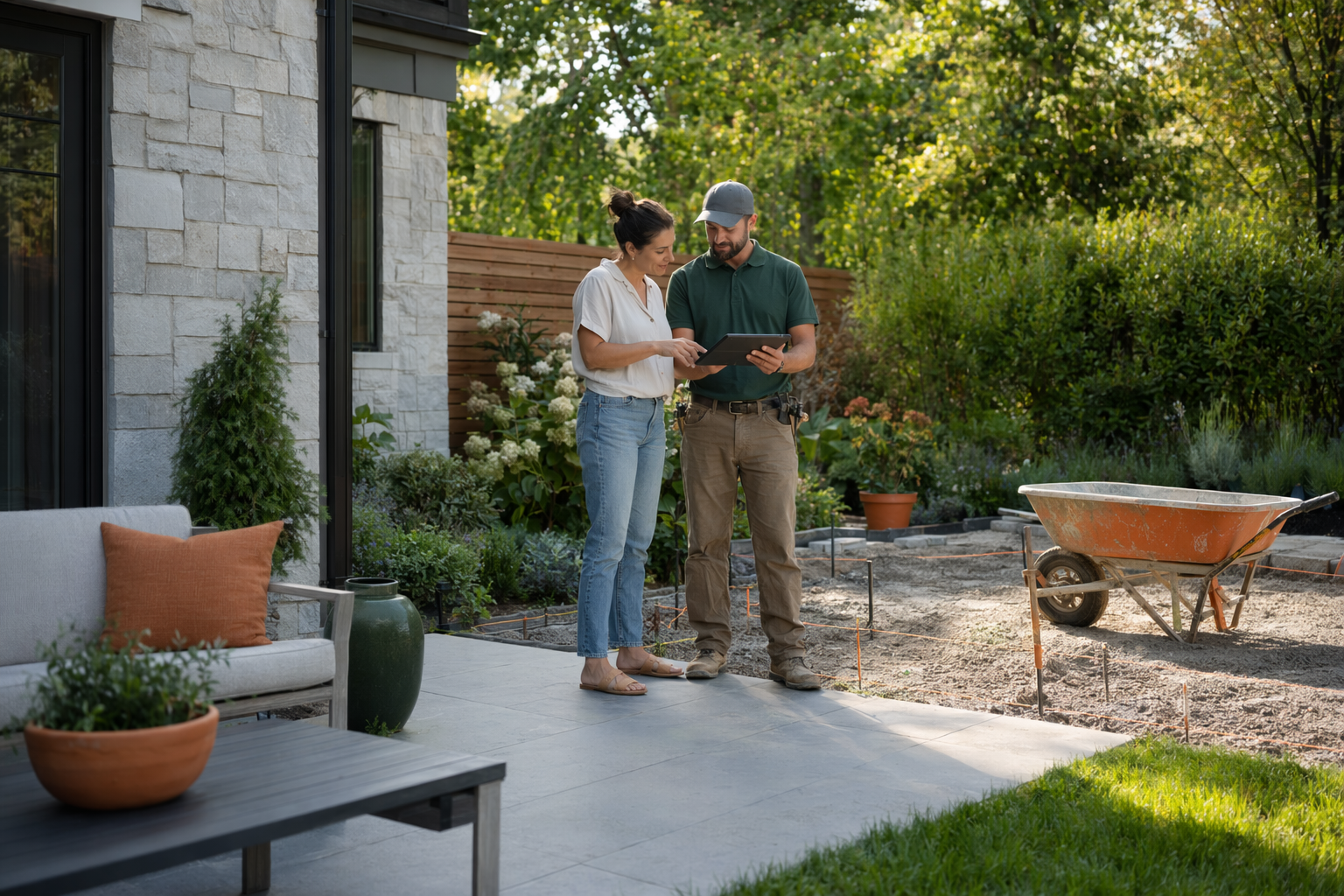
Plan the layout and budget first, then compare written quotes from licensed, insured local builders for the backyard features you really want.
Common questions
How much does it cost to build a full outdoor living space?
Many homeowners land somewhere around $25,000 to $120,000+ for a professionally built project, but the range is wide. Size, materials, kitchens, fire features, walls, drainage, utilities, and local labor costs can move the number up or down, so these are not quotes.
What features should I build first if my budget is limited?
Usually the best first step is the main patio and layout, because that creates the base for everything else. After that, many homeowners add a fire feature, shade, lighting, or a simple grill station in later phases.
Do I need permits for an outdoor living project?
Often, yes, especially if the project includes electrical, gas, plumbing, larger structures, or some walls. Permit and code rules vary by city, county, and HOA, so check locally and work with licensed pros.
Can one builder handle the whole backyard project?
Sometimes, yes, especially on design-build style hardscape projects, but it depends on the builder and the project scope. For gas and electrical work, licensed specialists are typically required, and some sites may also need engineering.
What does Slate & Sod do?
Slate & Sod is a free matching service, not a contractor or construction company. We help homeowners connect with licensed, insured local builders and share general planning information so you can compare your options.
What information do I need to share to get matched?
Just basic contact and project intent: your name, phone, optional email, project type, ZIP code, rough budget, and preferred language. You stay in control and decide whether to move forward with any builder.