Projects
Water features — fountains, ponds & cost
A water feature can make a backyard feel calmer, cooler, and more finished — from a simple bubbling fountain to a pond with plants and fish. The right choice depends on space, upkeep, sound, and budget.
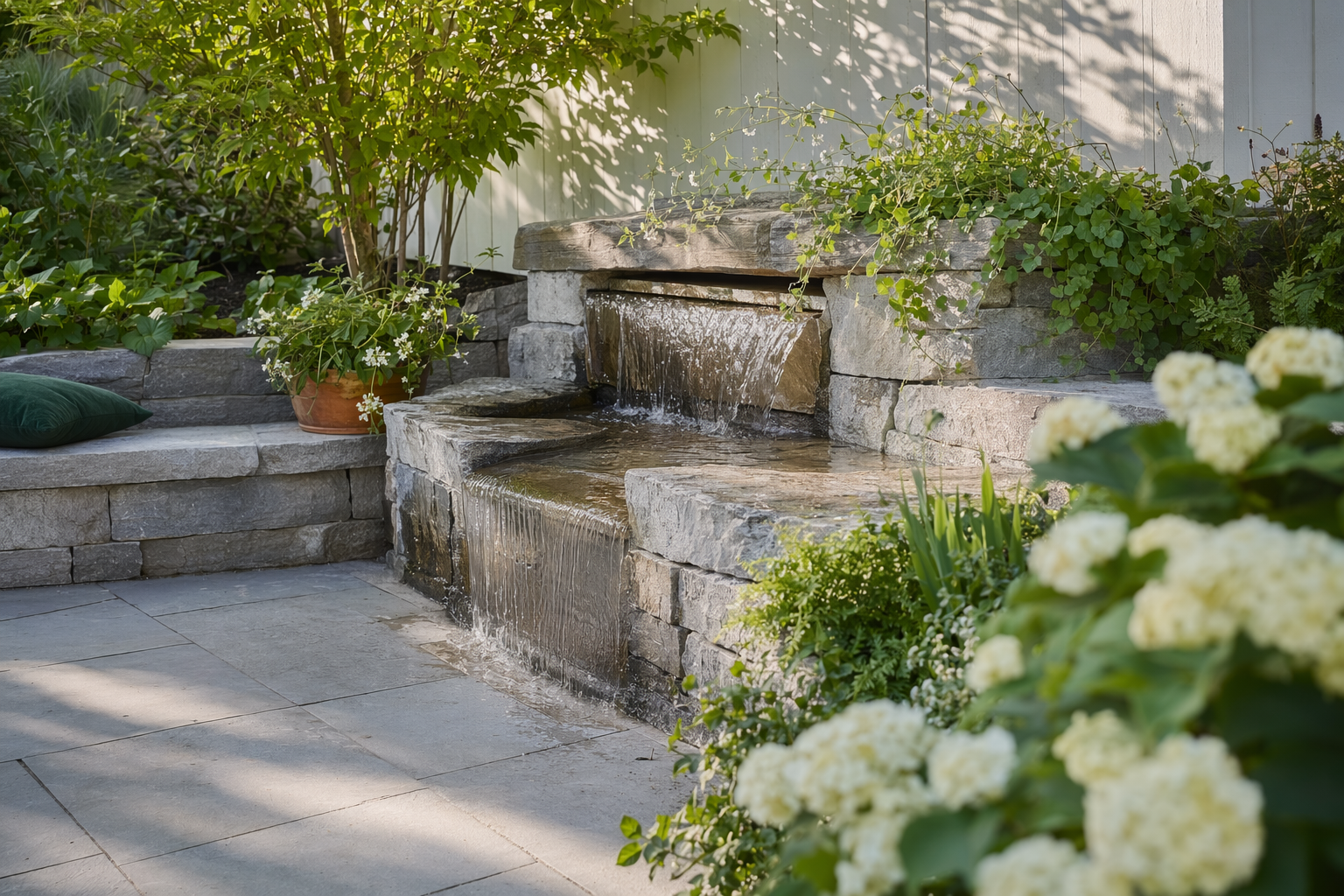
What a water feature adds to a backyard
Water features are popular because they change how a yard feels, not just how it looks. Moving water can soften traffic noise, add a sense of privacy, and make a patio or seating area feel more relaxing. Some homeowners want a small focal point near the front entry, while others want a larger pond or stream as part of a full backyard design.
The main types are fountains, pondless waterfalls, ponds, water walls, and small decorative basins. A fountain is often the simplest place to start. A pondless waterfall gives you the sound and movement of water without an open pond. A pond can feel more natural and may include plants or fish, but it usually needs more planning and upkeep. A water wall has a clean, modern look and works well near patios, outdoor kitchens, or pool areas.
If you are early in planning, it helps to think about the whole space first. A water feature should fit how you actually use the yard, not just fill an empty corner. You can explore other outdoor project ideas on our projects hub.
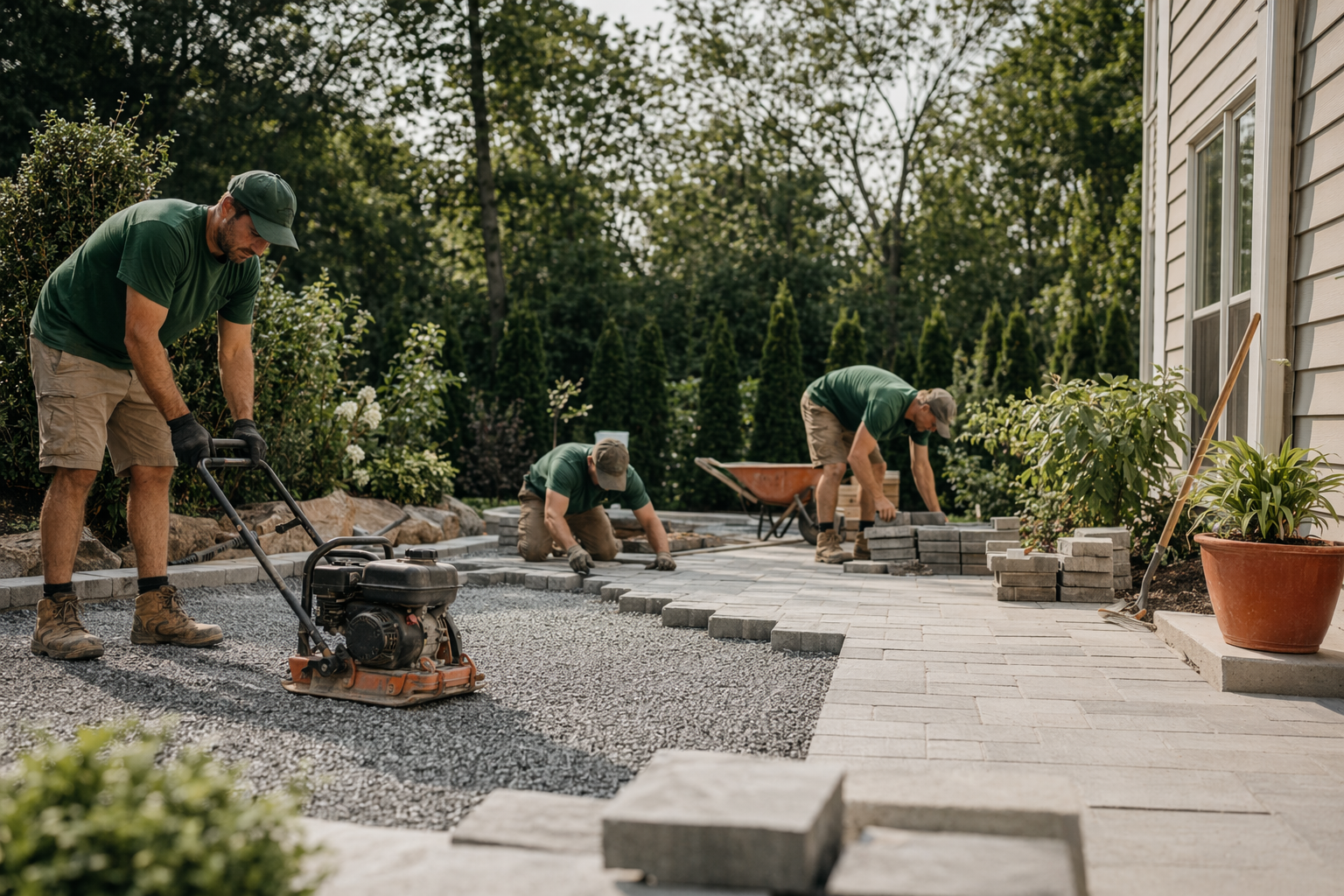
Design choices that matter most
The first big choice is the look: formal and modern, natural and garden-like, or something in between. A sleek water wall with smooth stone or tile feels very different from a pond edged with boulders and planting beds. Think about the house too. The best water features usually feel connected to the home's style and the rest of the hardscape.
Next, think about sound. Some people want a gentle background trickle. Others want a louder falling-water sound to help cover street noise or nearby neighbors. The size of the spillway, the height of the drop, and the pump setup all affect the sound. This is worth discussing early, because the sound level changes the whole experience.
Placement matters more than many homeowners expect. A feature may look great from the patio, kitchen window, or primary bedroom, but it also needs practical access to power, water, and service. Sun exposure matters for ponds because full sun can encourage algae. Wind can cause splash loss. Trees can drop leaves into the water and increase cleaning.
Lighting is another smart decision early on. Low-voltage lighting can make a fountain or waterfall much more dramatic at night, but electrical work should be handled by a licensed pro and usually requires permits. Local rules, HOA requirements, and what is allowed vary by area.
Materials, parts, and what goes into building one
Most water features include a basin or reservoir, a pump, plumbing lines, a waterproof liner or formed structure, and a finish material such as stone, concrete, tile, or manufactured components. Natural stone gives a more organic look. Cast stone, concrete, and tile can feel more formal or modern. Prefabricated fountain kits can lower cost for smaller projects, while custom builds allow more control over shape, height, and materials.
What is involved depends on the feature type. A small standalone fountain may need a prepared base, power, plumbing, and finish work around it. A pond or pondless waterfall often involves excavation, grading, drainage planning, underlayment, liner work, stone placement, and careful pump setup. Water walls may need a stronger support system and coordinated plumbing and electrical connections.
This is one reason it helps to hire a licensed, insured builder with experience in water features, not just general landscaping. Drainage, splash control, and access for maintenance all matter. If your project involves retaining walls, major grade changes, or complicated drainage, a licensed engineer may also be needed depending on local requirements. Slate & Sod is not a contractor or design firm — we are a free matching service that helps homeowners connect with local licensed, insured builders.
Honest water feature cost ranges
Costs vary a lot. A small fountain project may start around $2,500 to $8,000 for a simpler installation, while a custom fountain or water wall can often run $8,000 to $25,000 or more. Pondless waterfalls commonly fall around $5,000 to $20,000+. A modest backyard pond may land around $7,000 to $25,000+, and larger custom ponds with stonework, planting, lighting, or fish features can go much higher.
These are general ranges, not quotes. The real number depends on the size, materials, pump quality, site access, soil, slope, drainage needs, electrical work, and where you live. A project in a tight backyard with difficult access may cost more than a larger feature in an open yard because labor and equipment logistics are harder. Custom stonework, lighting, automatic fill systems, filtration, and nearby patio or planting work can also raise the price.
If you are comparing options, it can help to set a total budget first, then decide what matters most: sound, size, natural look, fish-friendly design, lower upkeep, or nighttime lighting. Our cost guides can help you start thinking about budget before you talk with builders.
Upkeep, common pitfalls, and smart questions to ask
Every water feature needs some maintenance. Pumps need periodic attention. Water levels need to be checked. Leaves, algae, and debris can build up. In colder climates, winterizing may be part of the routine. Ponds often need more ongoing care than a simple fountain or pondless waterfall, especially if they include fish or a lot of plant life.
A common mistake is choosing a feature because it looks beautiful in a photo without thinking through upkeep. Another is making it too small to create the sound you want, or too large for the yard so it takes over the whole space. Poor placement near trees, bad drainage planning, and hard-to-reach equipment can create frustration later.
Watch for contractor red flags too:
- large cash-only deposits
- no license or no insurance
- vague quotes with few details
- no written contract
- pressure to decide on the spot
Ask each builder what is included, who handles permits if needed, how the feature will be drained or winterized, what maintenance the system needs, and how equipment can be accessed for service. Get the scope and price in writing, and compare a few quotes before you choose.
How to plan and get matched with a local builder
A water feature usually works best when it is planned as part of the overall backyard, even if you build it in phases. Think about where people will sit, what they will see from inside the house, and how the feature connects to a patio, walkway, garden bed, or pool area. If you are still shaping the full project, our patio planning guide can help you think through layout, budget, and priorities.
When you are ready, you can use Slate & Sod's free matching service to get connected with local outdoor-living and hardscape builders. We do not build or install water features ourselves. We simply help homeowners get matched based on contact details and project intent: name, phone, optional email, project type, ZIP code, rough budget, and preferred language.
You stay in control of the project. You set the budget, compare written quotes, choose who to hire, and confirm the scope and price before work starts. Because rules, permits, HOA limits, and utility requirements vary by area, always confirm local requirements and have gas or electrical work handled by licensed pros.

A good water feature can be beautiful and calming, but the right one depends on your space, your budget, and how much upkeep you want.
Common questions
What is the easiest water feature to own?
For many homeowners, a small fountain or pondless waterfall is easier than a full pond. There is still upkeep, but usually less algae management, less debris collection, and fewer moving parts than a larger pond setup.
How much does a backyard water feature usually cost?
A simple fountain may start around $2,500 to $8,000, while custom fountains, water walls, ponds, and pondless waterfalls can run from about $5,000 into the tens of thousands. These are not quotes — actual cost depends on size, materials, site conditions, features, and location.
Do water features need a lot of maintenance?
Some need only light routine care, while others need regular cleaning, pump checks, seasonal care, and water treatment. Ponds usually need more upkeep than a basic fountain or pondless system.
Do I need a permit for a fountain or pond?
Maybe. Permit rules vary by city, county, and HOA, and electrical work usually requires a licensed pro and permits. Your builder and local building department can help confirm what applies in your area.
Can Slate & Sod build my water feature?
No. Slate & Sod is a free matching service, not a contractor or design firm. We help homeowners connect with licensed, insured local builders so they can compare options and choose who to hire.