Projects
Walkways and garden paths — materials & cost
A good walkway does more than connect two spots. It makes your yard easier to use, safer in wet weather, and more welcoming from the first step to the last.
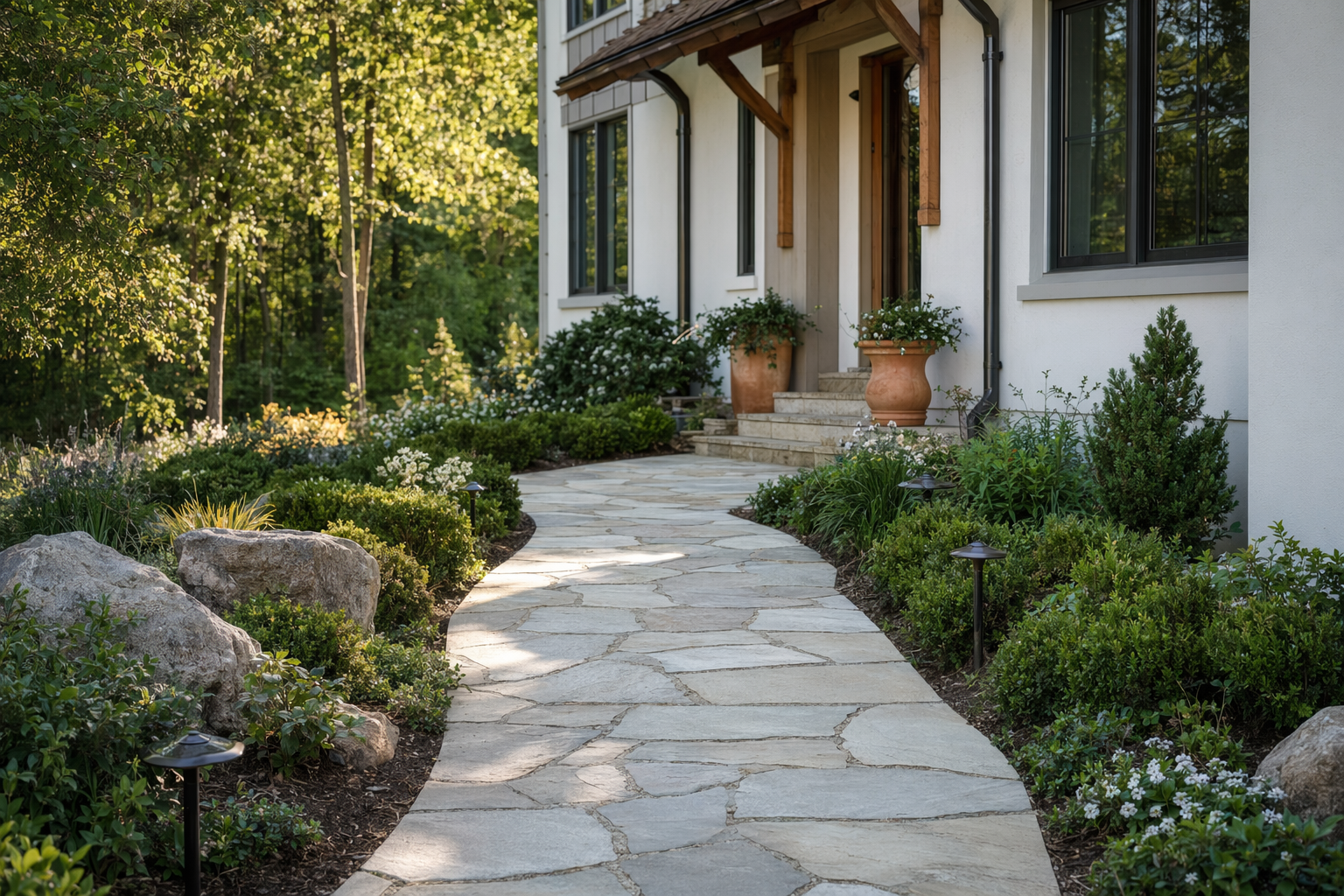
What a walkway or garden path adds to a yard
A walkway can be simple and practical, like a front path from the driveway to the porch. Or it can feel softer and more relaxed, like a garden path that winds past planting beds, a patio, or a fire pit. Either way, it helps people move through the yard without wearing a dirt trail into the grass.
Homeowners often like walkways because they make the whole property feel more finished. A clean path can improve curb appeal, reduce muddy shoes, and make a backyard easier for kids, guests, and older family members to use. In many yards, a walkway is also one of the most affordable hardscape projects with a big visual payoff.
If you are early in planning, it helps to think about where people already walk. The best path usually follows real daily movement: front door to driveway, patio to side gate, deck to pool, or back door to trash area. Start there, then think about style and materials.
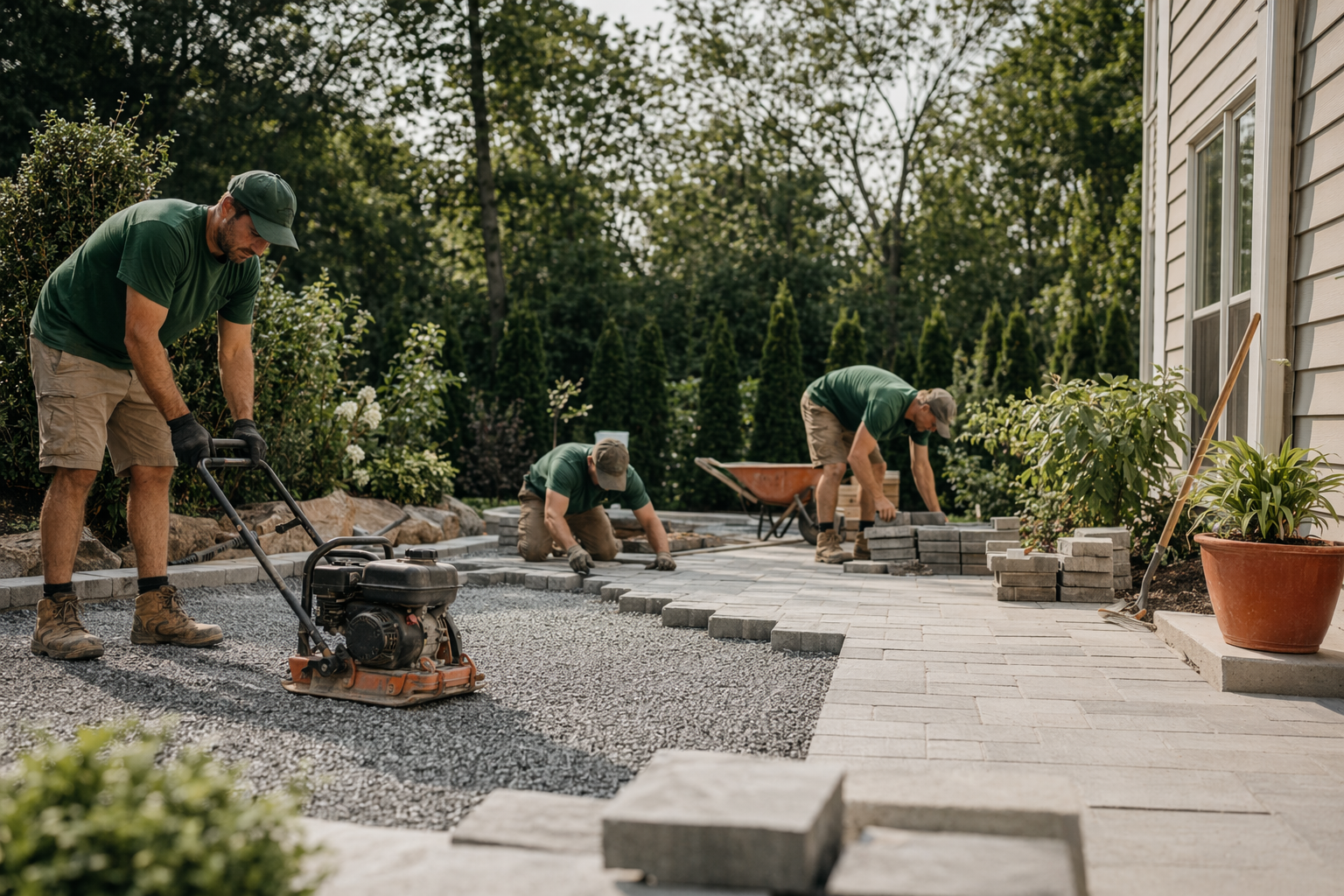
Popular walkway materials: pavers, flagstone, gravel, and concrete
Concrete pavers are one of the most common choices because they give you a clean look, many color options, and a surface that feels more finished than plain gravel. They can suit a modern home, a traditional front walk, or a backyard path that connects multiple areas. If one section settles or gets damaged, repairs can be more manageable than replacing one large slab.
Flagstone or other natural stone has a more organic look. Many homeowners love it for garden paths, cottage-style yards, and spaces meant to feel softer and less formal. The trade-off is cost: natural stone usually costs more than basic pavers or poured concrete, and the shape and thickness of the stone can affect labor.
Gravel is often the lower-cost option and can look great in the right setting. It works well for informal garden paths, side-yard access, or longer paths where a tighter budget matters. But gravel can move around, scatter into lawn or beds, and feel less stable for strollers, wheelchairs, or anyone with mobility concerns.
Poured concrete is usually chosen for a straightforward, practical path. It can be plain, colored, broom-finished, or stamped for a more decorative look. It may cost less than premium stone, but appearance, cracking, drainage, and site prep matter a lot. The best material depends on your style, budget, maintenance tolerance, and how the path will be used.
Design choices that affect look, comfort, and price
The shape of the path changes the feel right away. A straight path usually looks more formal and direct. A curved path can slow the eye down and make a yard feel larger or more landscaped. Width matters too. A narrow garden path may work for one person walking through planting beds, while a main front walk or backyard connection usually feels better with more room.
Edges and borders can make a big difference. Some homeowners want a simple path that blends into the yard. Others like a defined border in a contrasting color or material. Lighting, steps, nearby planting, and transitions to a patio or driveway can also turn a basic walkway into a stronger design feature.
Think about the surface under real life conditions, not only how it looks in a photo. Will it be slippery when wet? Will leaves collect on it? Will it stay level if the yard has drainage issues or tree roots nearby? If the path connects to gas, electrical, or lighting work, use licensed professionals and expect permits where required.
A local builder can help you compare what fits your yard and budget. If you want to plan the whole outdoor space together, our project ideas hub and patio planning guide can help you think through the layout first.
What walkway and garden path projects usually cost
For many homeowners in the US, a basic walkway or garden path may fall somewhere around $10 to $35 per square foot for simpler materials and layouts. Mid-range paver or concrete paths often land around $20 to $45 per square foot. Natural stone, detailed borders, premium finishes, curves, steps, and tougher site conditions can push costs to $35 to $70+ per square foot.
For a small, simple path, you might see total project costs starting around $1,500 to $4,000 in some areas. A more polished front walkway or longer backyard connection may be more like $4,000 to $10,000+. Larger custom paths, high-end stone, drainage work, steps, lighting, or difficult access can go higher.
These are general ranges, not quotes. Real pricing depends on the size of the project, the material you choose, local labor costs, excavation and base work, slope, drainage, soil, access to the yard, demolition of old surfaces, edging, and whether permits or related work are needed.
If you are comparing budgets across projects, visit our cost guides. A good rule is to decide what matters most first: appearance, low maintenance, accessibility, or lowest upfront cost. That usually makes the material choice clearer.
What is involved in building a walkway
Even a small path needs more than surface material on top of dirt. Most projects involve layout, excavation, base preparation, grading for drainage, edge restraint where needed, and careful placement of the finish material. That hidden prep work is a big reason one walkway lasts and another shifts, puddles, or settles too soon.
Some yards need extra attention because of slope, poor drainage, soft soil, tree roots, or tight side-yard access. If the walkway includes steps, retaining elements, or drainage concerns, a licensed builder may need to coordinate with a licensed engineer where required by local rules. Permits and code requirements vary by area, and HOA rules may also apply.
This is one reason it helps to compare a few written quotes from licensed, insured local builders. Ask what prep work is included, how they handle drainage, what material and thickness they are proposing, how edges are finished, and what cleanup is included at the end.
Common pitfalls and how to choose a builder wisely
The biggest problems usually start before work begins: choosing a material that does not fit the yard, underestimating drainage, or accepting a vague quote that leaves out prep work. A path may look affordable at first, then become expensive when change orders show up for excavation, haul-away, edge restraints, or base materials that should have been discussed earlier.
Watch for clear red flags: large cash-only deposits, no license or insurance, pressure to sign right away, no written contract, or a quote that does not clearly describe the scope and materials. You want the scope and price in writing so you can compare apples to apples.
Here is a simple way to shop the project:
1. Decide where the path starts, ends, and how you want it to feel.
2. Choose two or three materials that fit your budget and maintenance comfort.
3. Get a few written quotes from licensed, insured local builders.
4. Ask what site prep, drainage, demolition, and cleanup are included.
5. Confirm permits, HOA limits, and who handles them.
6. Review the contract carefully before work starts.
Slate & Sod is a free matching service for homeowners, not a contractor, builder, or design firm. We do not perform construction work. We can help you get connected with licensed, insured local outdoor-living and hardscape builders so you can compare options and choose who to hire. To get started, use get matched. We only collect basic contact and project details like your name, phone, optional email, project type, ZIP code, rough budget, and preferred language.
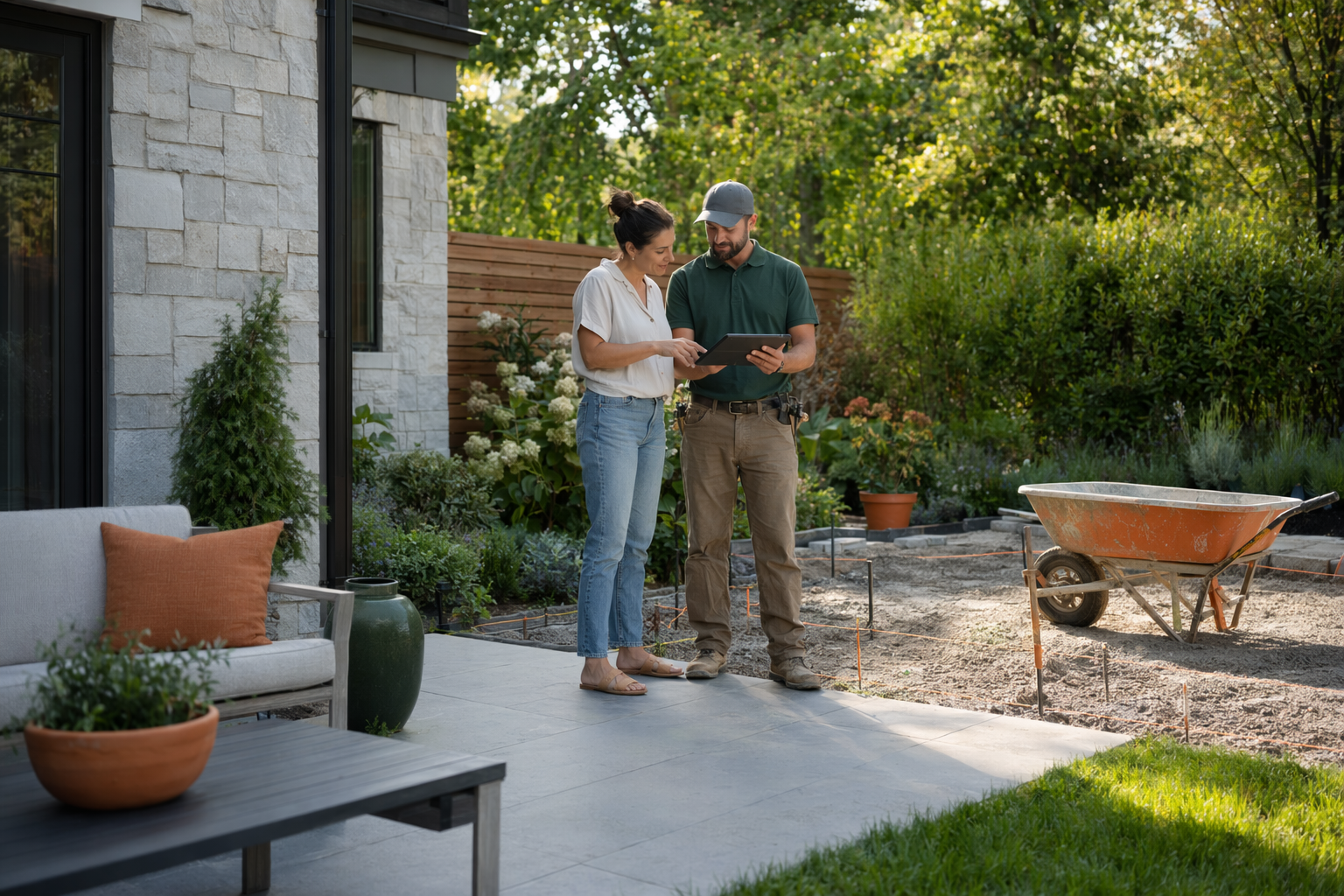
A well-planned walkway makes your yard easier to use, and the best choice comes from balancing material, prep work, and budget before you hire a licensed local builder.
Common questions
What is the cheapest material for a garden path?
Gravel is often one of the lowest-cost options upfront, especially for longer informal paths. But the cheapest choice is not always the best value if you want a smoother surface, less movement, or lower maintenance over time.
Are pavers better than poured concrete for a walkway?
It depends on your budget, style, and site conditions. Many homeowners choose pavers for their look and repair flexibility, while others choose concrete for a simpler, more straightforward path. A local licensed builder can help you compare what makes sense for your yard.
How wide should a walkway be?
That depends on how the path will be used. A casual garden path can be narrower, while a main front walk or backyard connection usually feels better with more room. Your builder can help you balance comfort, layout, and budget.
Do I need a permit for a walkway or garden path?
Sometimes, yes. Permit rules vary by city, county, and HOA, and they can change depending on grading, drainage, lighting, steps, or related gas and electrical work. Check local requirements and confirm who is handling permits before work starts.
How do I find a good walkway contractor near me?
Look for licensed, insured local builders, ask for written quotes, and compare the scope carefully. Slate & Sod is free for homeowners and can help you get matched with local builders so you can review your options and stay in control of the decision.