Projects
Paver patio — design, materials & what it costs
A paver patio can turn an empty yard into a place to eat, relax, and spend time outside. Here’s how the project usually works, what your material choices mean, and what the cost often looks like.
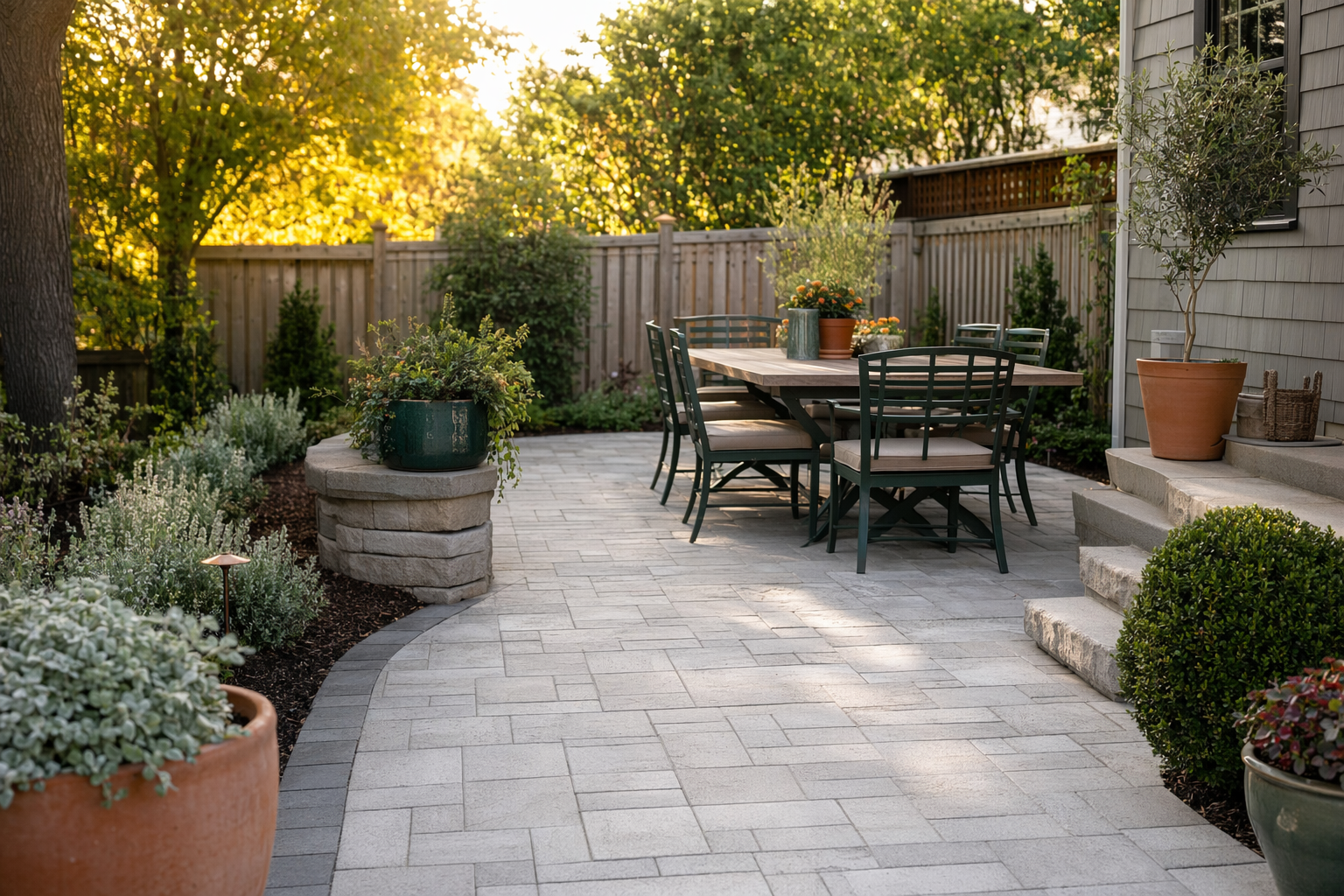
Why homeowners choose a paver patio
A paver patio is a paved outdoor surface made from individual units set together to create a seating area, dining space, grill zone, or full backyard gathering spot. Many homeowners like pavers because they look more finished than plain concrete, come in many colors and patterns, and can fit both simple and more custom designs.
Paver patios are popular for families who want a low-maintenance place to use the backyard, for people who entertain, and for homeowners who want a project that can work with a fire pit, pergola, outdoor kitchen, walkway, or pool area later. They can feel neat and modern, warm and rustic, or somewhere in between depending on the shape, border, pattern, and surrounding landscaping.
If you are just starting, it helps to think about how you want the space to feel before you think about exact materials. A patio for quick weeknight dinners may be smaller and simple. A patio for larger gatherings may need room for a table, lounge seating, a grill, and clear walking paths. Our patio planning guide can help you sort out the basics before you ask builders for quotes.
Design choices that matter most
The biggest design decision is size. A patio that looks good on paper can feel crowded once you add chairs, a dining table, planters, or a grill. Many homeowners are happiest when they plan enough space to pull chairs out comfortably and still walk around them. Shape matters too: a simple rectangle is often more budget-friendly, while curves, steps, seat walls, and multiple levels can raise the cost.
Then think about where the patio sits in the yard. Sun, shade, privacy, drainage, slope, and access from the house all affect how useful the space feels. A beautiful patio that sits in harsh afternoon sun with no shade may not get used much. A patio too far from the kitchen may be less convenient for meals and entertaining.
Style choices also affect both look and budget. You can choose from different laying patterns, border accents, paver sizes, colors, and textures. Larger-format pavers can look clean and modern. Tumbled or textured pavers can feel more traditional. Contrasting borders can make the patio look more custom, but they add material and labor.
If you know you may add features later, mention that early. Lighting, drainage solutions, seating walls, a pergola, a fire feature, or an outdoor kitchen can affect layout now even if you build in phases.
Paver vs concrete vs natural stone
Pavers are often chosen because they offer a good balance of looks, flexibility, and repairability. Since they are individual pieces, a damaged section can sometimes be addressed more easily than a large cracked concrete slab. They also give you many design options without the higher cost that some natural stone projects can bring.
Concrete can cost less upfront for a basic patio, especially if the shape is simple. But plain concrete tends to have a more basic look, and cracking can be a concern over time depending on conditions and installation. Decorative concrete can improve appearance, but the price can move closer to other options.
Natural stone can be beautiful and more unique, but it is often more expensive in both material and labor. The look is hard to copy, but the budget usually needs more room. Stone can also vary more in thickness, shape, and installation complexity depending on the product.
The right choice depends on your budget, the look you want, site conditions, and how the patio connects to the rest of your yard. If you are comparing surfaces, our cost guides and project hub can help you narrow down what fits your goals.
What a paver patio usually costs
For many homeowners in the US, a basic paver patio often starts around $15 to $35 per square foot, while a more custom project may land around $35 to $60+ per square foot. A small, straightforward patio might cost roughly $3,000 to $8,000. A medium patio for dining and seating may be more like $8,000 to $18,000. Larger or more detailed projects can go well beyond that.
These are general ranges, not quotes. The real number depends on patio size, paver type, pattern, borders, excavation needs, slope, drainage, soil, demolition of old surfaces, access to the backyard, regional labor costs, and whether you add steps, walls, lighting, a pergola, or other features.
A few examples: a flat backyard with easy access and a simple rectangular layout is usually less expensive than a yard with a steep slope, tight side access, drainage problems, or a design with curves and built-in features. Premium pavers, custom borders, and multiple elevation changes also push the cost up.
If your yard needs significant drainage work, grading changes, or a retaining wall, costs can rise quickly. Tall retaining walls, drainage concerns, and other structural issues may require a licensed engineer where local rules require it. Your local building department can also tell you what permits or code rules apply in your area.
What’s involved in building one
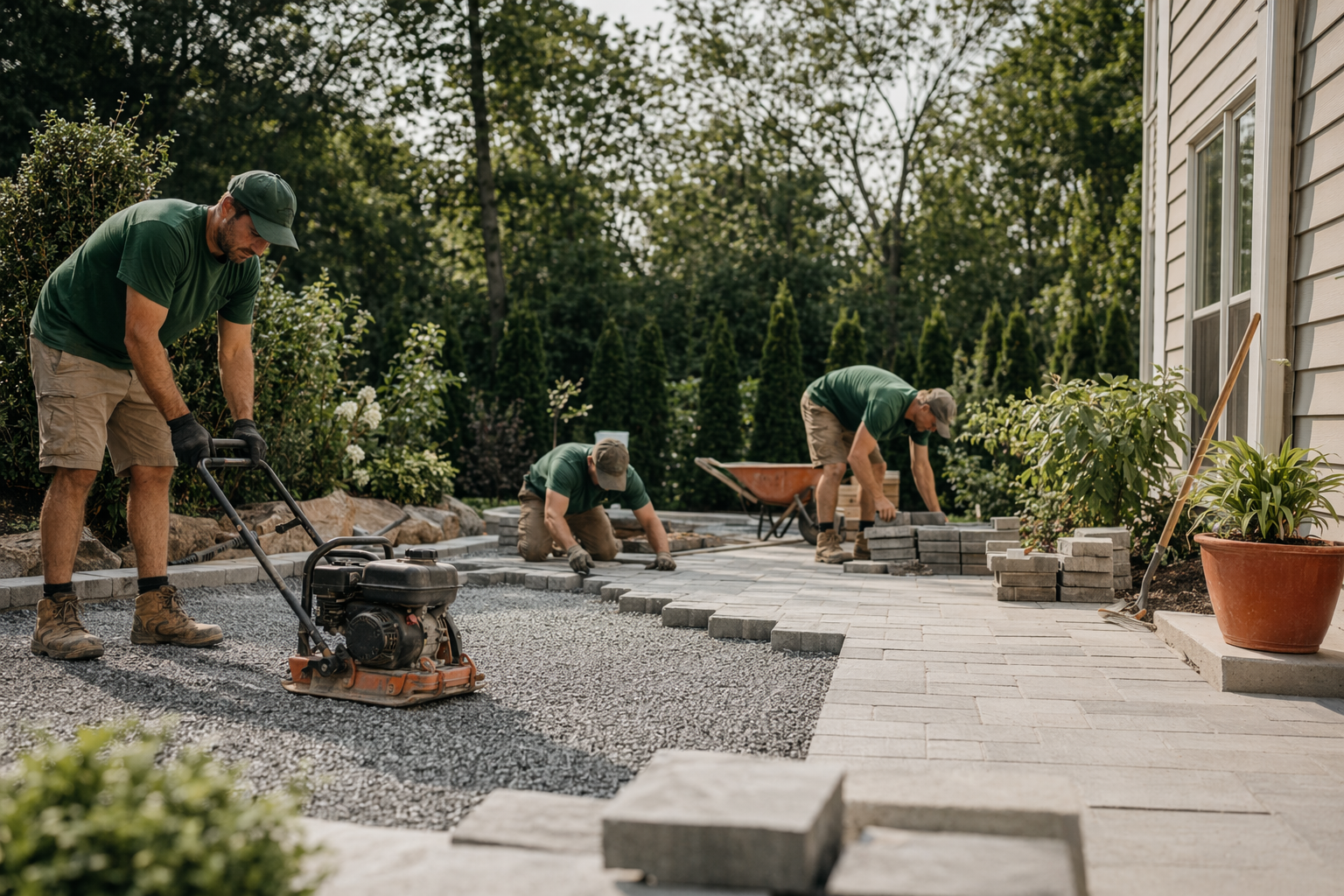
A good patio is not just about the pavers on top. Much of the work is in site prep, grading, base materials, edge restraints, and compaction. Those hidden steps help the patio stay even and drain properly over time. General information like this is useful for planning, but your licensed, insured builder should explain the specific approach for your site and local conditions.
If gas or electrical lines are part of the project for lighting, a grill area, or a fire feature, those parts should be handled by properly licensed pros and usually require permits. Local code, utility locations, and safety rules vary by area.
When you speak with builders, ask them to explain the scope in plain language and put it in writing. A clear written quote should describe the patio size, materials, site prep, what is included, and what is not. That makes it much easier to compare bids fairly.
Red flags are worth taking seriously: large cash-only deposits, no license or insurance, vague pricing, no written contract, or pressure to decide right away. Homeowners stay in control by setting the budget, comparing a few written quotes, and confirming the scope and total price before work starts.
How to plan smart and get matched with a local builder
Start with the two things that matter most: budget and use. Decide roughly how much you want to spend and how you want to use the patio day to day. That makes material and size decisions easier and helps builders suggest options that actually fit your plans.
- Measure the area or estimate the size you want.
- List your must-haves: dining, lounging, grill space, shade, fire feature, or future add-ons.
- Set a rough budget range.
- Save a few photos that show the style you like.
- Ask for written quotes from licensed, insured local builders.
Slate & Sod is a free matching service for homeowners, not a contractor, builder, or design firm. We do not perform construction work. We can help you get connected with licensed, insured local outdoor-living and hardscape builders so you can compare options yourself.
To get matched, you share basic contact and project details only: name, phone, optional email, project type, ZIP code, rough budget, and preferred language. Then you can review written quotes, ask questions, and choose who to hire. If you are ready, you can get matched now.
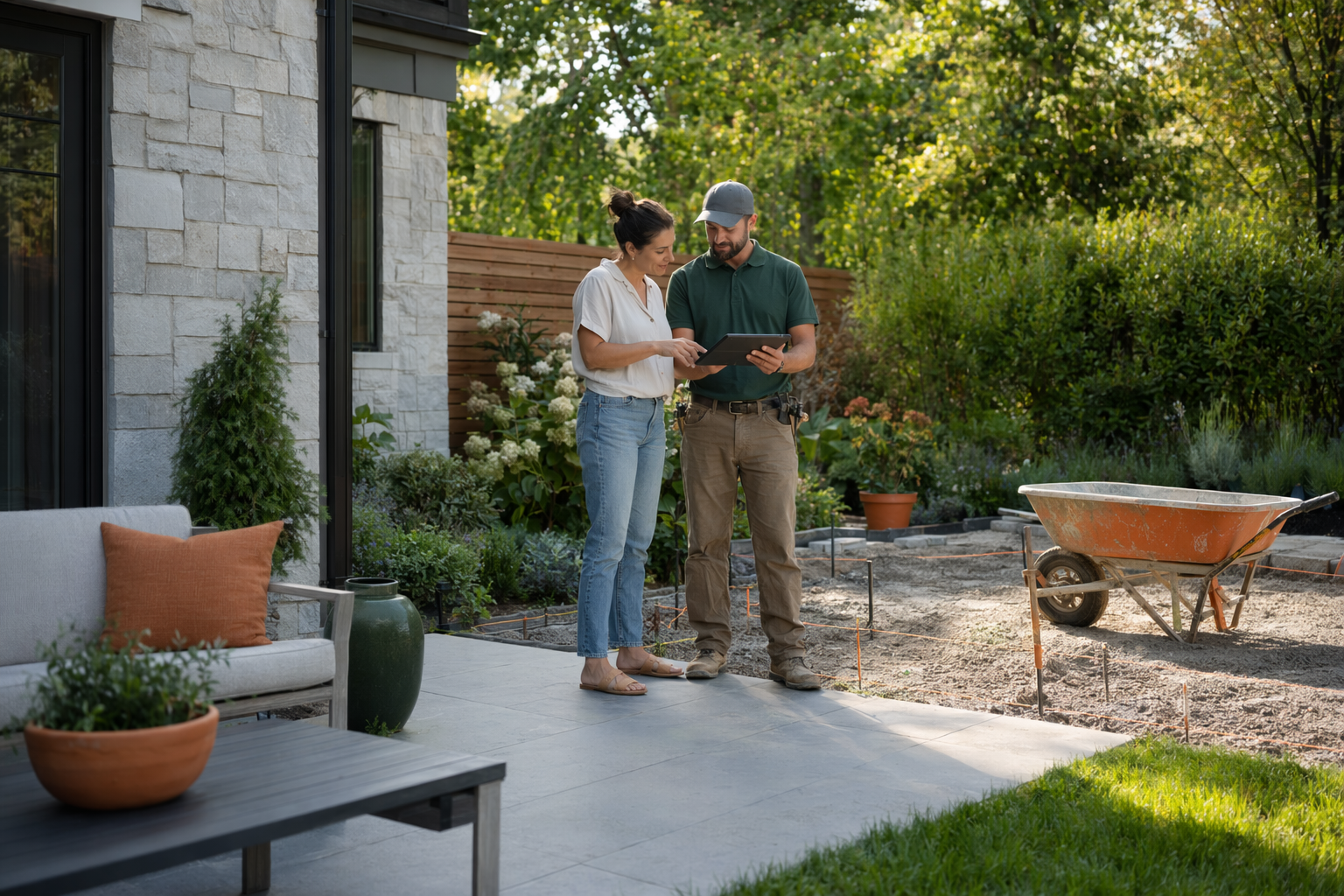
A paver patio can be a great backyard upgrade, but the best results come from planning the size, materials, and budget early and comparing written quotes from licensed local builders.
Common questions
Is a paver patio cheaper than concrete?
Sometimes no, sometimes yes depending on the project. Basic concrete can cost less upfront, but pavers often offer more design options and easier spot repairs; the real price depends on size, materials, site conditions, and your area.
How big should a paver patio be?
It depends on how you plan to use it. A small sitting area needs much less space than a patio for a dining table, grill, and lounge furniture, so it helps to plan around your actual furniture and walking room.
Do I need a permit for a paver patio?
Maybe. Permit rules vary by city, county, and HOA, and nearby drainage, grading, walls, gas, or electrical work can change what is required. Your builder and local building department can help confirm the rules.
How many quotes should I get?
It is smart to compare a few written quotes. That helps you see differences in scope, materials, and price so you can make a more informed choice.
What information does Slate & Sod collect?
Only basic contact and project-intent details: name, phone, optional email, project type, ZIP code, rough budget, and preferred language. The service is free for homeowners.
Can Slate & Sod build my patio?
No. Slate & Sod is a free matching service, not a contractor or builder, and does not perform construction work. We help connect homeowners with licensed, insured local builders.