Guides
How to plan a patio or outdoor living project
Start with the kind of space you want, then set a realistic budget and choose materials that fit your climate and upkeep. Slate & Sod is a free matching service, not a contractor, so we help you connect with local licensed, insured builders after you know what you want.
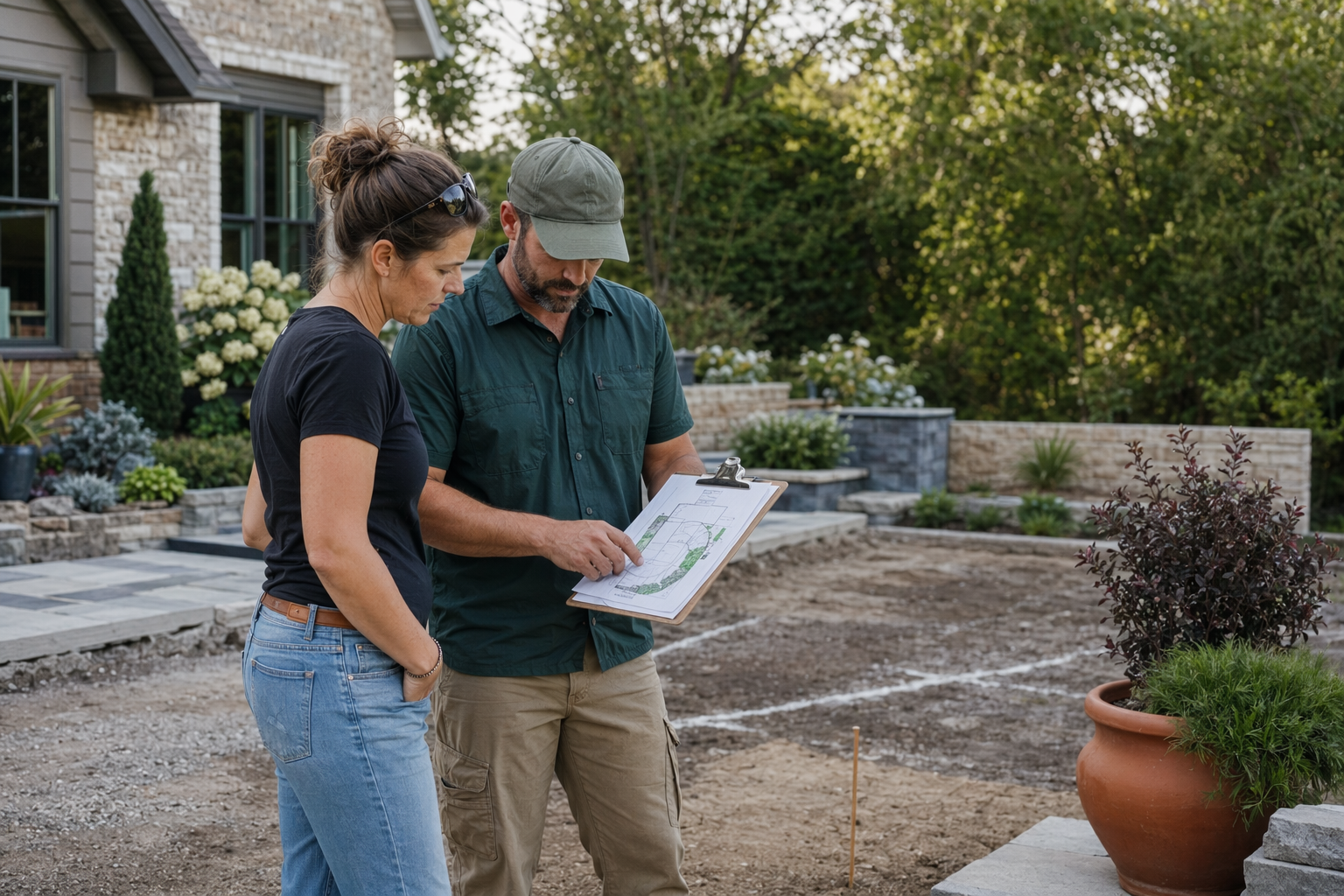
1) Picture the space first
Before you compare prices, think about how you want to use the backyard. Do you want a simple patio for chairs and a grill, a place for family dinners, a fire pit, an outdoor kitchen, or a full backyard with seating, shade, and paths?
The clearest plans start with everyday life: how many people will use it, how often, and in what seasons. A small patio can feel generous if it fits your table and walking space. A bigger yard can still feel awkward if the layout is spread out or hard to maintain.
If you want ideas, browse project types and planning guides to see common layouts and features homeowners choose.
- Think about who will use it: adults, kids, guests, pets.
- Decide what matters most: dining, relaxing, cooking, shade, or low upkeep.
- Measure the outdoor items you already own, like a table, grill, or lounge chairs.

2) Set the budget before choosing materials
Budget first, material second. That keeps the project grounded and helps you avoid falling in love with features that are too expensive to build or maintain.
For a basic patio or walkway, homeowners often see rough ranges in the low thousands to the tens of thousands depending on size, materials, and site conditions. A more finished outdoor living space with seating walls, lighting, a fire pit, or an outdoor kitchen can move into the tens of thousands or more. These are not quotes—real pricing depends on your yard, access, soil, drainage, slope, and local labor costs.
Ask yourself what you can comfortably spend now, then leave room for surprises. Backyard projects often cost more when the site needs grading, drainage help, demolition, hauling, or extra prep work.
- Small/simple projects usually cost less than multi-feature backyards.
- Hard-to-reach yards, steep slopes, poor drainage, or poor soil can raise costs.
- Ask for a written scope and itemized price so you can compare quotes fairly.
3) Choose materials that fit your climate and upkeep
The best material is not always the fanciest one. It is the one that fits your budget, your climate, and how much maintenance you really want to do.
Pavers are popular because they come in many looks and are easy to replace one by one if a piece gets damaged. Natural stone can look beautiful and timeless, but it often costs more and may need more careful installation and maintenance. Concrete may be more budget-friendly, but the finish and crack control matter. For outdoor kitchens, plan for surfaces and cabinets that can handle heat, weather, and cleaning.
If you live where winters are cold or the ground moves a lot, ask builders what they recommend for freeze-thaw conditions. If you want a pool deck, walkway, or patio that stays cooler underfoot, ask about lighter colors and slip resistance.
- Pavers: flexible look, many styles, easier piece-by-piece repair.
- Natural stone: premium appearance, often higher cost and more material variation.
- Concrete: usually simpler and cheaper, but appearance and cracking need careful attention.
4) Plan the layout and the practical parts
A good outdoor space works well on paper before it is built in the yard. Start with the main zone, then add features only if they truly improve how you will use the space.
Think about traffic flow, storage, shade, privacy, lighting, and where people will walk with food, drinks, or wet shoes. If you are adding gas, electrical, water, drainage changes, or a retaining wall, those parts often need licensed pros and permits. Your local building department and HOA rules may also affect what is allowed.
A simple way to plan is to list your must-haves and nice-to-haves, then cut until the project fits your budget. That usually leads to a better backyard than trying to squeeze in everything at once.
- Must-haves: patio size, seating, grill space, path, shade, privacy.
- Nice-to-haves: fire feature, outdoor kitchen, lighting, pergola, built-in seating.
- Always check permits, HOA rules, and utility locations before work starts.
5) Get several written quotes and compare them carefully
Once you know your budget and rough plan, talk to a few local builders. Slate & Sod is a free matching service for homeowners, and we do not perform construction work. We help collect basic contact and project intent details so you can be connected with licensed, insured local outdoor-living and hardscape builders.
When you compare quotes, do not just look at the total price. Ask what is included: demolition, grading, base prep, drainage, materials, cleanup, permits, and any electrical or gas work. Make sure the scope, materials, and payment schedule are in writing before work begins.
Red flags are easy to miss when you are excited: large cash-only deposits, no license or insurance, vague quotes, no written contract, and pressure to decide on the spot. A good builder should be willing to explain the plan clearly and let you compare a few options.
- Verify license and insurance before hiring.
- Get the scope, materials, and total price in writing.
- Compare a few quotes and keep control of your budget and choices.
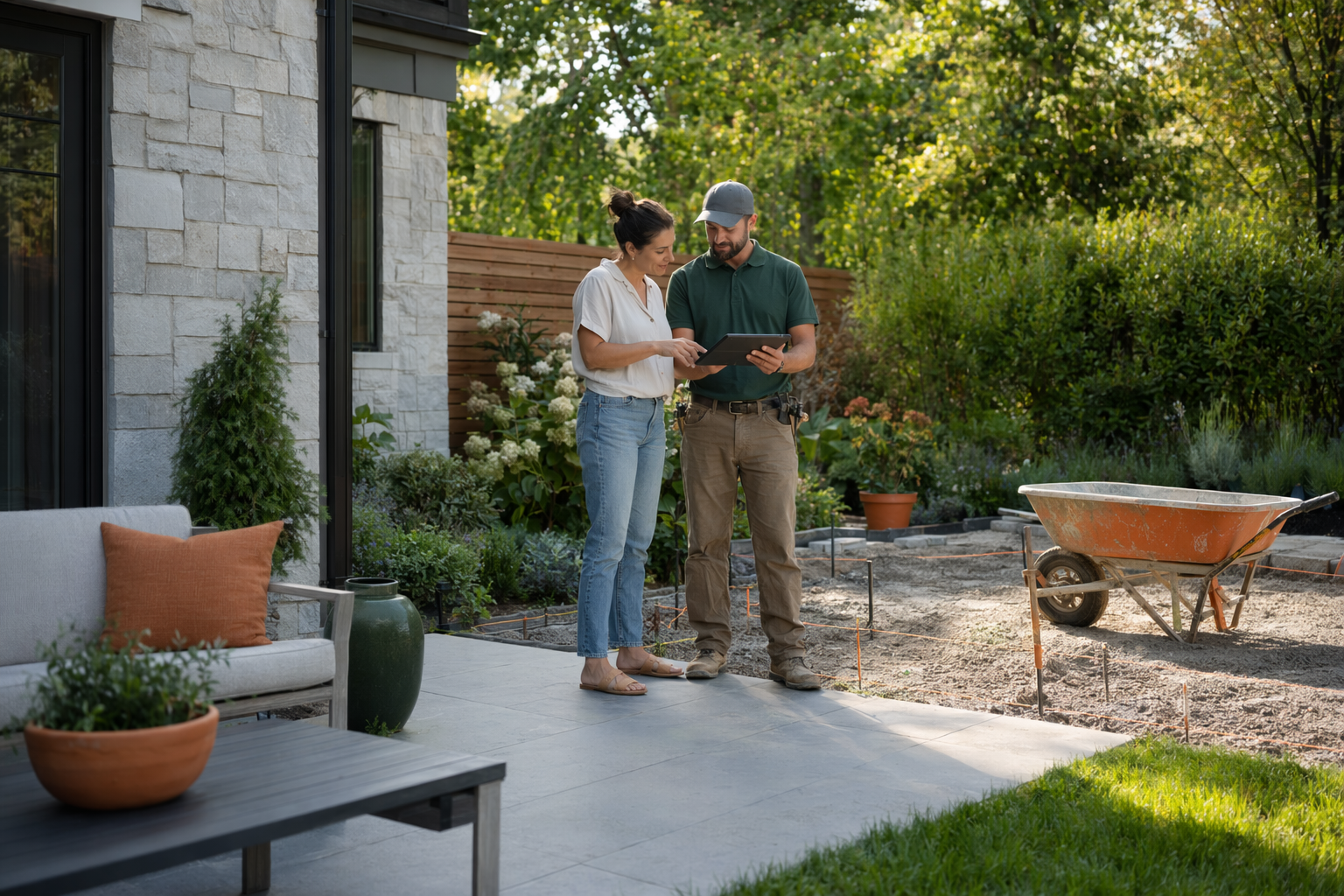
Plan the use, budget, and materials first, then compare written quotes from licensed, insured local builders before you start.
Common questions
What is the first thing I should do when planning a patio?
Decide how you want to use the space and how big it needs to be. After that, set a realistic budget and choose materials that fit your climate and maintenance comfort.
How much does a patio or outdoor living project cost?
It varies a lot by size, materials, and yard conditions. Simple projects may start in the low thousands, while larger outdoor living spaces can reach the tens of thousands or more, especially if you add kitchens, lighting, drainage work, or walls.
Do I need permits for an outdoor project?
Sometimes, yes—especially for gas, electrical, drainage changes, retaining walls, or larger structures. Rules vary by city and county, so check with your local building department and ask your builder what permits are needed.
How do I know if a builder is trustworthy?
Look for a licensed, insured builder who gives you a written scope and price, answers questions clearly, and does not pressure you to decide right away. Be careful with cash-only deposits, vague estimates, or anyone who refuses to show proof of insurance.