Quick answers
Do I need a permit for a retaining wall?
Often, maybe. Many areas require a permit for some retaining walls, especially taller walls or walls that affect drainage, slopes, driveways, sidewalks, or neighboring property.
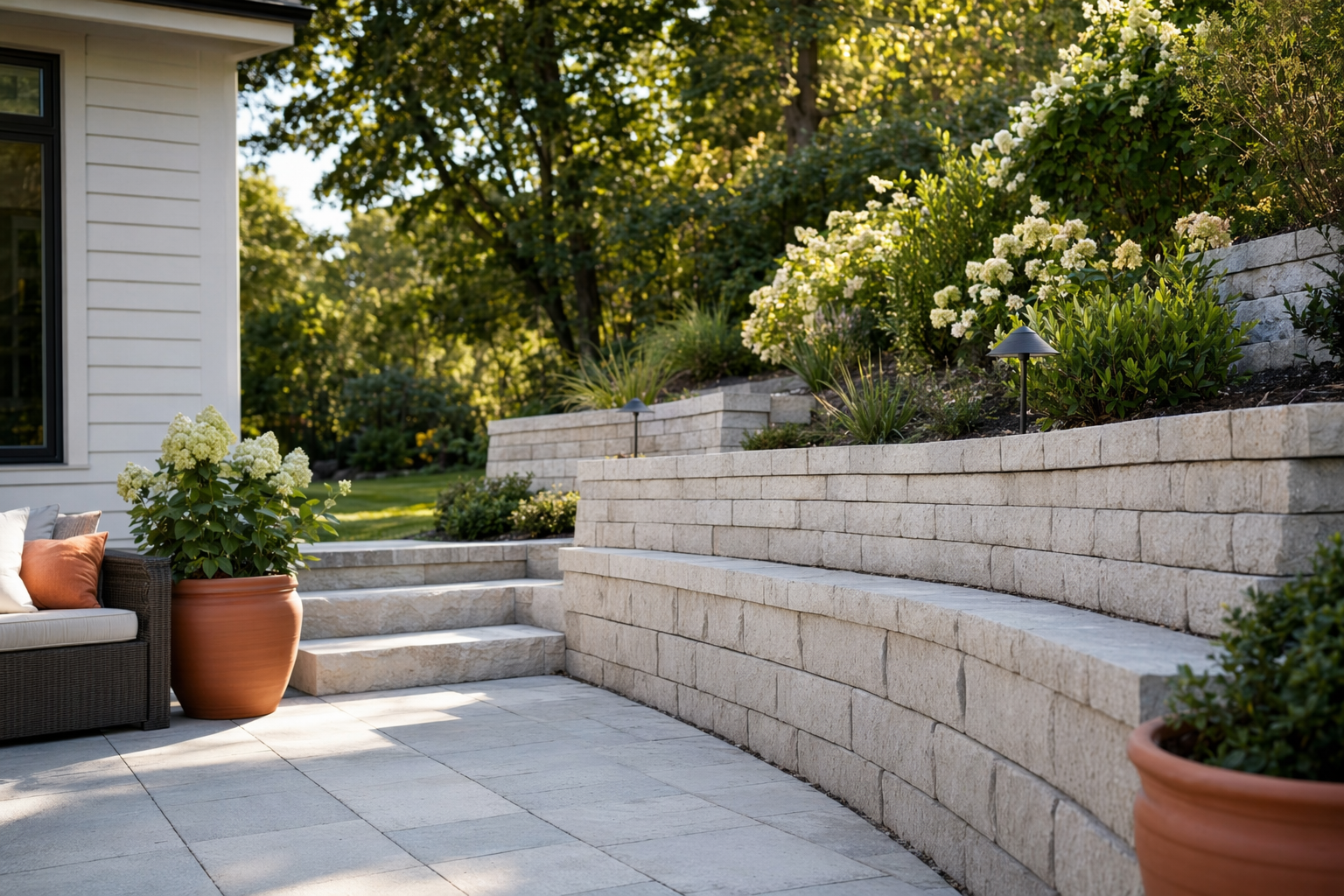
Short answer: sometimes — and height is only part of it
A retaining wall may need a permit, but the rule is not the same everywhere. In many US cities and counties, a permit is more likely once a wall reaches a certain height, but local rules can also depend on where the wall sits, how much soil it holds back, whether there is a surcharge above it (like a driveway, parking area, fence, pool, or structure), and whether drainage changes are involved.
Even a shorter wall can trigger permit or engineering review if it is near a property line, supports a slope, affects stormwater flow, or is part of a bigger backyard project. That is why the safest first step is to check with your local building department and talk with a licensed, insured builder who works in your area.
This page is general information only, not construction, engineering, or legal advice. For walls that are taller, hold back significant soil, or involve drainage or steep slopes, a licensed engineer may be required by local code.

When permits are commonly required
A permit is commonly required when a retaining wall is considered tall by local code, when the wall supports extra weight above it, or when failure could affect safety or nearby property. In many places, walls around 3 to 4 feet and up get more review, but your local rule may be lower, higher, or based on how the wall is measured.
Permits and inspections are also more likely if the project changes grading, adds drainage pipe or swales, sits near a sidewalk or public right-of-way, or is close to a home foundation, pool, driveway, or neighboring lot. HOA rules can add another approval step too.
A licensed, insured local builder can usually tell you what is common in your area, but always confirm with the local building department. Requirements vary by city, county, and state.
- Wall height over a local threshold
- Slope, drainage, or erosion concerns
- Extra load above the wall, like a driveway or structure
- Work near property lines, sidewalks, easements, or utilities
- HOA review or neighborhood design rules
When homeowners get surprised
Many homeowners assume a permit question is only about block walls. It is not. Segmental concrete block, natural stone, timber, poured concrete, and other retaining wall systems can all be subject to permit rules depending on the size and site conditions.
The biggest surprise is usually drainage. A wall that looks simple from the yard side may need gravel backfill, drainage planning, and careful site prep to avoid water pressure building behind it. Poor drainage is one of the main reasons retaining walls lean, crack, or fail.
Another surprise is property boundaries. If the wall is near a fence line or affects how water moves onto a neighbor's lot, the project can get more complicated. That is one reason to avoid handshake deals and vague promises.
What a permit can mean for cost and timeline
A permit can add time and cost, but skipping one when it is required can cost more later. If the city or county stops the project, asks for changes, or requires work to be redone, your final bill can rise fast.
For a small retaining wall, permit-related costs may be modest in some areas. For a larger wall that needs plans, drainage review, or engineering, the total pre-construction cost can be much higher. A simple wall project might land somewhere around $3,000 to $8,000, while larger or more complex retaining walls can run $8,000 to $25,000 or more. These are broad ranges, not quotes. The real number depends on wall size, height, materials, access, excavation, drainage, soil, slope, and your area.
Material choice matters too. Timber can cost less up front in some markets but often has a shorter life and more moisture concerns. Concrete block systems are common and can balance looks, performance, and budget. Natural stone can look beautiful but often costs more in both material and labor. A licensed builder can explain what fits your yard and budget. You can also review project cost guides before talking to builders.
How to plan the project without getting burned
If you are thinking about a retaining wall, do the planning before you focus on finishes. Start with the purpose: are you leveling a yard, stopping erosion, creating space for a patio, or solving a slope problem? That helps you talk clearly with builders and compare quotes fairly.
Then get the scope and price in writing. A good written quote should spell out wall dimensions, materials, drainage approach, excavation, hauling, permit responsibility, cleanup, and what is not included. If one quote is much lower than others, ask what was left out.
Watch for red flags: large cash-only deposits, no license or insurance, vague one-page estimates, pressure to sign today, or a promise that "you do not need permits" without checking local rules. Compare a few written quotes and verify the builder is licensed and insured where required.
How Slate & Sod can help
Slate & Sod is a free matching service for homeowners. We are not a contractor, builder, or design firm, and we do not do construction work. We help you plan your outdoor project and get connected with licensed, insured local outdoor-living and hardscape builders.
You stay in control. You set the budget, compare written quotes, choose who to hire, and confirm the scope and price before work starts. We only collect basic contact and project-intent details like your name, phone, optional email, project type, ZIP code, rough budget, and preferred language.
If you want help finding local pros for a retaining wall or a full backyard project, you can get matched. If you are still comparing options, start with our guides or visit help for more plain-language answers.
You might need a permit for a retaining wall, so check local rules, use a licensed and insured builder, and get the scope, permit responsibility, and price in writing.
Common questions
Do I need a permit for a 3-foot retaining wall?
Maybe. In some places a 3-foot wall may not need a permit, but in others it can if it affects drainage, sits near a property line, supports extra weight, or is part of grading work. Check with your local building department.
Who pulls the permit for a retaining wall?
That depends on your area and your contract. Sometimes the homeowner pulls it, and sometimes the licensed builder does. Get that responsibility in writing before work starts.
Do I need an engineer for a retaining wall?
Sometimes, yes. Taller walls, walls on steep slopes, walls with drainage issues, or walls supporting driveways or other loads often need engineering review. Local code may require a licensed engineer.
What happens if I build a retaining wall without a required permit?
You could face stop-work orders, fines, delays, trouble when selling the home, or expensive changes later. If a permit is required, it is usually cheaper and safer to handle it up front.
Can a contractor tell me I do not need a permit?
A builder can share local experience, but the final authority is your local building department. Be careful if someone says permits are unnecessary without checking the actual local rule.
How many quotes should I get for a retaining wall?
Usually at least two or three written quotes is a smart start. That helps you compare scope, materials, drainage details, permit responsibility, and total price.