Guides
How to budget for a hardscape project
Start with your total comfort number, then divide it between the must-haves, the nice-to-haves, and a backup fund for surprises. A good hardscape budget is less about guessing a low price and more about planning for real materials, labor, and site conditions.
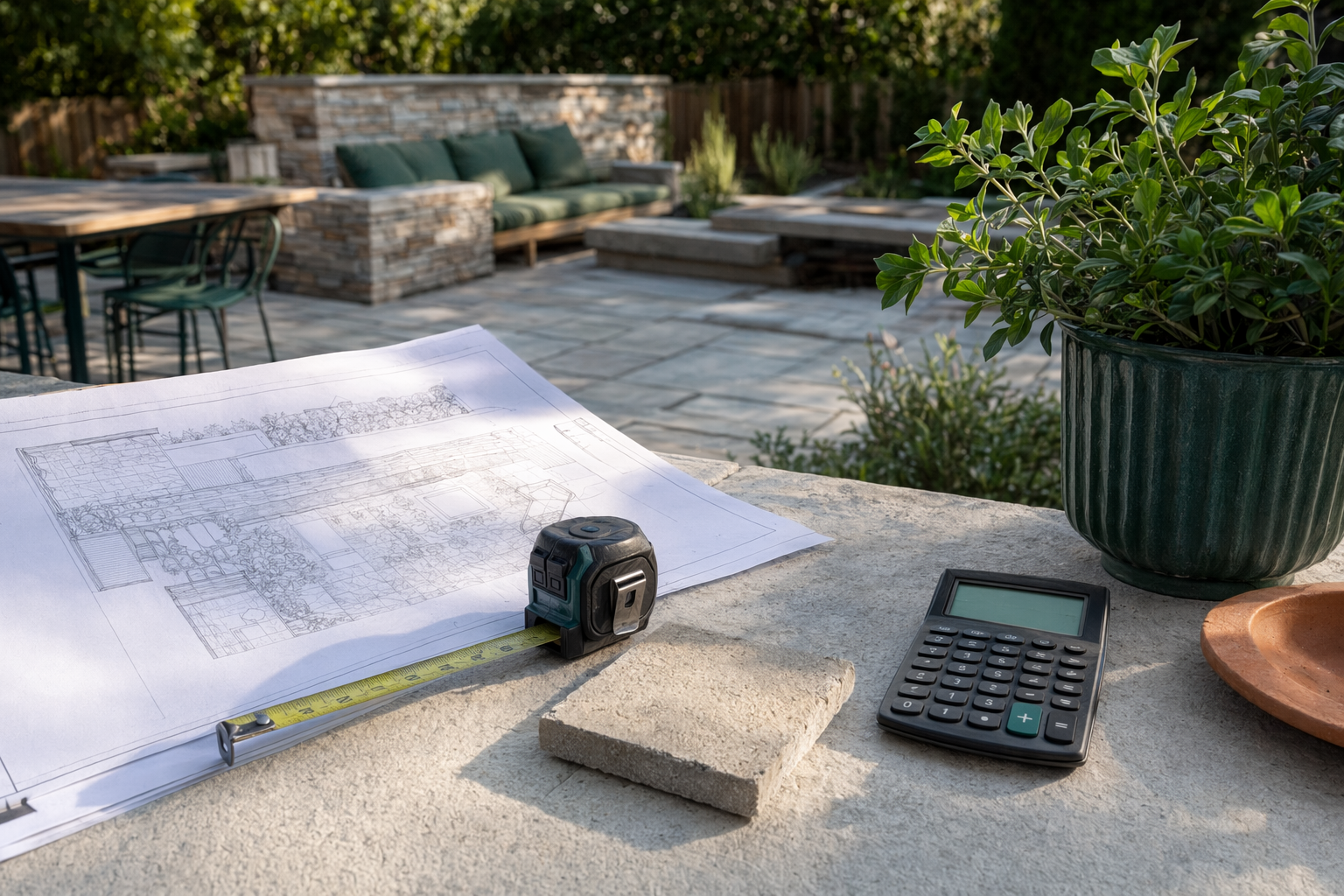
Start with the total number you can comfortably spend
The simplest way to budget for a hardscape project is to pick a total range you can actually live with before you fall in love with a design. That could be a small refresh budget, a mid-range budget, or a larger investment for a full backyard. The key is to decide your ceiling early so you can make smart choices about size, materials, and features.
For many homeowners, a realistic starting point looks something like this: a basic paver or concrete patio may land around $15 to $35 per square foot, a natural stone patio often runs higher, retaining walls can range widely depending on height and drainage needs, and outdoor kitchens commonly start in the several-thousand-dollar range and go much higher with appliances and utilities. A full backyard project can range from a few thousand dollars for a simple upgrade to tens of thousands for a larger, more custom space. These are general ranges, not quotes. Real cost depends on project size, materials, slope, drainage, soil, access to the yard, and the area you live in.
If you are not sure what is realistic, it helps to browse project ideas and cost guides first. That gives you a better sense of what usually costs more and what can stay simple.

Know where the money usually goes
A hardscape budget is not just the visible patio, wall, or fire pit. A big part of the cost is the work underneath and around it. That includes demolition of old surfaces, excavation, grading, base materials, drainage work, hauling debris away, edge restraints, cuts, labor, and cleanup. If your yard has a slope, tight side access, poor drainage, tree roots, or soft soil, the budget usually goes up.
Then come the finish choices. Higher-end pavers, natural stone, larger-format materials, custom borders, built-in seating, lighting, pergolas, steps, seat walls, and kitchens all add cost. Gas and electrical features add more because they require licensed pros and permits in most areas.
A good rule: spend first on the parts that make the project last and function well, then spend on looks. A beautiful patio that holds water or settles badly is not a bargain.
Set priorities: where to save and where to splurge
If your budget is tight, keep the footprint simple. Shape, size, and access matter a lot. A clean rectangular patio is usually more budget-friendly than a large patio with many curves, steps, multiple levels, and built-in features. Choosing one strong main feature often works better than trying to do everything at once.
In general, it makes sense to splurge on base prep, drainage, and durable installation by a licensed, insured builder. Those things protect the life of the project. It is often easier to save on material upgrades, decorative borders, premium color blends, extra seating walls, or adding the outdoor kitchen later.
Material choices also change the budget. Concrete can be more affordable up front, but appearance and repair options vary. Concrete pavers are popular because they come in many styles and are often easier to repair piece by piece. Natural stone can look beautiful and timeless, but material and labor costs are usually higher. Gravel can be budget-friendly in some spaces, but it has a different look and more movement underfoot. There is no one best material for every yard.
Think in phases if needed. For example:
1. Build the patio and fix drainage first.
2. Add a fire pit or walkway later.
3. Add lighting, kitchen, pergola, or plant beds in a second phase.
That approach can help you avoid overspending while still ending up with a finished-feeling space over time.
Leave room for surprises and permit-related costs
Many hardscape budgets go off track because the first number did not leave room for the unknowns. A smart budget usually includes a contingency fund, especially for larger projects or older properties. Hidden problems can include buried concrete, poor soil, drainage issues, root removal, access limits for equipment, or the need to adjust elevations near the house.
Permits, HOA review, surveys, engineering, and utility work can also affect the budget depending on where you live and what you are building. Tall retaining walls, major drainage changes, gas lines, electrical work, and some roofed structures often involve added review or permits. Rules vary by city, county, and HOA.
Slate & Sod is a free matching service, not a contractor or design firm, and we do not perform construction work. We share general information only. For project-specific requirements, ask a licensed, insured builder, a licensed engineer where required, and your local building department. For gas and electrical work, use licensed pros and expect permits.
How to compare quotes fairly without getting fooled
When you get estimates, do not look only at the bottom-line price. Make sure each builder is pricing the same scope. One quote may look cheaper because it leaves out demolition, drainage, hauling, edge restraints, utility coordination, sealing, or cleanup. Another may include better materials or more prep work below the surface.
Ask for the scope and price in writing. The quote should clearly say what is included, what materials are being used, approximate quantities or square footage where relevant, who handles permits if needed, and what is excluded. If something matters to you, such as matching an existing patio, adding steps, relocating sprinklers, or protecting a tree, get that in writing too.
Red flags are worth taking seriously:
- Large cash-only deposits
- No license or no proof of insurance
- Vague quotes with few details
- No written contract
- Pressure to decide right away
- Refusal to explain materials or prep work
It is smart to compare a few written quotes from licensed, insured local builders. The cheapest number is not always the best value, and the highest number is not automatically the best either. You stay in control: you set the budget, compare written quotes, choose who to hire, and confirm the scope and price before work starts.
A simple budgeting plan you can use right now
If you feel overwhelmed, keep it simple. Start by writing down your project type, rough size, must-haves, and comfort budget. Then separate your ideas into three buckets: must-have, nice-to-have, and later. That alone can make builder conversations much clearer.
Here is a practical way to plan:
1. Choose your total maximum budget.
2. Pick the main project first: patio, wall, walkway, fire feature, kitchen, or backyard refresh.
3. Decide what matters most: bigger size, better materials, lower upkeep, or more features.
4. Leave part of the budget for surprises, permits, and site issues.
5. Ask for written quotes with the same scope from a few licensed, insured builders.
6. Compare what is included, not just the total number.
If you want help finding local builders, get matched through Slate & Sod. The service is free for homeowners. We collect basic contact and project details only, like your name, phone, optional email, project type, ZIP code, rough budget, and preferred language. If you are still early in planning, our guides and cost pages can help you narrow down what makes sense before you talk to anyone.
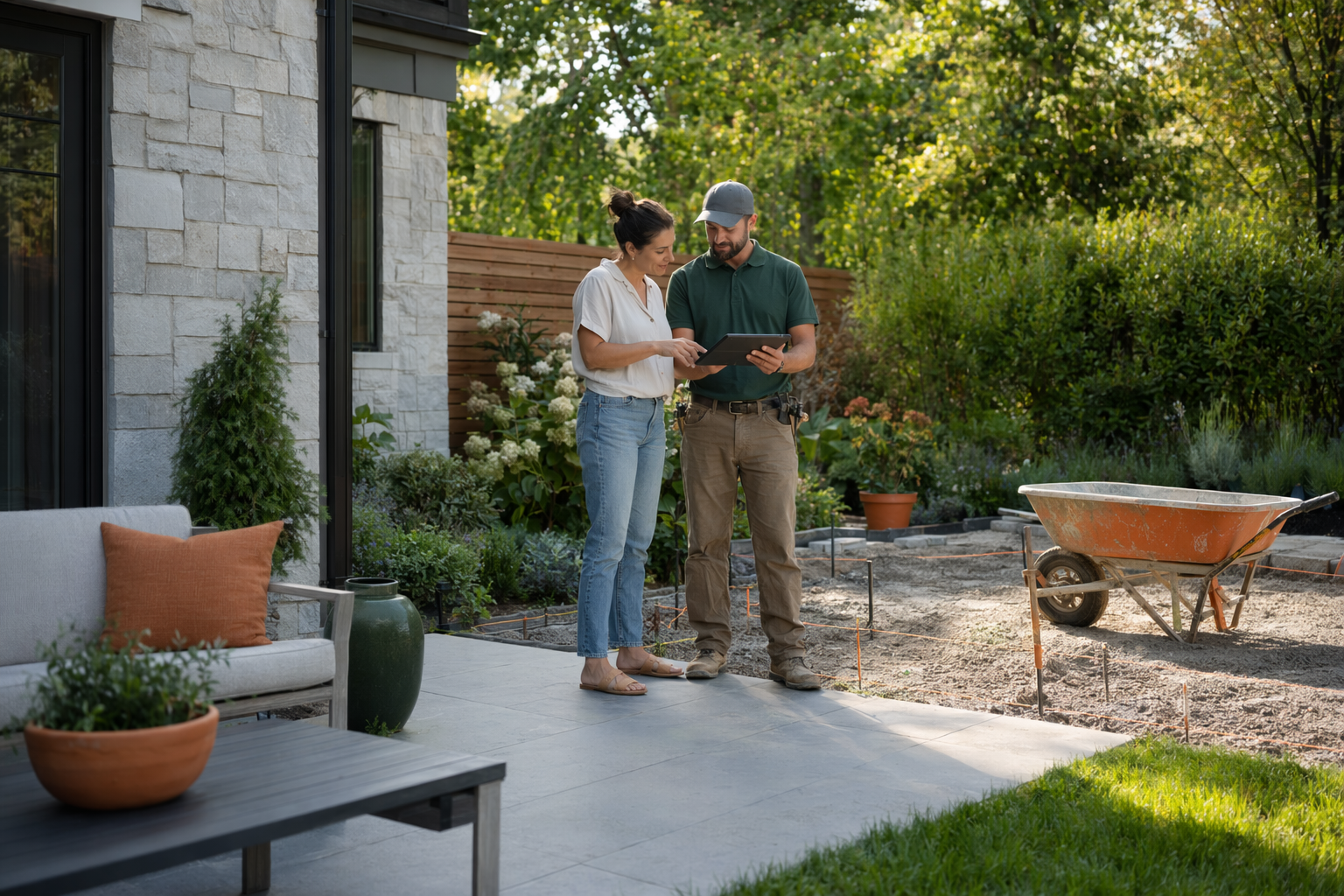
A good hardscape budget starts with your real spending limit, focuses first on solid prep and drainage, and compares a few detailed written quotes before you hire anyone.
Common questions
How much should I budget for a patio or hardscape project?
There is no one number that fits every yard. A simple patio may start in the low thousands, while a larger patio, retaining wall, outdoor kitchen, or full backyard project can run much higher. Size, materials, access, slope, drainage, and your local market all affect the real price.
What part of a hardscape project usually costs the most?
Often it is the labor and site preparation, not just the surface material. Excavation, grading, base work, drainage, demolition, hauling, and access challenges can take a big share of the budget.
Should I finance extra features now or build in phases?
Many homeowners are better off building in phases if the full wish list feels too expensive. It often makes sense to do the patio, drainage, and main layout first, then add features like lighting, a pergola, or an outdoor kitchen later.
How do I know if a quote is too low?
A very low quote can mean important work is missing, such as proper base prep, drainage, cleanup, or permit-related items. Ask for a written breakdown of what is included and compare that scope against other quotes.
Can Slate & Sod give me a quote or build the project?
No. Slate & Sod is a free matching service for homeowners, not a contractor, builder, or design firm. We do not perform construction work; we help connect you with licensed, insured local builders so you can compare options.