Services
Retaining walls, grading and drainage
Retaining walls, grading, and drainage help make a yard safer, more usable, and easier to enjoy. This guide explains what they do, what affects cost, and how to find a licensed, insured local builder.
What retaining walls, grading, and drainage actually do
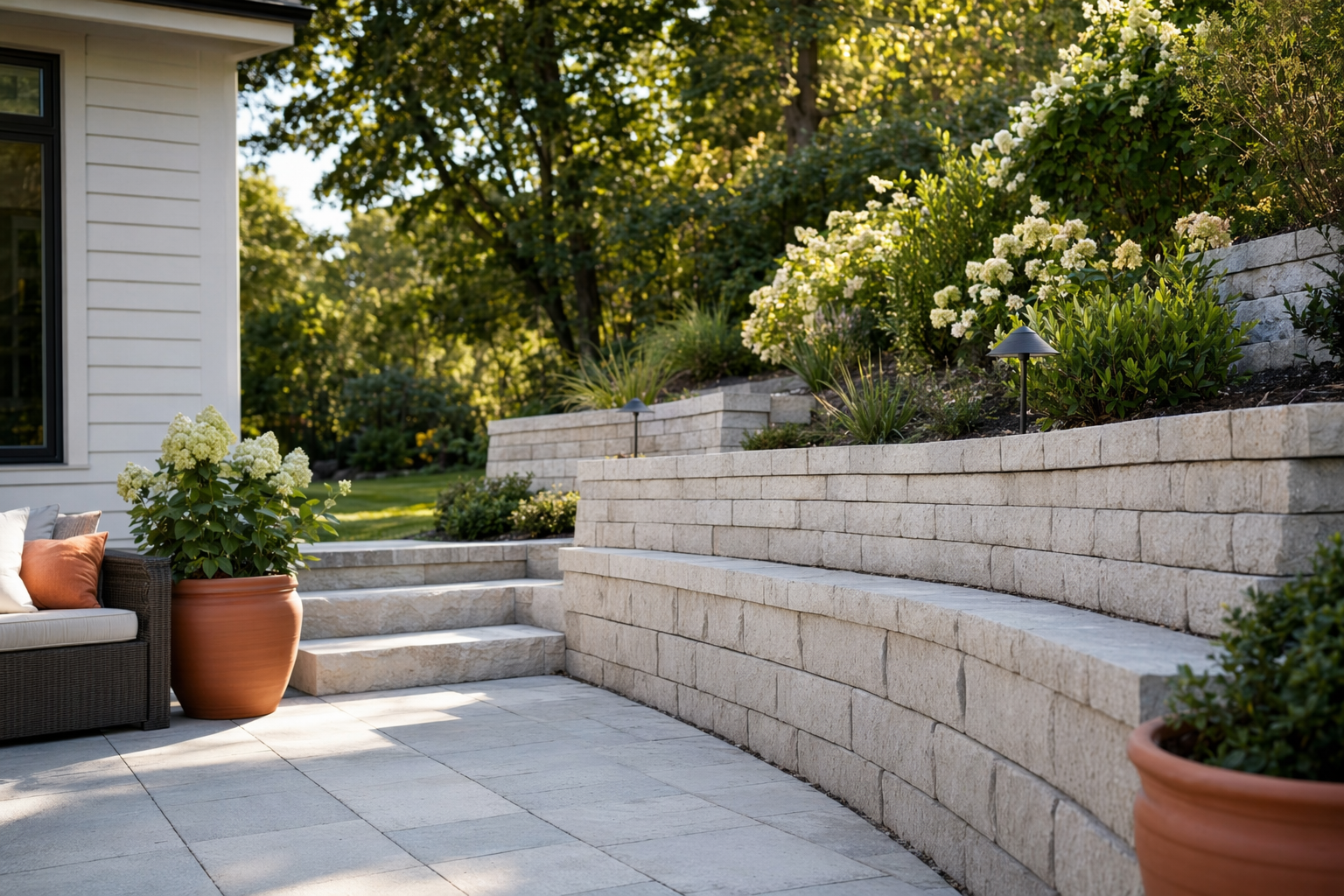
These jobs are often connected. A retaining wall holds back soil where the yard changes height. Grading reshapes the slope so water moves away from the home and the yard works better. Drainage features help control where water goes so it does not sit against the house, wash out a patio, or turn part of the yard into mud.
Homeowners usually start looking at this work when they have a sloped yard, erosion, standing water, a failing old wall, or a backyard project that needs a level area first. If you are planning a patio, outdoor kitchen, fire pit, walkway, pool deck, pergola, or a full backyard update, this work may be the part that makes the rest possible. You can explore related services, projects, and typical costs as you plan.
A good builder will look at more than the wall itself. They will pay attention to slope, soil, drainage, access for equipment, nearby structures, and whether permits or engineering may be required in your area. This matters because a wall that looks nice but does not manage water well can fail early.
This page is general information only, not construction, engineering, or legal advice. For retaining walls, drainage design, and site conditions, use a licensed, insured local builder and a licensed engineer where required by local code or the project conditions.

How a builder usually plans the job
A careful builder starts with the site, not the catalog. They will measure the height change, look at how water moves during rain, check access to the yard, and ask what you want the finished space to do. Sometimes the right answer is not just a taller wall. It may be a combination of regrading, a shorter wall, steps, drainage improvements, and better surface materials.
Drainage is a big part of the plan. Water behind a wall adds pressure. Water near the house can lead to bigger problems. Depending on the site, the plan may include grading changes, gravel backfill, drainage pipe, inlets, swales, or downspout adjustments. Exactly what is needed depends on the yard and local requirements.
For taller walls, difficult slopes, poor soil, or drainage concerns, a licensed engineer may be required. Local rules vary a lot across the US, and HOA rules may also apply. A licensed, insured builder can tell you what is commonly required in your area, and your local building department can confirm permit rules.
Gas and electrical work are separate issues. If your project also includes lighting, a grill, or a fire feature near the wall area, use licensed pros and get permits where required.
What the work usually includes: base prep, wall system, and finishes
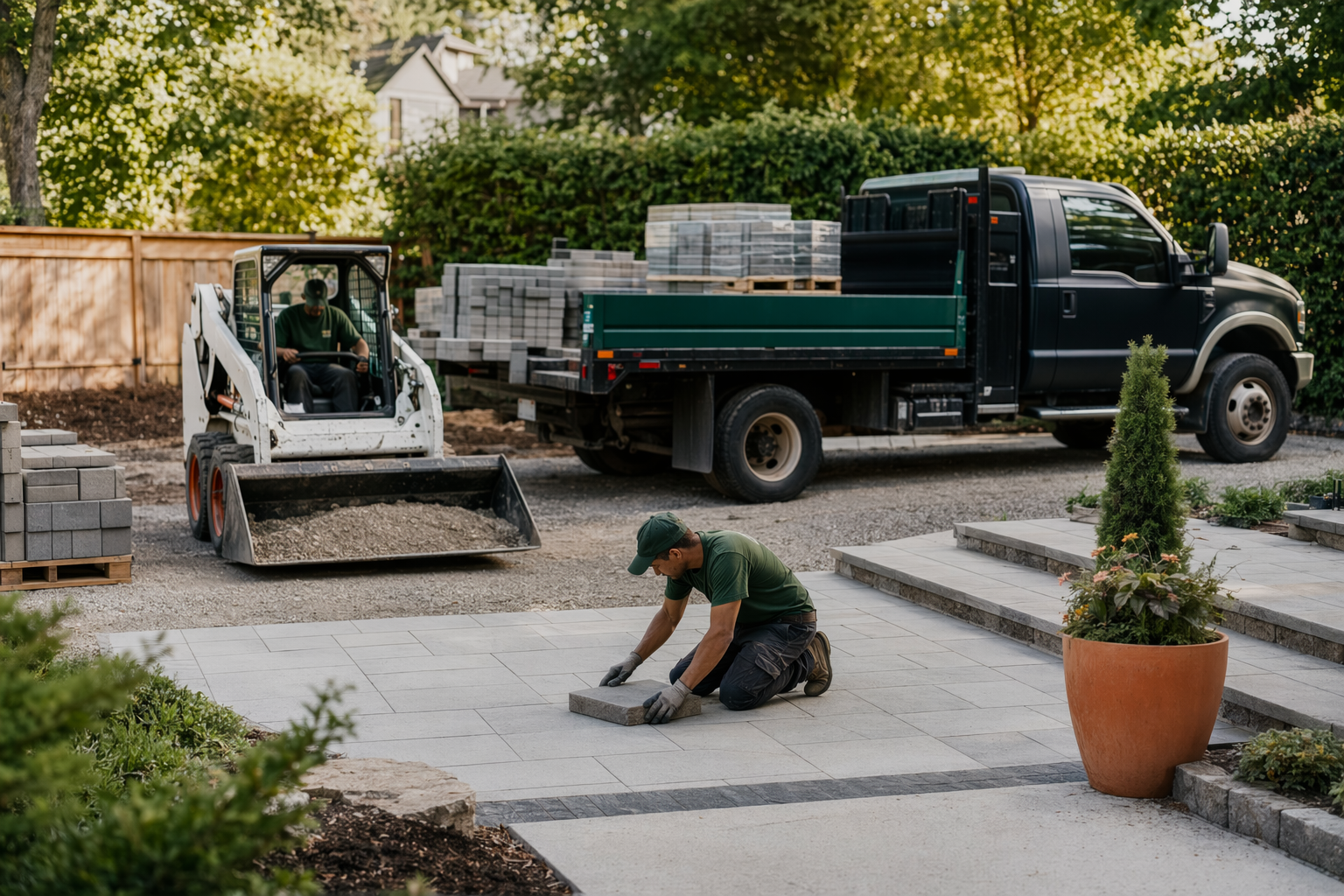
Most retaining-wall and grading jobs begin with layout, excavation, and base preparation. This early part is easy to overlook, but it is one of the most important parts of the whole project. The ground has to be prepared correctly for the wall system being used, and the builder needs room to place backfill and drainage materials properly.
Then comes the wall itself. Common choices include concrete wall block, natural stone, poured concrete, timber in some cases, and larger segmental systems for heavier-duty jobs. Each material has a different look, cost, and maintenance level. Concrete block systems are common because they offer a clean look and many color options. Natural stone often costs more but gives a more custom, timeless feel.
After the structure and backfill are in place, the builder finishes the area around it. That may include grading the yard, tying drainage into the rest of the site, rebuilding a lawn edge, adding steps, caps, lighting, plant beds, or connecting the wall to a patio or walkway. The finish work matters because a wall should look like part of the yard, not just a fix.
If you are comparing proposals, ask what is included before and after the wall goes in. Cleanup, haul-away, access repairs, sod or seed, drainage outlets, and capstones can change the total price a lot.
Typical material choices and where each makes sense
Segmental concrete block walls are one of the most common options for residential yards. They can work well for many heights and styles, and they are often easier to match with patios, walkways, and outdoor living features. They are a practical choice for many homeowners who want a clean, durable result without the price of hand-laid natural stone.
Natural stone walls have a more organic look and can fit beautifully into older homes, wooded yards, or high-end backyard designs. They usually cost more because materials and labor are more demanding. Poured concrete can be a fit for some modern designs or specific site needs, but the finish and detailing matter a lot.
Grading materials can include topsoil, fill, gravel, and erosion-control products depending on the job. Drainage parts may include gravel backfill, perforated pipe, catch basins, channel drains, or surface swales. The right mix depends on the slope, water flow, soil, and what is nearby.
There is no single best material for every yard. The best choice depends on the wall height, the look you want, your budget, drainage needs, and the site itself.
Honest cost ranges and what moves the price
Retaining walls, grading, and drainage can range from a modest fix to a major site project. Small drainage improvements or minor regrading may start around $1,500 to $5,000. Many residential retaining wall projects land somewhere around $4,000 to $15,000+. Larger walls, difficult access, major regrading, engineered plans, multiple tiers, stone materials, or extensive drainage can push totals to $15,000 to $40,000 or more.
These are general ranges, not quotes. The real number depends on wall height and length, material choice, drainage needs, slope, soil, demolition, access for equipment, permit requirements, finish work, and your local market. A yard with tight side-yard access or poor drainage can cost much more than a straightforward install in an open backyard.
If your project is part of a larger backyard plan, ask for costs to be broken out clearly. It helps to know how much of the budget is going to earthwork, drainage, the wall system, steps, lighting, planting, and surface restoration. That makes it easier to compare written quotes and decide where to spend more and where to simplify.
A low bid is not always a bargain on this kind of work. If drainage, base prep, haul-away, permits, or engineering are missing from the proposal, the final cost may rise later or the wall may not perform well.