Services
Paver and stone patio building
A paver or stone patio can turn an empty yard into a place to eat, relax, and gather. This guide explains how patio building usually works, what affects cost, and how to compare local builders without feeling rushed.
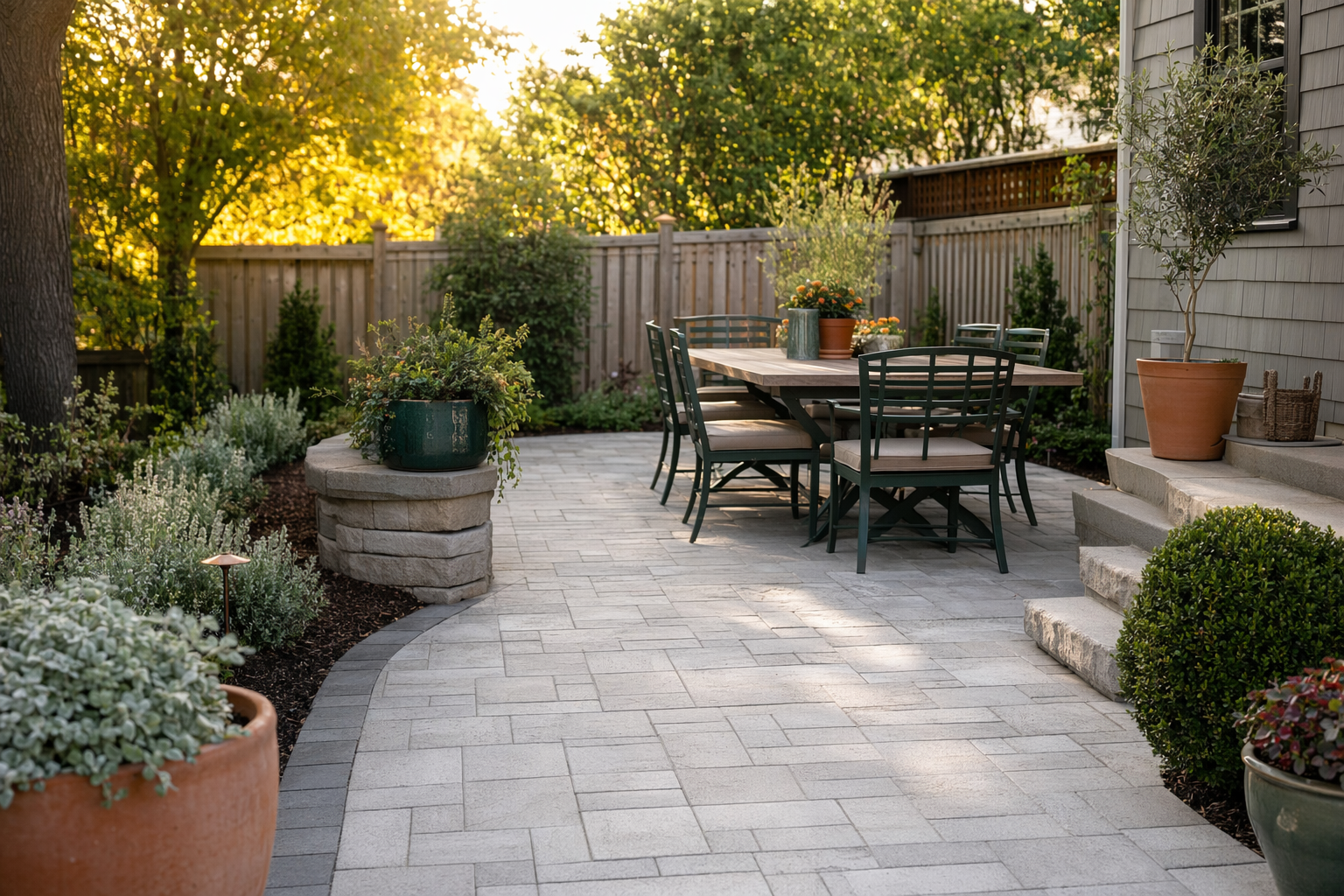
What paver and stone patio building usually includes
A patio is a finished outdoor floor built for seating, dining, grilling, or just making the yard more usable. Some homeowners want a simple square space for a table. Others want a larger patio with steps, borders, lighting, a fire pit, or space tied into a walkway, pergola, or full backyard plan.
Two common choices are concrete pavers and natural stone. Pavers are popular because they come in many colors, sizes, and patterns, and they can fit a wide range of budgets. Natural stone gives a more organic look, but the material cost and labor can be higher depending on the stone and the layout.
A builder will usually look at the size of the area, how the yard slopes, where water goes, how easy the site is to reach, and how the patio will connect to the house and the rest of the yard. Those details matter because a patio is not just the surface you see. The parts below it — base prep, drainage, edging, and compaction — are what help it stay level and last.
If you are still comparing ideas, our services and projects pages can help you think through what fits your yard and budget.
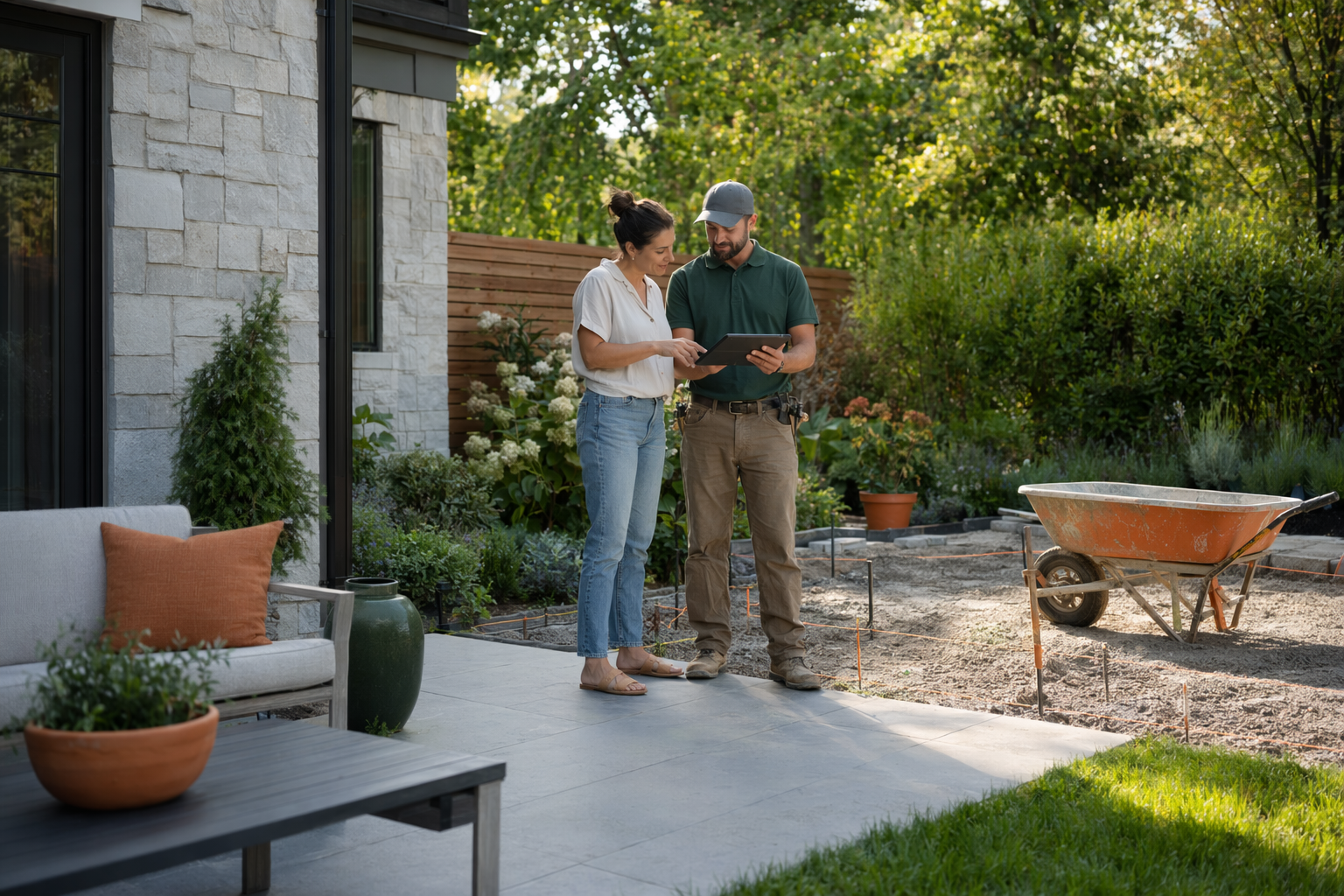
How builders plan the job: layout, base prep, drainage, and finishing details
Good patio work starts before any pavers or stone are laid. A builder will usually measure the area, talk with you about how you want to use the space, and check practical issues like slope, drainage, and access for materials and equipment. They may also ask about HOA rules, property lines, and whether you want to add features now or leave room for them later.
Most patio projects involve excavation, grading, a compacted base, bedding material, the patio surface, and edge restraint or border details. The exact method can vary by material, site conditions, climate, and local practice, so this is general information only — not construction or engineering advice. If the project involves unusual drainage, major grade changes, nearby structures, or retaining work, a licensed builder and sometimes a licensed engineer may be needed.
Drainage is especially important. A patio should not send water toward the house or create puddles that make the surface unpleasant to use. In some yards, simple grading may be enough. In others, builders may suggest drains, swales, or other drainage work. What is allowed can vary by area, so local codes and the building department matter.
Finishing details also affect how the patio looks and feels. Homeowners often choose a running bond, herringbone, or random pattern; a contrasting border; steps; seat walls; lighting; or transitions into grass, gravel, or planting beds. These details can make a basic patio feel custom, but they also add labor and cost.
Material choices and the trade-offs to know
Concrete pavers are often the most straightforward choice for homeowners who want a clean, durable patio with lots of design options. They come in many shapes, colors, and textures, and damaged pieces can often be replaced individually. Prices can range from budget-friendly to premium depending on the brand, thickness, finish, and pattern.
Natural stone can create a beautiful, more relaxed look. Popular options vary by region, and the right choice depends on appearance, thickness, finish, and local availability. Some stone is sold in more regular shapes, while other stone has irregular edges that take more time to fit. That extra labor is one reason stone patios often cost more than paver patios.
You may also need to choose edging, joint material, steps, coping, lighting, and whether to seal the surface. Sealing can enhance color on some materials and may help with staining, but it also adds cost and future maintenance. Not every patio needs every upgrade.
A good builder should be able to explain the practical side of your choices, not just the look. Ask what tends to hold up well in your climate, what needs more maintenance, and what may show dirt, wear, or shifting more easily over time.
What a paver or stone patio may cost
For many homeowners, a professionally built patio starts around a few thousand dollars for a small, simple area and can climb well into the tens of thousands for a larger custom project. As a very general national-style range, a basic patio may fall around $15 to $35 per square foot, while mid-range to higher-end paver or natural stone work can run roughly $35 to $70+ per square foot. Large custom patios with steps, seat walls, lighting, drainage work, or premium stone can go higher.
These are not quotes. The real number depends on patio size, material choice, pattern complexity, borders, access to the yard, demolition of old concrete, slope, drainage needs, soil conditions, local labor costs, and your area. A small patio can cost more per square foot than a big simple one because there are still setup and mobilization costs.
Some builders price as one total project, while others may break out site prep, base work, material, edging, drainage, demolition, and optional upgrades. That breakdown can be helpful when you compare quotes because it shows where the money is going.
If you want to get your bearings before talking to builders, our costs page can help you think in ranges. Then compare a few written quotes for the same scope so you are looking at apples to apples.
What to watch for when comparing patio builders
A patio can look simple from the top and still fail early if the prep work is weak. That is why the cheapest quote is not always the best value. A strong builder should be willing to explain, in plain language, how they handle excavation, base prep, compaction, drainage, edging, and cleanup, even if they do not share every technical detail.
Ask whether the company is licensed and insured for this kind of work in your area, and verify it. Get the scope, materials, and price in writing. If permits are needed, ask who is handling them. Rules vary by area, and some patio projects need more review than homeowners expect — especially if the work connects with grading, drainage, electrical, gas, or retaining walls. Gas and electrical work require a licensed pro and permits.
Clear red flags include:
- large cash-only deposits
- no license or no insurance
- vague quotes with missing details
- no written contract
- pressure to decide on the spot
- promises that sound too cheap or too fast to be realistic
It is smart to compare a few quotes, ask what is included, and make sure each builder is pricing the same job. You stay in control: you set the budget, compare written quotes, choose who to hire, and confirm the scope and price before work starts.
How Slate & Sod can help you find a local patio builder
Slate & Sod is a free matching service for homeowners. We are not a contractor, builder, or design firm, and we do not perform construction work. We help you plan your project in a practical way and connect with licensed, insured local outdoor-living and hardscape builders so you can compare options.
When you reach out through get matched, we only collect basic contact and project intent details: your name, phone, optional email, project type, ZIP code, rough budget, and preferred language. That helps us understand what you are planning and connect you with local builders who handle that kind of work. The service is always free for the homeowner.
Before you talk with builders, it helps to have a rough idea of your patio size, your must-haves, and your budget comfort zone. Even simple notes like “space for a dining table,” “low maintenance,” or “match the house color” can make the conversation easier.
If you are ready to explore options, start with get matched or browse more services and projects.
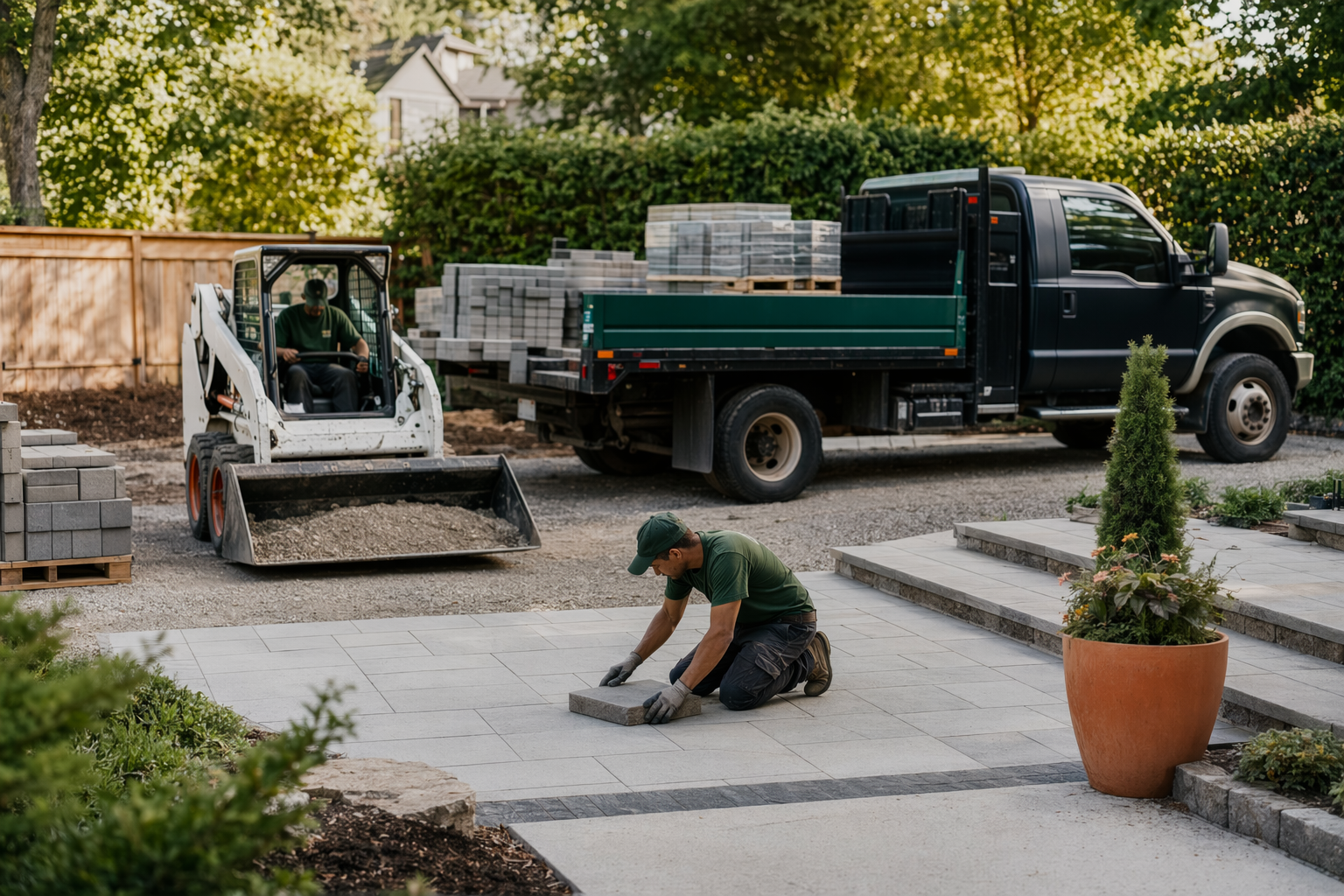
A good patio is more than pretty pavers or stone — the planning, base prep, drainage, and the builder you choose matter just as much.
Common questions
Is a paver patio cheaper than a natural stone patio?
Often, yes, but not always. Many paver patios cost less than natural stone because the material and installation can be more predictable, but the real price depends on the pattern, site conditions, size, and local labor costs.
How long does patio building usually take?
A small, straightforward patio may take a few days, while a larger or more complex project can take longer. Weather, access, drainage work, material availability, and permit timing can all affect the schedule, so timelines are never guaranteed.
Do I need a permit for a patio?
Sometimes. Permit rules vary by city, county, and HOA, and the answer can change if the project includes grading, drainage changes, retaining walls, gas, or electrical work. Your builder and local building department can clarify what is required.
What should be in a patio quote?
A good quote should clearly describe the scope, materials, approximate size, prep and demolition work if any, drainage or edging details, price, and payment terms. It should also say what is not included so there are fewer surprises later.
Can Slate & Sod give me a quote or build my patio?
No. Slate & Sod is a free matching service, not a contractor or builder, so we do not perform construction work or issue project quotes. We help you connect with licensed, insured local builders so you can compare written quotes and decide who to hire.