Services
Fire pits, fireplaces and fire tables
A fire feature can make a backyard feel warm, social, and usable on cool evenings. This guide explains the main types, common fuel choices, honest cost ranges, and how to plan safely with a licensed local builder.
What fire features are, and why homeowners like them
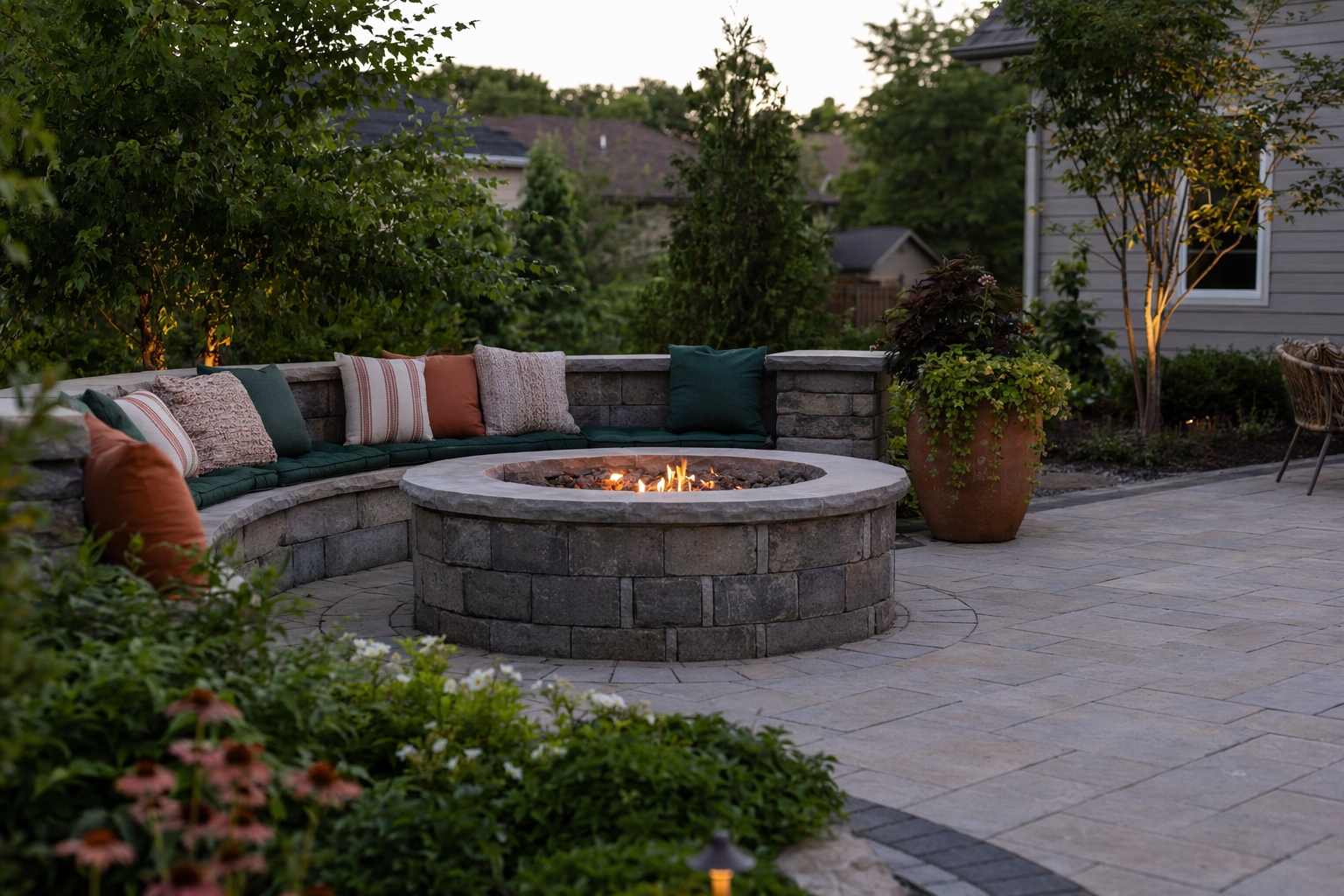
Outdoor fire features usually fall into three groups: fire pits, fireplaces, and fire tables. A fire pit is the most casual choice for gathering with family or friends. A fireplace feels more like an outdoor room, with a taller structure that can add privacy and a strong focal point. A fire table is often the most compact and furniture-like option for patios and smaller seating areas.
Homeowners often choose a fire feature because it makes the yard feel finished and gives people a natural place to sit and talk. It can also help you enjoy the space in cooler weather, especially when paired with a patio, seating wall, pergola, or outdoor kitchen. You can browse related projects and other services if you are still deciding what fits your yard.
The right choice depends on how you want to use the space. If you picture roasting marshmallows and a simple hangout area, a fire pit may be enough. If you want a more polished look with a defined seating area, a fireplace or fire table may fit better.
Main choices: pit, fireplace, or table — and wood or gas
The first big decision is the style of feature. Fire pits can be round, square, or rectangular, and they may be built from concrete block, stone, brick, or metal components. Outdoor fireplaces are larger and usually built as masonry-style structures or veneered frames with stone, brick, or stucco finishes. Fire tables are usually lower-profile units, often using gas, and may be built in or purchased as ready-made products.
The second big decision is fuel. Wood-burning features offer the crackle, smell, and traditional campfire feel many people love. Gas features are cleaner and easier to turn on and off, and they avoid storing wood and cleaning ash. Natural gas can be convenient if a line is available. Propane may work where natural gas is not practical, but tank storage and placement matter.
There is no one best answer for every yard. Some neighborhoods, HOAs, or local rules limit certain fire features or fuels. In some areas, burn restrictions, air-quality rules, setbacks, or permit requirements can change what is allowed. A licensed, insured local builder and the local building department can tell you what applies where you live.
How builders plan and install a fire feature
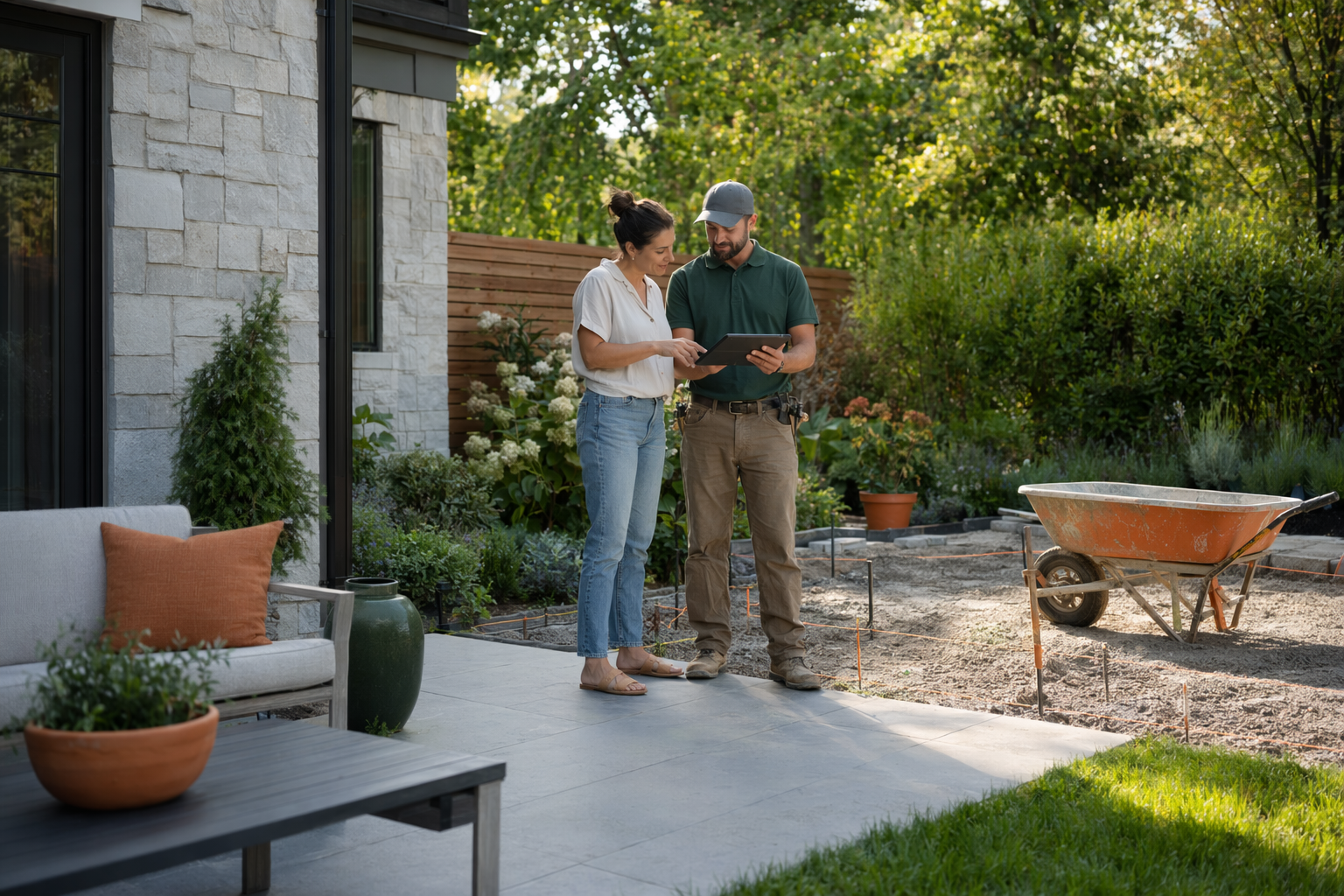
Good planning starts with the location. A builder will look at the size of the yard, nearby structures, seating layout, wind exposure, access to the site, and how people move through the space. They should also consider surface materials, drainage, and the distance from the home, fence lines, pergolas, trees, and anything else that could be affected by heat or sparks.
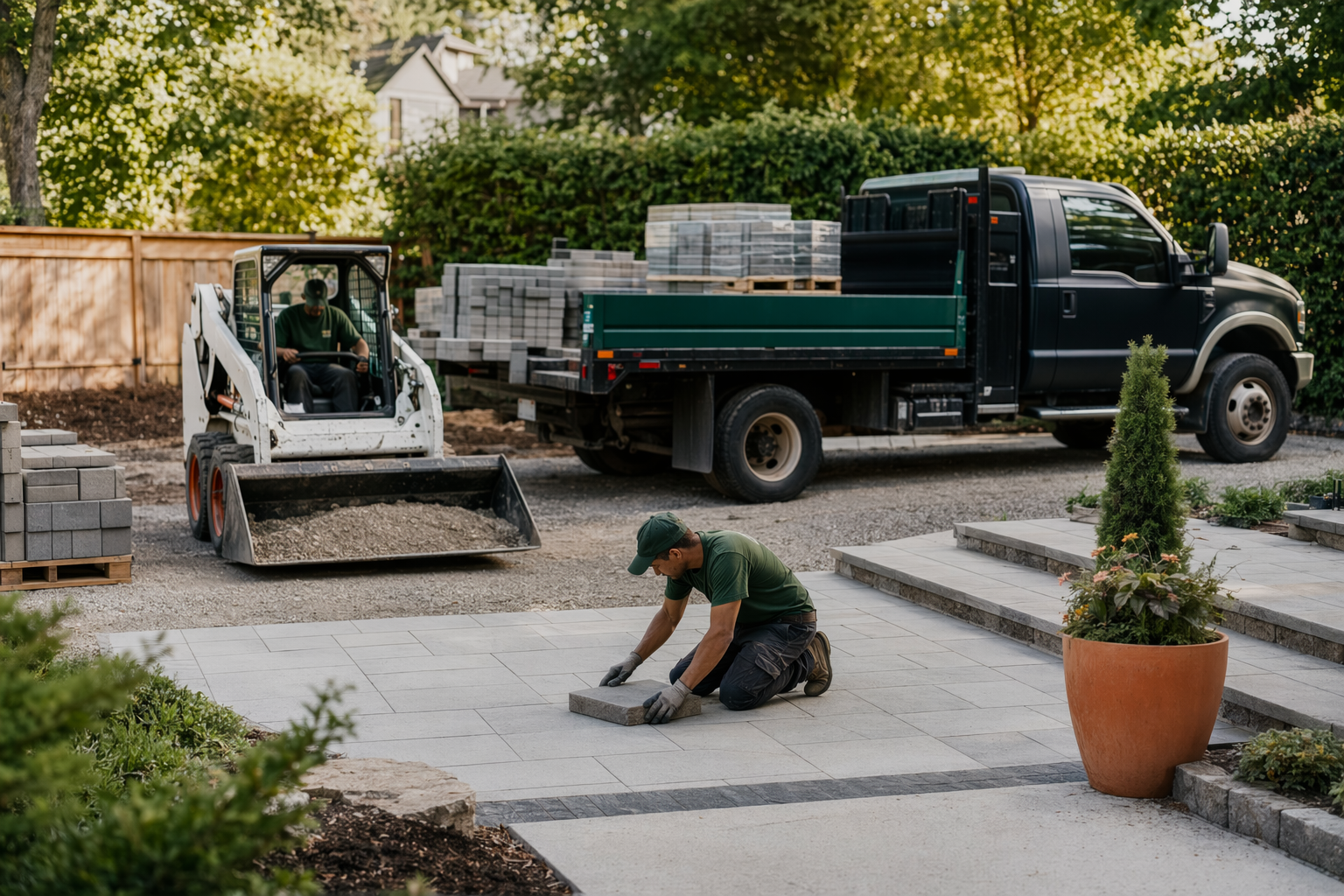
For many projects, the work starts with base preparation. If the fire feature sits within a patio, the builder may excavate, compact the sub-base, add the proper base material, and install the finished surface so the area stays level and drains well. The exact base depth and assembly depend on the project, the soil, weather, and local practice. Drainage matters because standing water, frost movement, and poor soil prep can shorten the life of the patio or structure.
Then comes the fire feature itself. A builder may assemble a manufactured fire pit kit, construct a veneer over a stable core, or build around an approved burner system for a gas unit. Finishes can include concrete caps, natural stone, brick, porcelain or metal accents, and coordinated seating walls or lighting. For gas and electrical work, use properly licensed pros and expect permits where required. Clearances, venting, shutoffs, and fuel-line details must follow local code and manufacturer requirements.
This is general information only, not construction or engineering advice. For gas, electrical, structural questions, drainage concerns, or larger masonry features, rely on licensed, insured professionals and your local building department. If you are comparing ideas and budgets first, costs can help you think through the bigger picture.
Honest cost ranges — and what changes the price
Outdoor fire feature costs vary a lot. In many US markets, a simple prefab or kit-style fire pit installed in an existing patio area might start around $2,500 to $6,000. A custom built-in fire pit is often around $5,000 to $12,000 or more. Gas fire pits and fire tables with burners, fuel-line work, and upgraded finishes often land higher.
Outdoor fireplaces usually cost more because they are larger, heavier, and more complex. In many areas, a basic outdoor fireplace project may start around $8,000 to $18,000, while larger custom fireplaces with stone veneer, seating walls, lighting, wood storage, chimneys, or integrated patios can run $20,000 to $40,000+. A built-in gas fire table or custom fire wall can also fall into that wider range depending on materials and utility work.
These are general ranges, not quotes. The real number depends on size, fuel type, burner system, utility access, materials, finish level, site access, slope, drainage, soil conditions, demolition, and your area. If a gas line has to be extended a long distance, if the yard is hard to reach, or if the feature is part of a full backyard project, costs usually go up.
A low price is not always a good deal if the scope is unclear. Ask what is included: demolition, base prep, utility work, permits, ignition system, burner pan, media, veneer, caps, cleanup, and repair of disturbed areas. Written detail helps you compare one quote to another.
What to watch for before you hire anyone
Fire features involve heat, fuel, and outdoor conditions, so quality and safety matter. Ask whether the builder is licensed and insured for the work they perform, and verify it. If gas or electrical work is part of the project, make sure properly licensed pros handle that part and that permits are pulled when required.
Be careful with bids that seem too vague or too cheap. Red flags include large cash-only deposits, no proof of license or insurance, pressure to decide on the spot, no written contract, and quotes that do not clearly explain materials, fuel type, utility work, clearances, or cleanup. You want the scope and price in writing before work starts.
It also helps to ask who is responsible for permits, site protection, utility coordination, final cleanup, and warranty details. A good builder should explain the trade-offs between wood and gas, simple kits and custom builds, and different finish materials without pushing you into the most expensive option.
The homeowner stays in control. Set a budget you are comfortable with, compare a few written quotes, and choose the builder you trust after you understand the scope, price, and timeline.
How Slate & Sod helps you get matched
Slate & Sod is a free matching service for homeowners. We are not a contractor, builder, or design firm, and we do not perform construction work. We help you plan the project in plain language and connect with licensed, insured local outdoor-living and hardscape builders so you can compare options.
You tell us the basics: your name, phone, optional email, project type, ZIP code, rough budget, and preferred language. We use contact and project-intent details only so we can help match you for the kind of work you want. Then you can speak with local pros, ask questions, compare written quotes, and decide who to hire.
If you are ready to start, visit get matched. If you are still comparing project types, you can also look through services or browse projects for ideas before taking the next step.
- Free for homeowners
- You compare written quotes and choose who to hire
- Best for homeowners who want to plan budget and materials first
A good fire feature starts with the right fuel, location, and budget — then a licensed local builder can help you do it safely and clearly.
Common questions
Is a gas fire pit better than a wood-burning one?
It depends on how you want to use it. Wood gives a classic campfire feel, while gas is easier to start, cleaner to use, and often simpler for regular entertaining. Local rules, HOA limits, and utility access can also affect the decision.
Do outdoor fire pits and fireplaces need permits?
Often, yes, especially for gas lines, electrical components, and larger built-in structures. Permit rules vary by area, so check with your local building department and use licensed pros for gas and electrical work.
How far should a fire feature be from my house or fence?
The right clearance depends on the product, fuel type, local code, and site conditions. Follow manufacturer requirements and local rules, and have a licensed builder review placement before work begins.
How long does it take to install a fire feature?
A simple project may move quickly, while a custom fireplace or a feature tied into a larger patio project can take much longer. Timing depends on design, permits, weather, materials, utility work, and builder schedule, so ask for a written timeline estimate.
What should be included in a quote for a fire feature?
Look for clear details on the size, fuel type, materials, base prep, utility work, permits, finishes, cleanup, and what is not included. Written quotes make it much easier to compare builders fairly.
Can Slate & Sod build my fire pit or fireplace?
No. Slate & Sod is a free matching service, not a contractor or builder. We help homeowners understand the project and connect with licensed, insured local pros.