Services
Decks, pergolas and shade structures
Thinking about a deck, pergola, pavilion, or covered patio? This guide explains the basic choices, typical cost ranges, and how to compare local builders so you can plan the space before you commit.
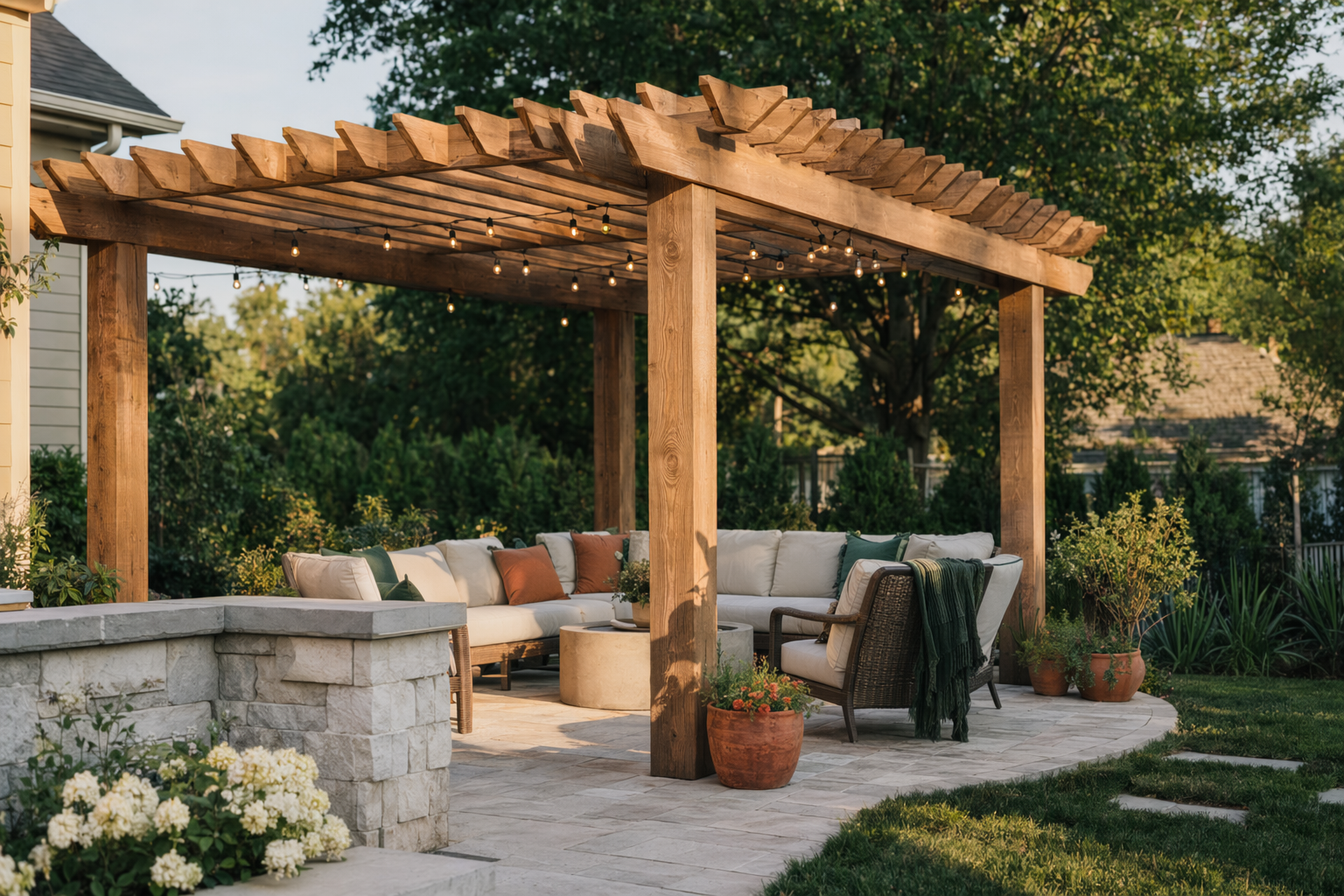
What these projects are — and why people choose them
Decks and shade structures help turn a backyard into a place you will actually use. A deck can create a level area for dining, grilling, and relaxing. A pergola adds light shade and structure. A pavilion or covered patio gives stronger sun and rain protection and can make the space feel more like an outdoor room.
Some homeowners want a simple platform outside the back door. Others want a full setup with stairs, railings, lighting, fans, privacy screens, or a roof. The right choice depends on how you use the yard, your budget, your climate, and what your local codes or HOA allow.
In many projects, a builder may also coordinate the deck or structure with nearby hardscape work like a patio, walkway, outdoor kitchen, or fire feature. If you are comparing ideas, our projects and services hubs can help you sort out what belongs in phase one and what can wait.
Common options: deck, pergola, pavilion, or covered patio
A deck is usually a raised or low platform built from wood or composite boards over a framed structure. It works well where the yard slopes, where you want a clean transition from the house, or where you want a defined lounging area above grade.
A pergola is an open-roof structure that gives partial shade and visual shape. It can stand over a deck, patio, or outdoor kitchen. It is often chosen for style, climbing plants, string lights, or a more finished look without the cost of a fully covered roof.
A pavilion or covered patio gives more protection from sun and weather. That can make the space more usable in hot climates or rainy areas. These projects are usually more complex because they may involve larger footings, roof framing, drainage planning, permits, and sometimes electrical work for lights, fans, or outlets.
Attached structures connect to the house. Freestanding structures sit apart from it. Attached work can feel seamless, but it may also involve more permit and waterproofing details. Freestanding designs can be simpler in some yards and may work better if you want flexibility in placement.
How a builder usually plans and builds it
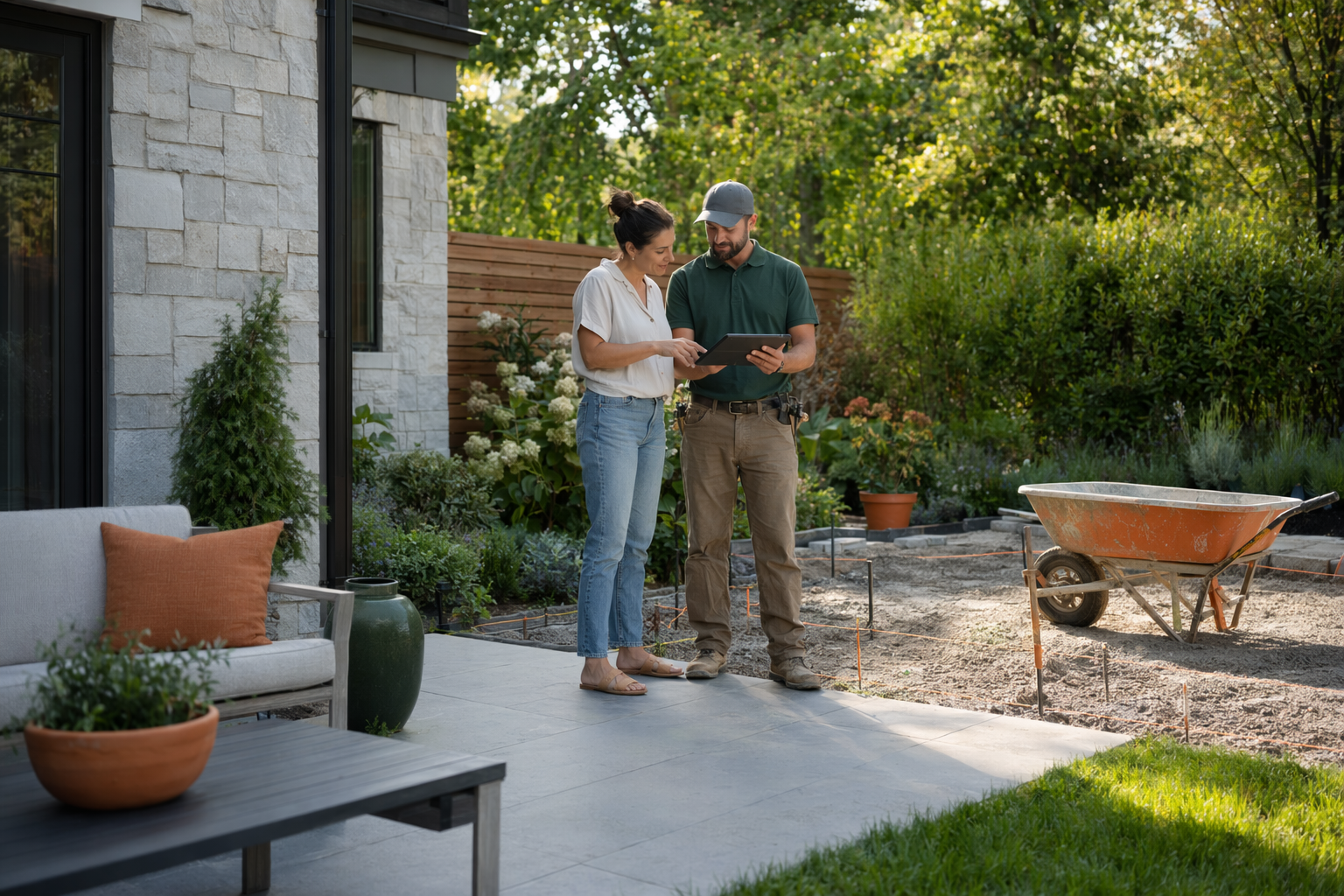
A good builder starts with layout, use, and site conditions. They should look at the size of the space, how people will move through it, where the sun hits, how water drains, how close the project is to the house or property line, and whether the yard slopes. They should also ask about furniture, grill placement, privacy, railings, stairs, and whether you may want lighting or a future outdoor kitchen.
For decks, the planning often includes the framing system, support posts, footings, attachment details if the deck connects to the house, board direction, stairs, and railing style. For pergolas and roofed structures, planning also includes post spacing, beam size, roof style, finish materials, and how rainwater will be handled. This is general information only — exact structural design, engineering, and code requirements must be handled by licensed pros and, where required, a licensed engineer and the local building department.
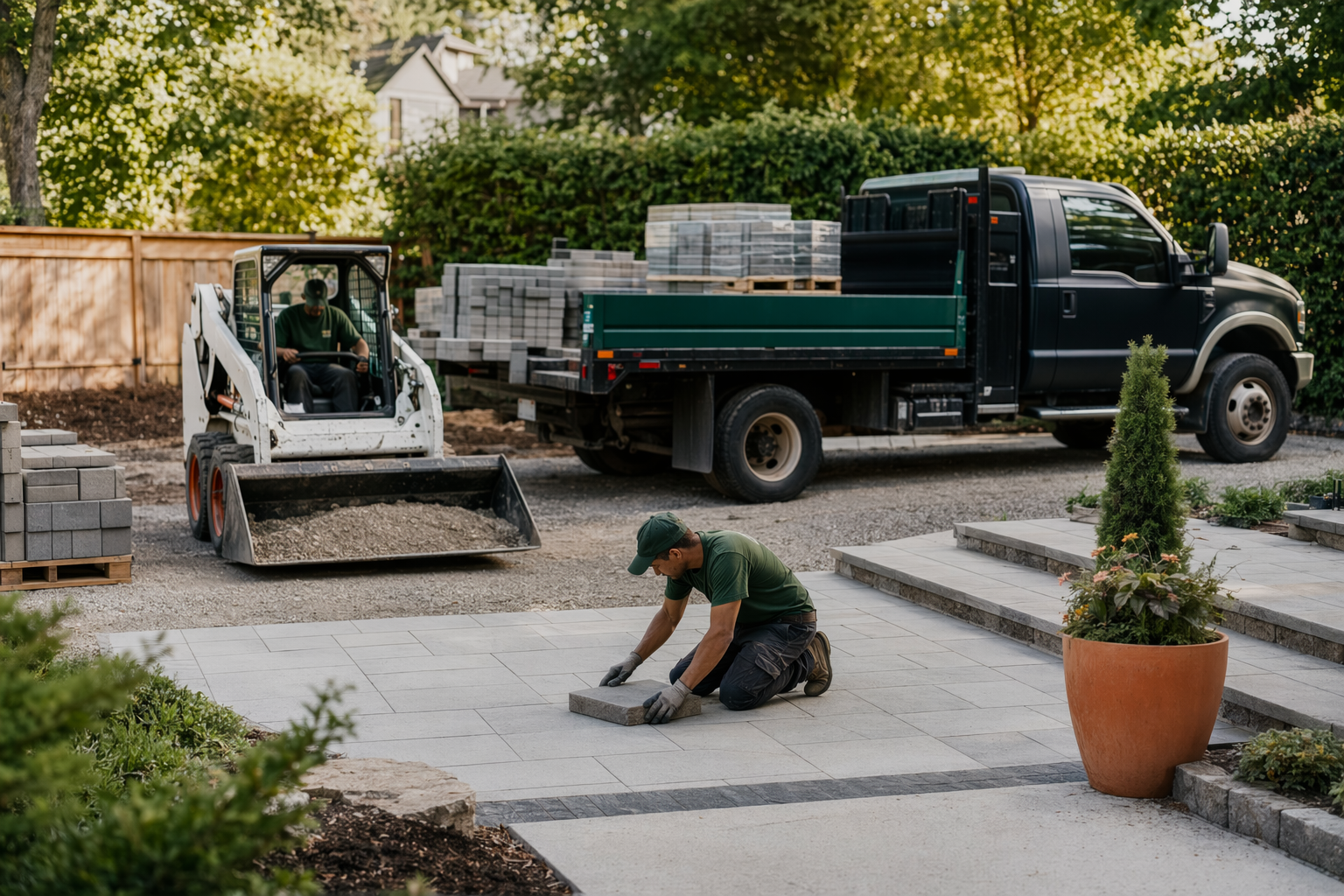
Base prep still matters even when the project is not a paver patio. The area under and around a deck or structure may need grading, drainage work, weed control, gravel, or splash management so water does not collect where it should not. For covered areas, builders should think through gutters, downspouts, runoff, and where that water goes next.
Finishes affect both look and upkeep. You may compare pressure-treated wood, cedar, redwood, tropical hardwoods, composite decking, aluminum railings, wrapped posts, stained wood, painted trim, privacy panels, or ceiling finishes under a roof. For electrical or gas features like lights, heaters, outlets, fans, or a fireplace nearby, use licensed professionals and expect permits where required.
Materials, upkeep, and trade-offs
Wood decks often cost less upfront than composite, but they usually need more ongoing care. Depending on the species and your climate, that may mean cleaning, staining, sealing, and watching for warping, splinters, or rot over time. Some homeowners like the natural look and lower initial cost enough to accept the extra maintenance.
Composite decking usually costs more upfront, but many people choose it for lower maintenance and a more uniform appearance. It still needs cleaning, and product quality varies, but it can be a practical fit for busy families who do not want regular staining. Railings, stairs, skirting, trim details, and hidden fasteners can change the final cost a lot.
Pergolas come in wood, metal, vinyl, and other materials. A simple pergola can be mostly about appearance and partial shade, while a larger custom pergola can become a major focal point. Pavilions and roofed structures can use shingles, metal roofing, or ceiling finishes that match the home, which often raises cost but can make the yard feel more complete.
If your goal is a whole backyard upgrade, it helps to decide early which features need to happen now and which can wait. A clear plan can prevent rework later, especially if the deck or shade structure needs to line up with a future patio, pool deck, or kitchen. Our costs hub can help you compare project types before you talk with builders.
Honest cost ranges — and what changes the number
Costs vary a lot by size, height, material, roof type, access, permits, and your local market. These are general ranges only, not quotes. A small basic wood deck may start around $6,000 to $15,000. A mid-size composite deck with railings and stairs often lands around $15,000 to $35,000 or more. Larger, more customized decks can go well beyond that.
A simple pergola may start around $3,000 to $10,000 depending on size and material. A larger custom pergola with finish details, lighting, or privacy elements may run $10,000 to $25,000+. Pavilions and covered patios are usually a bigger jump because of roof framing, footings, and finishing work. Many fall somewhere around $15,000 to $50,000+, and premium designs can exceed that by a lot.
The price usually goes up when the project is large, high off the ground, hard to access, built on a slope, tied into the house, or includes custom stairs, wide spans, premium materials, lighting, fans, or drainage work. Demolition of an old deck, permit requirements, HOA review, and matching the home's finishes can also add cost.
The best way to avoid sticker shock is to set a realistic budget range early and tell builders what matters most to you. If your budget is tight, ask what can be phased. For example, you might build the main deck now and add a pergola or finished ceiling later.
What to watch for — and how to find a qualified local builder
This kind of work can look simple from the yard but involve important structural and code details. That is why it is smart to hire a licensed, insured local builder and verify that information yourself. Ask whether they handle permits, what is included in the scope, who does the work, what materials are specified, and how change orders are handled.
Red flags are worth taking seriously: a large cash-only deposit, no license or insurance, vague pricing, no written contract, or pressure to decide that day. Get the scope and price in writing, compare a few quotes, and make sure the plan clearly covers stairs, railings, footings, drainage, cleanup, and finish details. If electrical or gas is involved, confirm that licensed pros and permits will be used where required.
Slate & Sod is not a contractor, builder, or design firm, and we do not perform construction work. We are a free matching service that helps homeowners connect with local outdoor-living and hardscape builders. You stay in control: you set the budget, compare written quotes, choose who to hire, and confirm the scope and price before work starts.
If you want help getting started, you can get matched for free. We only collect basic contact and project-intent details like your name, phone, optional email, project type, ZIP code, rough budget, and preferred language.
Decks and shade structures can make your yard much more usable, but the right design, materials, drainage, permits, and builder matter just as much as the look.
Common questions
Is a deck cheaper than a covered patio or pavilion?
Often, yes, but not always. A basic deck is usually less expensive than a roofed structure, while a large composite deck with custom stairs and railings can cost more than a simple covered area. Size, materials, site conditions, and local labor costs make a big difference.
Do I need a permit for a deck or pergola?
Very often, yes, especially for decks, roofed structures, electrical work, and anything attached to the house. Permit rules vary by area, so check with your local building department and ask the builder what is required.
What is lower maintenance: wood or composite decking?
Composite is usually lower maintenance over time, but it costs more upfront. Wood may cost less at first, but it generally needs more cleaning, staining, sealing, and repair over the years.
Can a builder add lights, fans, or heaters to a shade structure?
Often, yes, but electrical work should be done by a licensed professional and may require permits. For gas heaters or fire features, use a licensed pro as well and confirm code and clearance requirements locally.
How many quotes should I get?
Many homeowners compare at least two or three written quotes. That helps you compare scope, materials, timeline expectations, and pricing more clearly instead of choosing based on one number alone.
What does Slate & Sod do?
Slate & Sod is a free matching service for homeowners, not a contractor or builder. We help you connect with local outdoor-living professionals so you can compare written quotes and decide who to hire.