Services
Decorative concrete and masonry work
Decorative concrete and masonry can turn a plain yard into a patio, entry, seat wall, or set of steps that looks finished and built to last. This guide explains the common options, typical cost ranges, and how to compare local builders without getting rushed.
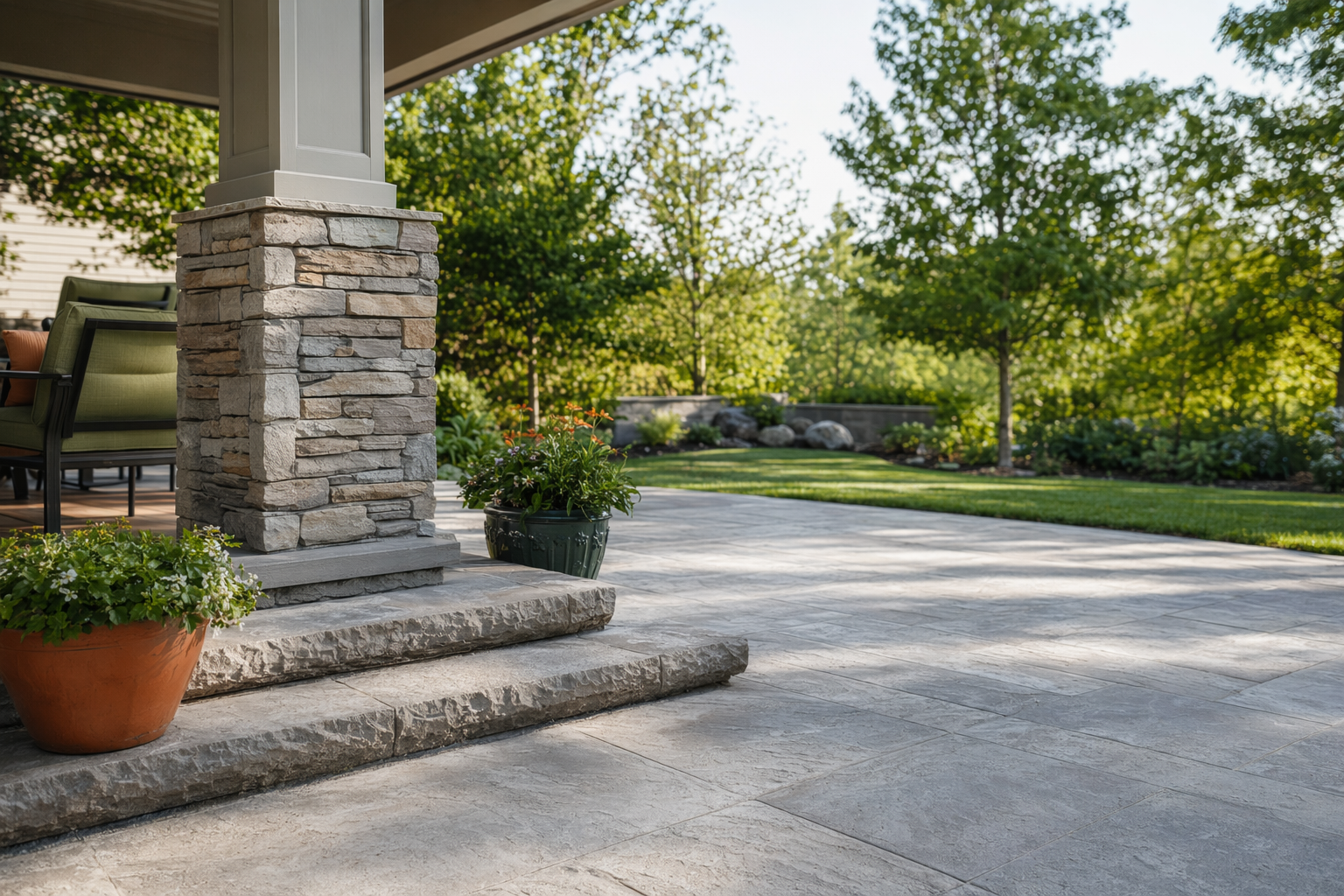
What decorative concrete and masonry work includes
This kind of work covers a wide range of outdoor projects: poured concrete patios, stamped concrete that imitates stone or brick, broom-finish walkways, masonry steps, stone veneer on outdoor kitchens or fireplaces, garden walls, seat walls, and other small hardscape features. Some homeowners want a simple clean surface that is easy to maintain. Others want a more detailed look with texture, borders, color, or stone facing.
Concrete and masonry can work well for patios, paths, pool areas, entry steps, outdoor kitchens, and accent features. The best choice depends on how you want the space to look, how much maintenance you are comfortable with, your climate, and your budget. A stamped concrete patio may give you a decorative look for less than full natural stone, while brick or stone masonry can feel more traditional and may be easier to repair in small sections.
Every project also depends on the site. Slope, drainage, soil, tree roots, access to the yard, demolition of old surfaces, and local weather all affect how the work should be planned and priced. This page is general information only, not construction or engineering advice. A licensed, insured local builder should review your site, and where needed, an engineer and local building department should guide structural and code-related work.
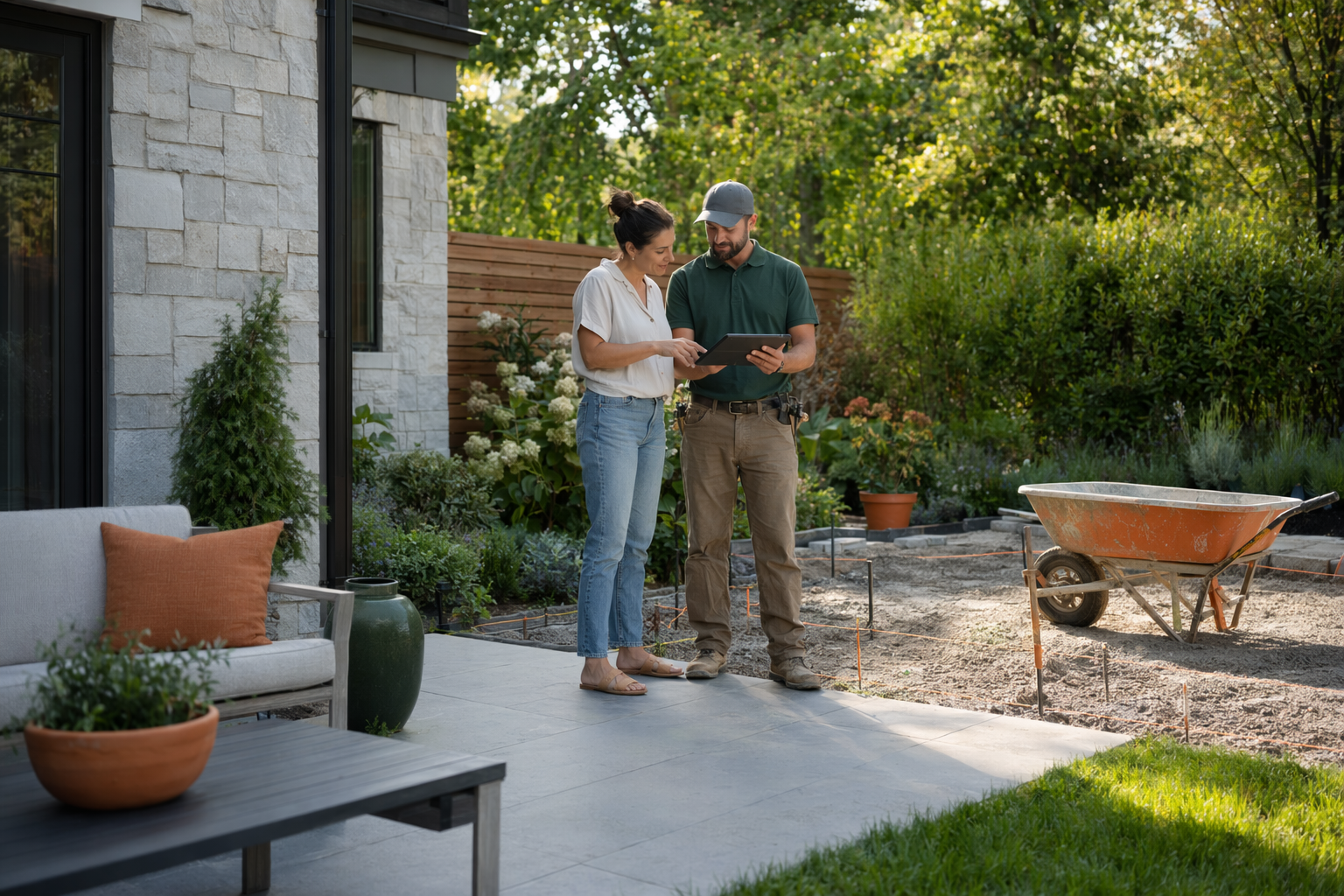
How builders plan the job: layout, base prep, drainage, and finishes
Good decorative concrete and masonry work starts long before the surface goes in. A builder usually begins by measuring the space, asking how you want to use it, checking slope and drainage, and looking at how water already moves through the yard. If water sits near the house, runs toward the patio, or collects at the bottom of a slope, that should be addressed in the plan. Drainage details matter because even a beautiful surface can become a problem if water is trapped under it or pushed toward the foundation.
Base prep is one of the biggest quality issues. Depending on the project, that may include excavation, grading, compacted base material, forms, reinforcement, joints, edge restraint, and careful control of height and pitch. Masonry projects may also involve footings or other support conditions depending on what is being built. Exact methods vary by area, soil, frost conditions, and code requirements, so this is work for a qualified local pro.
Finishes come after the structure of the job is planned. For concrete, common finishes include broom finish, smooth finish where appropriate, exposed aggregate, integral color, stain, borders, scoring, and stamped patterns that imitate slate, tile, wood plank, or stone. For masonry, choices include brick, concrete block, cast stone, natural stone, stone veneer, capstones, mortar color, and joint style. The finish changes the look, but also the price and upkeep.
If your project includes lighting, outlets, drainage lines, or a gas-fed fire feature, a licensed professional and permits are required for that work. Slate & Sod is not a contractor or design firm. We are a free matching service that helps homeowners connect with licensed, insured local builders for projects they are planning.
Common project types and what homeowners usually choose
For patios and walkways, many homeowners compare plain poured concrete, decorative concrete, pavers, and natural stone. Plain concrete is often the most budget-friendly starting point. Decorative concrete adds pattern, color, borders, or texture. Pavers cost more in many cases but can be easier to repair piece by piece. Natural stone usually brings the highest material cost, but many people love the look.
For steps, seat walls, and vertical features, masonry becomes more important. Steps can be poured concrete, faced with stone, built from block and veneer, or made with precast or natural stone treads. Seat walls and low garden walls are often block-based with a veneer or cap. Stone veneer is also common on outdoor kitchens, columns, fireplaces, and the visible face of retaining features.
Stamped concrete is popular because it gives a decorative look over a larger area, but it is not the right fit for every homeowner. It can crack like other concrete, color can weather over time, and repairs may be visible. Masonry and paver systems can also shift or settle if base prep is poor, but individual sections are sometimes easier to replace. A good builder should explain these trade-offs clearly instead of pushing just one material.
Honest cost ranges and what drives the price
Costs vary a lot by region, project size, material choice, access, demolition needs, site prep, and details. These are general US ranges, not quotes. As a rough starting point, basic poured concrete for a patio or walkway may run about $8-$18 per square foot. Decorative or stamped concrete often lands around $14-$30+ per square foot. Masonry walls, steps, veneer, and custom features are usually priced by the feature rather than by simple square footage, and costs rise quickly when the work is detailed or structural.
A small set of masonry steps might start in the low thousands, while larger custom entry steps, seat walls, or stone-faced outdoor features can run several thousand to well over $10,000 depending on layout and materials. Stone veneer commonly adds meaningful cost because of labor, corner details, prep, and the material itself. If you are comparing patios, walls, and steps together, a full decorative concrete and masonry project often falls somewhere from a few thousand dollars for a simple scope to tens of thousands for a larger backyard build.
What moves the price up or down? Size matters, but details matter too. Curves, borders, multiple colors, demo and haul-away, tight access, drainage fixes, thicker slabs where needed, custom forms, stone caps, premium veneer, and matching existing architecture all add labor and cost. Your location matters too. Labor rates, permit rules, and material availability vary across the US.
If you are budgeting, it helps to decide what matters most first: bigger space, lower maintenance, decorative finish, or premium materials. Then compare a few written quotes with the same scope. You can also explore more general costs and browse other outdoor projects before you talk to builders.
What to watch for when comparing builders
The biggest red flag is a nice-looking surface with poor prep underneath. Ask what site prep is included, how drainage will be handled, what materials are being used below the finished surface, and what finish or sealer is included if any. You do not need to know construction jargon to ask good questions. You just want clear answers in writing.
Also watch for business red flags: large cash-only deposits, no license or no proof of insurance, vague pricing, no written contract, or pressure to decide the same day. A trustworthy builder should be willing to explain the scope, describe what is included and excluded, and give you time to compare options.
Helpful questions to ask include:
- Is your license current for this type of work in my area?
- Can you show proof of insurance?
- What exactly is included in prep, base, drainage, finish, cleanup, and haul-away?
- Are permits needed for this project?
- Who handles electrical or gas work if the project includes those items?
- What maintenance should I expect for this surface?
- What could change the final price after work starts?
The homeowner stays in control. Set your budget, ask for the scope and total price in writing, compare a few quotes, and choose who to hire only when you feel comfortable with the plan.
How Slate & Sod helps you find a local masonry or concrete pro
Slate & Sod helps homeowners who are planning an outdoor-living project connect with licensed, insured local builders. We do not do the construction work ourselves, and we do not give engineering, structural, or legal advice. Our service is free for homeowners.
If you want help getting started, you can use get matched and share basic project details: your name, phone, optional email, project type, ZIP code, rough budget, and preferred language. That is it. We only collect contact and project-intent information so we can help connect you with local builders for the kind of work you are planning.
Before you submit, it helps to have a simple wish list ready:
1. What you want built: patio, steps, wall, veneer, walkway, or another feature
2. Your rough size or area if you know it
3. The look you like: plain concrete, stamped concrete, brick, block, stone, or veneer
4. Your budget range
5. Any timing concerns, HOA rules, or access issues
If you are still comparing ideas, start with our broader services hub and narrow down what fits your yard, maintenance comfort, and budget. Then ask for a few written quotes and choose the builder that gives you the clearest plan.
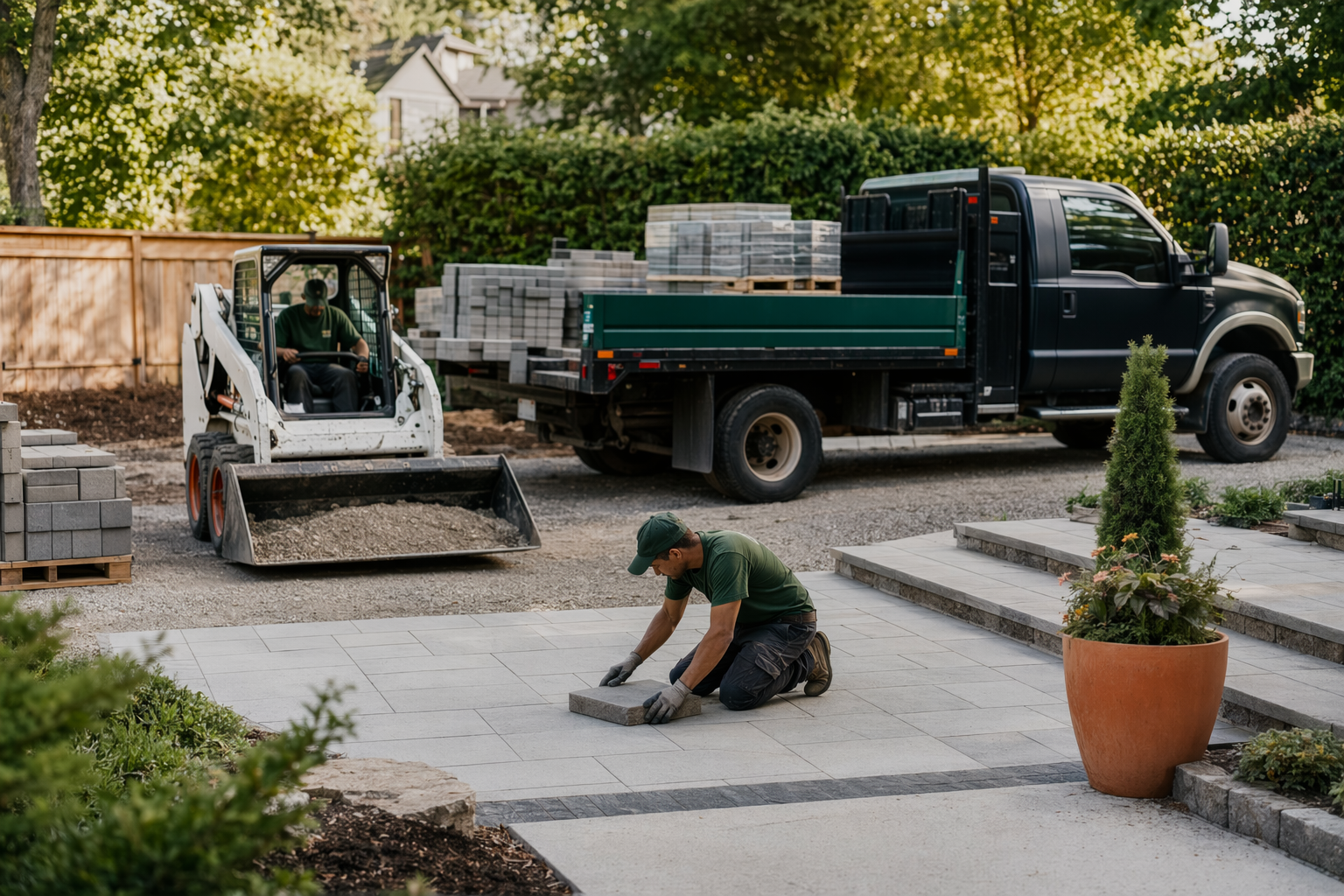
Decorative concrete and masonry can look great, but the real value comes from solid prep, good drainage, clear pricing, and hiring a licensed, insured local builder you trust.
Common questions
Is stamped concrete cheaper than pavers or natural stone?
Often yes, but not always. Stamped concrete is commonly less expensive than natural stone and sometimes less than pavers, but the real price depends on size, pattern detail, color, prep, drainage, and local labor rates.
How long does decorative concrete or masonry work last?
A well-built project can last many years, but lifespan depends on base prep, drainage, climate, materials, and maintenance. Freeze-thaw weather, poor drainage, and weak prep can shorten the life of the surface.
Do I need a permit for concrete or masonry work?
Sometimes. Permit rules vary by city, county, and HOA, and they are more likely for structural walls, steps, electrical, gas, drainage changes, and larger projects. Your builder and local building department can confirm what is required.
What is the biggest mistake homeowners make on these projects?
Focusing only on the top surface and not enough on prep and drainage. A lower price can become expensive later if the base, slope, or water management is not handled correctly.
How do I know if a masonry or concrete builder is qualified?
Ask for a current license if your area requires one, proof of insurance, a written scope, and clear answers about prep, drainage, materials, and permits. It is smart to compare a few quotes instead of choosing the first one who shows up.