Quick answers
What countertops work for an outdoor kitchen?
Outdoor-kitchen countertops need to handle sun, rain, heat, and cleaning. Here are practical material options and trade-offs, plus how to plan your budget and compare local builders—through Slate & Sod, a FREE matching service.
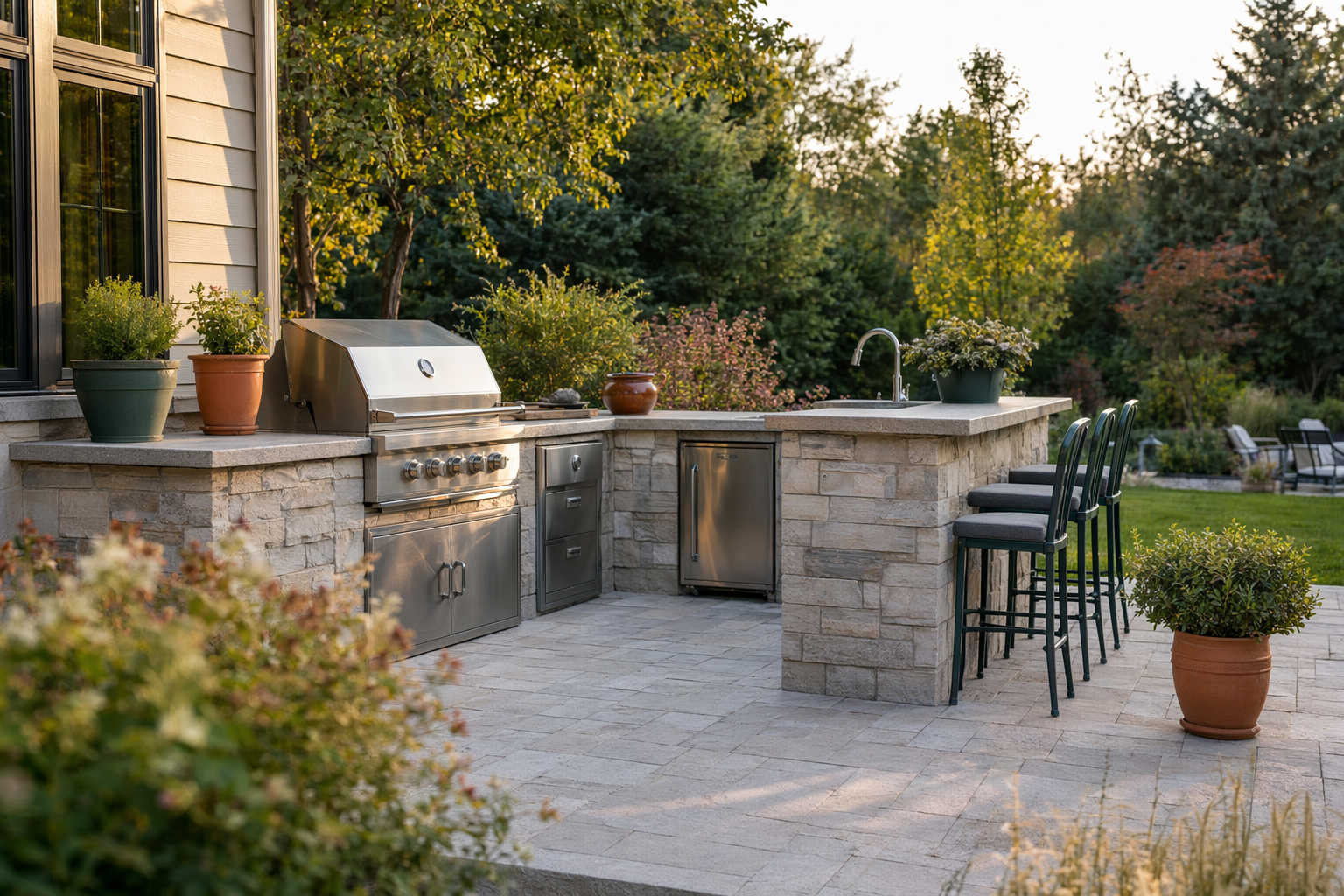
First: the best countertop depends on your climate and how you’ll use the kitchen
If your outdoor kitchen gets lots of sun and weather, you’ll want materials that resist fading, water, and heavy daily cleaning. If you live in a freeze–thaw climate, you’ll also want surfaces that won’t crack or degrade after cold winters.
Before you pick a material, think about your “normal day”: Will you cook year-round? Will you hose the area down after parties? Do you expect to set hot pans directly on the counter? Your answers affect which countertop types are a good fit and which ones can frustrate you later.
This guide is general information. A licensed, insured outdoor-living builder (and sometimes the local building department) can confirm what’s appropriate for your site, including permits and safe installation.

Top countertop materials (and the real trade-offs)
Most outdoor-kitchen countertops fall into a few buckets: stone (natural), stone-like (engineered), tile/brick-style surfaces, and solid-surface products made for outdoor use.
Below are common options homeowners consider—what people like, and what can go wrong.
1) Natural stone (granite, etc.)
Natural stone is popular because it looks great and can be very durable. Many stones are naturally dense and resistant to water.
Trade-offs: Some stones can be more expensive, and the color/pattern can vary. Also, even durable stone often still needs the right finish/sealer for outdoor conditions—your builder should recommend what’s needed for your specific stone.
2) Engineered stone (often quartz)
Engineered stone is consistent in color and typically has a very smooth look.
Trade-offs: Not every engineered stone product is designed for direct outdoor exposure. Heat and sun can be an issue depending on the specific product, and freeze–thaw conditions can be a concern for some installations. Always ask your builder which outdoor-rated product they’re using and how it will be finished.
3) Concrete countertops (poured or pre-cast)
Concrete can be customized in color, edge style, and thickness, which gives you more design flexibility.
Trade-offs: Concrete can stain and can be sensitive to cracking if the system isn’t built for outdoor movement and drainage. It also may require sealing and more ongoing care. Ask for a clear plan for how it will be protected from water and how stains are managed.
4) Tile over a cementitious system
Tile can be affordable for some budgets and lets you pick colors and patterns.
Trade-offs: The countertop is only as good as the waterproofing and grout system underneath. Grout can discolor or need cleaning, and cracks in the substrate can telegraph through over time. Ask what exterior-rated underlayment system will be used and how water will be handled.
5) Outdoor-rated laminate or solid-surface (less common)
Some manufacturers offer products marketed for outdoor use.
Trade-offs: These can be easier to maintain in some climates, but you must verify it’s truly outdoor-rated and compatible with heat. In strong sun, some surfaces can fade or degrade faster than stone.
Tip: A “beautiful sample” isn’t enough—verify the product is rated for outdoor, your climate (including freeze–thaw), and whether hot items can be used safely.
Outdoor durability checklist (what to ask before you choose)
When you talk with builders, ask questions that match how countertops fail outdoors: water intrusion, heat damage, fading, and staining.
Use this quick checklist as a conversation starter:
- Ask whether the countertop material is specifically rated for outdoor use.
- Ask what happens in freeze–thaw climates (if you get winter freezes).
- Ask about sealing: whether it’s required, what product to use, and how often re-sealing is typically needed (general guidance varies by material and local conditions).
- Ask how it handles heat: whether hot pans need a trivet, and what the manufacturer recommends.
- Ask about edges and joints: how water is prevented from getting underneath.
- Ask how the surface will be cleaned (some finishes stain more easily than others).
If your outdoor kitchen includes a grill with lots of heat, make sure the countertop plan accounts for that heat exposure. For any gas or electrical components, you’ll need a licensed pro and required permits.
What do outdoor-kitchen countertops cost? (Typical ranges, not quotes)
Pricing varies a lot based on size, thickness, edges, cutouts (sink/grill areas), and the difficulty of your site (access, slope, drainage). The material choice matters, too—stone tends to cost more than basic surfaces, and “custom” sizes usually raise the total.
Very rough homeowner ranges (to help you budget) often look like:
- Tile countertop approach: commonly lower material costs, but the labor and waterproofing quality matter. Total can still rise if you want premium tile or complex edges.
- Natural stone: often mid-to-high range depending on stone type, thickness, and finish.
- Engineered stone: often mid-to-high, but only if you select a product truly appropriate for outdoor exposure.
- Concrete: can be anywhere from mid-to-high depending on how it’s finished, sealed, and how complex it is.
These are not quotes. Your real number depends on the counter footprint and how it’s integrated with the outdoor kitchen base. If you want, review outdoor kitchen costs for broader budget guidance.
Common builder mistakes & contractor red flags to avoid
Good results come from good material choices and a careful installation approach. A few red flags show up again and again.
Watch for these:
- Large cash-only deposits with no clear written schedule.
- No license/insurance or unclear coverage.
- Vague estimates like “stone work” without listing the countertop material, thickness/finish, sink/grill cutouts, edges, and waterproofing/underlayment details.
- Pressure to decide on the spot or to skip a written contract.
- No plan for how joints and seams will be sealed and protected from water.
A solid next step: ask for a written scope and price breakdown before anyone starts work. That written scope should name the countertop material, brand/product (when available), what’s included, what’s excluded, and the cleanup/disposal plan. For gas or electrical work, the right permits and licensed professionals are essential.
If you’re building a larger outdoor-living setup, also consider whether your area has HOA rules or neighborhood requirements—these can affect materials, colors, and sometimes placement.
How to get matched with a local builder (FREE) and plan your next steps
Slate & Sod is a FREE matching service. We don’t build patios or kitchens ourselves—we connect you with licensed, insured local outdoor-living and hardscape builders who can help you plan and bid your project.
To get matched, share only what we need to route you well: your ZIP code, the outdoor-kitchen countertop type you’re considering (or “not sure”), a rough budget range, and your preferred language.
Then you can compare a few written proposals with the same checklist in mind (outdoor-rated material, heat/water handling, sealing needs, and cutouts). If you want a starting point for conversations, browse guides and help.
Ready to move forward? Use get matched to tell us about your outdoor kitchen plan.
Outdoor-kitchen countertops should be chosen for your weather and heat exposure, so compare outdoor-rated materials, sealing needs, and written scopes with a licensed, insured builder—then plan your budget using realistic cost ranges.
Common questions
Can I use quartz outdoors for an outdoor kitchen countertop?
Sometimes, but not all quartz products are suitable for direct outdoor exposure. Ask your builder to use a product that’s specifically outdoor-rated and confirm how it should be finished for your climate (especially sun intensity and freeze–thaw).
What countertop is easiest to maintain outdoors?
Many homeowners find certain stone and properly sealed surfaces easier than grout-heavy options. The “easiest” choice depends on how often you’ll clean, whether you need sealing, and how stain-prone the surface is in your area.
Do outdoor countertops need to be sealed?
Some materials do, and some don’t—depending on the exact stone/product and its finish. Ask what your countertop will be (brand/type) and what sealing is recommended, then factor re-sealing into your long-term plan.
Will a tile countertop crack or get water damage?
Tile can work well outdoors, but it depends heavily on the exterior-rated waterproofing system and substrate. If installation isn’t done for outdoor conditions, water can get behind the surface over time.
How do I compare countertop quotes fairly?
Make sure each quote spells out the material (product/brand when possible), thickness, finish, edges, cutouts (sink/grill), sealing/waterproofing details, and what’s included in the scope. Ask for it in writing and compare like-for-like as much as you can.