Quick answers
Pavers vs a concrete patio — which is better?
Neither is “best” for every yard. Pavers usually win if you want a more finished look and easier repairs, while concrete often costs less upfront and can be a solid simple choice.
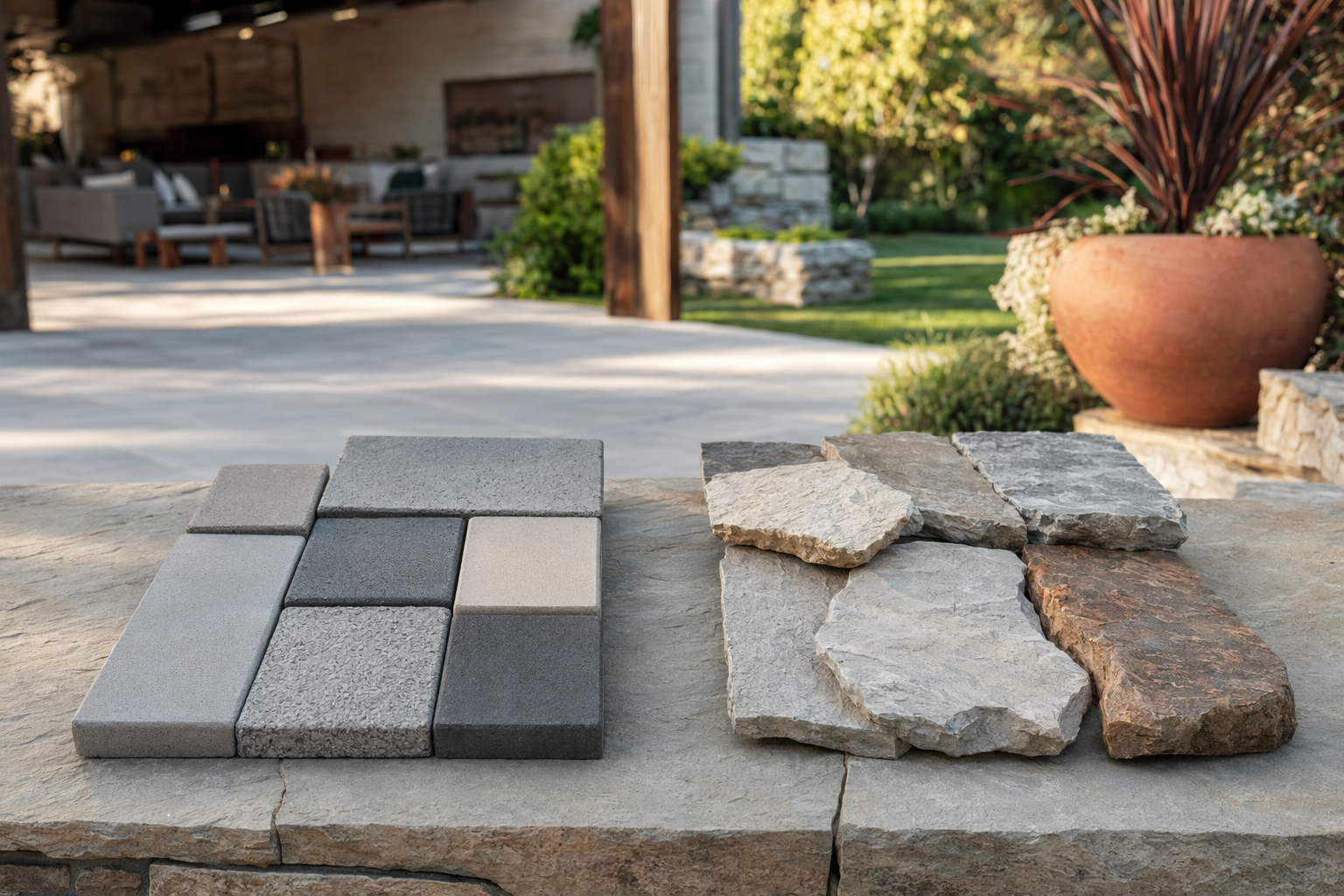
Quick answer: it depends on your budget, your yard, and how you want it to look
If you want the short version: pavers are usually the better pick for appearance, repairability, and long-term flexibility. Concrete is usually the better pick if your main goal is a lower upfront price and a simpler surface.
A paver patio is made from individual stones or bricks set in a pattern. A concrete patio is one poured slab. Both can work well for patios, pool areas, and backyard hangout spaces, but they feel different and age differently.
If you are planning a project and want help finding local builders, get matched with licensed, insured pros. Slate & Sod is a free matching service, not a contractor or design firm, so you stay in control of the final choice.

How the two materials compare in real life
Pavers are often chosen because they look more custom and can handle small repairs better. If one piece cracks or stains, a builder can often replace just that piece instead of tearing out the whole patio. They also come in many colors, shapes, and styles.
Concrete is usually faster and less expensive to install at the start. For a simple patio, it can be a practical option, especially if you want a clean, modern look and do not need a lot of design detail. But if it cracks or settles, repairs can be more noticeable.
Here is the simple trade-off: pavers often cost more up front but may be easier to live with later; concrete often costs less up front but may be less forgiving over time. The best choice depends on your yard conditions, your budget, and how much maintenance you are comfortable with.
Cost: honest ranges and what changes the price
For a typical backyard patio, concrete is often the lower-cost option and pavers are often the higher-cost option. As a rough planning range, many homeowners see concrete patios somewhere around the lower end of patio pricing, while paver patios can run noticeably higher per square foot. Exact numbers vary a lot by region and project size, so ranges are not quotes.
Costs go up when the area is large, the shape is complicated, the site has slope or drainage issues, access is tight, or the job needs extra base work. Material choice matters too: basic concrete is usually cheaper than decorative finishes, while premium pavers, borders, and special patterns add cost.
If you are comparing options, ask each builder to list the same scope in writing: demolition, base prep, edging, drainage, material brand/type, labor, cleanup, and any permit work. That makes it easier to compare apples to apples. You can also look at more planning help on costs.
Maintenance, repairs, and long-term upkeep
Concrete can be low-maintenance day to day, but it may show cracks, stains, or surface wear over time. Sealing may help in some cases, but it depends on the finish and local conditions.
Pavers usually need some upkeep too. Weeds can grow in joints if the patio is not installed and maintained well, and sand between joints may need attention over time. On the plus side, individual pavers can often be replaced if one gets damaged.
Neither choice is completely maintenance-free. If you want the least visible repair work later, pavers often have an advantage. If you want the simplest surface and are okay with some cracking risk, concrete can still be a smart choice.
Red flags when you are hiring a builder
A good builder should explain the scope clearly, give you a written price, and answer questions without pressure. Get a few written quotes so you can compare materials, prep work, and warranty terms.
Watch out for these red flags:
- large cash-only deposits
- no license or insurance
- vague estimates with missing details
- no written contract
- pressure to decide on the spot
For gas lines, outdoor kitchens, or electrical work near your patio, use licensed pros and confirm permits are required. For structural issues, drainage concerns, or taller retaining walls near the patio, a licensed engineer or the local building department may need to be involved, depending on your area.
A simple way to decide
Choose pavers if you care most about curb appeal, design options, and easier spot repairs. Choose concrete if you want a simpler project and a lower starting price.
If you are still unsure, the best next step is to talk with a few licensed, insured local builders and compare written quotes. Slate & Sod can help you connect with pros after you share basic contact and project details like your name, phone, ZIP, project type, rough budget, and preferred language.
You stay in control: you set the budget, compare the bids, confirm the scope and price in writing, and choose who to hire.
Pavers usually cost more but look better and are easier to repair, while concrete usually costs less up front and is simpler.
Common questions
Are pavers better than concrete for a patio?
Pavers are often better if you want a nicer look and easier repairs. Concrete is often better if your main goal is a lower upfront cost. The right choice depends on your budget, yard conditions, and how much upkeep you want.
Which lasts longer, pavers or concrete?
Both can last a long time when installed well, but they age differently. Pavers often handle small repairs better, while concrete can crack and show wear more visibly. Local soil, drainage, and weather matter a lot.
Is a concrete patio cheaper than pavers?
Usually yes, concrete is cheaper up front. But the final price depends on size, prep work, slope, access, finishes, and your local market, so always compare written quotes.
Do I need permits for a patio?
Sometimes, but it depends on your city, county, and HOA rules. A licensed local builder or your building department can tell you what is required in your area.
How do I avoid a bad contractor?
Get the scope and price in writing, compare a few quotes, and avoid large cash-only deposits, no-license/no-insurance crews, vague estimates, and pressure to sign right away.