Quick answers
How much per square foot do pavers cost?
Most homeowners pay about $10-$30+ per square foot for a paver patio or walkway installed, but the real number depends on the paver type, project size, site conditions, and where you live. These are general ranges, not quotes.
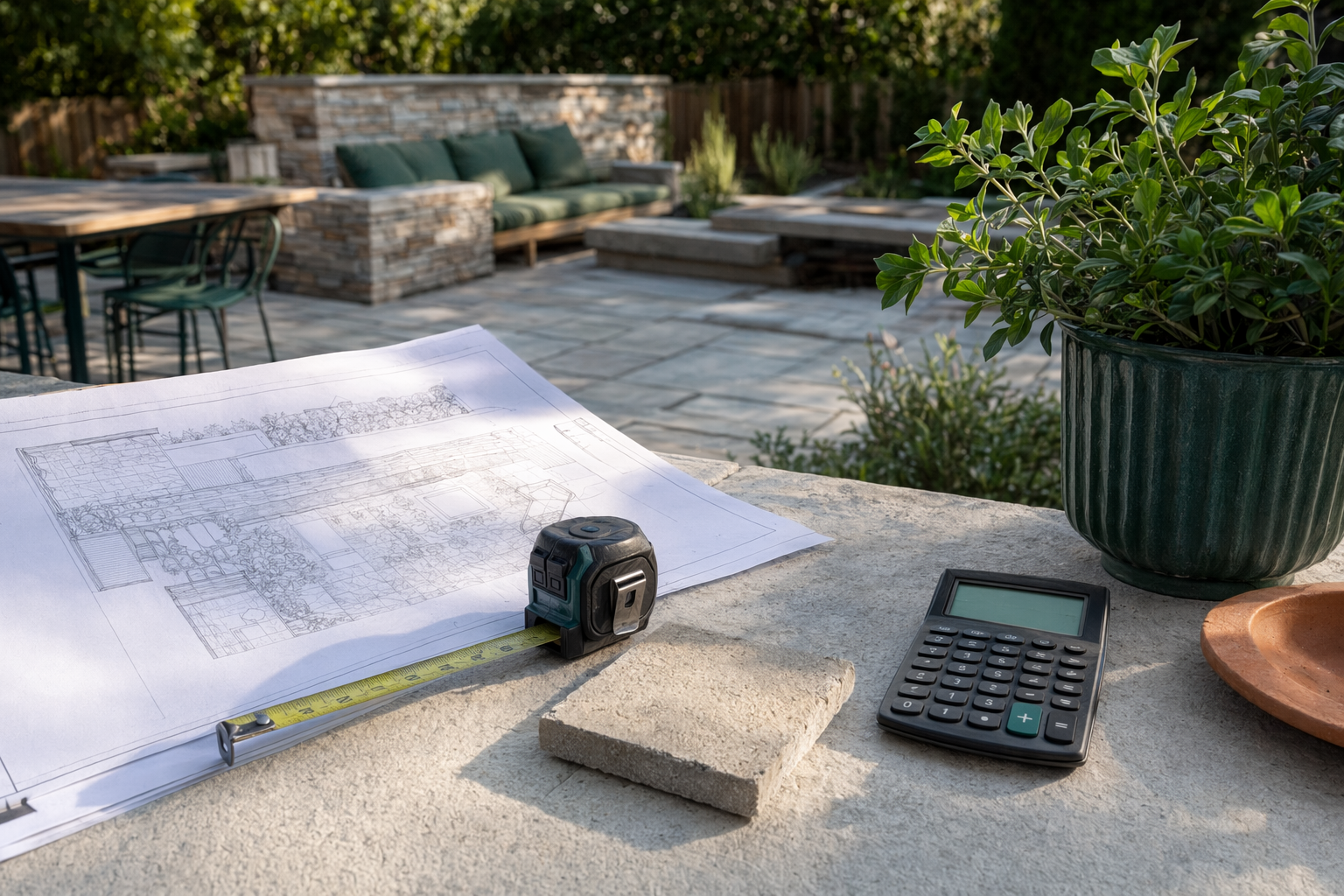
Short answer: paver cost per square foot
For many US projects, installed pavers often land around $10-$30+ per square foot. Simpler concrete pavers on an easy, flat site may be toward the lower end. Premium pavers, detailed patterns, borders, steps, curves, drainage work, or difficult access can push the price higher.
If you are only looking at the pavers themselves, the material-only price is often much lower than the installed price. Homeowners sometimes see a low store price and think that is the full project cost, but installation also includes base preparation, edge restraints, sand, cutting, labor, cleanup, and sometimes demolition or hauling away old concrete.
A good rule: use online square-foot numbers only for rough planning. They are not quotes. Your actual cost depends on size, materials, soil, slope, drainage, access to the backyard, and your local labor rates.

What changes the price most
The biggest price drivers are usually the paver material, the size of the area, and how much site prep is needed. A large, simple rectangle is usually easier and more cost-efficient per square foot than a small space with curves, tight cuts, steps, and several levels.
Site conditions matter more than many homeowners expect. If the yard slopes, holds water, has poor soil, or is hard to reach with materials and equipment, the project usually costs more. Removing an old patio, roots, or damaged base can also add cost.
Design choices add up too. Borders, inlays, fancy laying patterns, seat walls, lighting, pergolas, fire features, outdoor kitchens, and drainage improvements all increase the total. Gas and electrical work require licensed pros and permits.
Your area matters as well. Labor, permit costs, and what is common in your market vary across the US. HOA rules may also limit materials, colors, or layout.
Material trade-offs: what you pay for
Concrete pavers are often the most budget-friendly choice for many homeowners. They come in many colors and shapes, and they work well for patios, walkways, and pool decks. The trade-off is that some lower-cost products may show wear, fading, or a more basic look over time.
Brick pavers give a classic, warm look that many people love. They can fit traditional homes nicely and may age in a charming way. They are not always the cheapest option, and color choices and sizes can be more limited than concrete.
Natural stone usually costs more, but many homeowners choose it for its unique color, texture, and higher-end appearance. Stone can be beautiful, but the material cost and labor can rise quickly, especially if pieces need more fitting or the stone type is premium.
Thicker or specialty pavers may also cost more. For example, areas with heavier use, special textures, or a luxury finish can increase both material and labor costs. A licensed, insured local builder can explain what makes sense for your yard, budget, and climate.
- Concrete pavers: often lower cost, many styles, practical for most patios
- Brick pavers: classic look, durable, sometimes mid-range pricing
- Natural stone: usually higher cost, premium look, more variation
Typical planning ranges for common projects
If you are trying to budget quickly, multiply the rough square footage by a broad installed range. For example, a 200-square-foot patio might roughly fall somewhere around $2,000 to $6,000 or more at $10-$30+ per square foot. A 400-square-foot patio could be roughly $4,000 to $12,000 or more. Again, these are planning ranges, not quotes.
Why such a wide range? Because two patios with the same size can be very different jobs. One may be a simple backyard rectangle on flat ground. Another may need demolition, grading, drainage work, lots of cuts, a border, steps, or difficult access through a narrow gate.
If you are still early in the process, it can help to set a total budget first, then choose materials and features that fit it. Our costs and guides pages can help you compare project options before you talk with builders.
How to compare quotes without getting burned
Always compare a few written quotes from licensed, insured builders. Ask each one to list the project size, paver brand or type, pattern, border details, site prep, base work, drainage, cleanup, and who handles permits if needed. Get the scope and total price in writing before work starts.
Watch for red flags: large cash-only deposits, no license or insurance, vague one-page estimates, no written contract, or pressure to sign right away. If a quote is much lower than the others, ask what is missing. Sometimes the cheapest number leaves out demolition, proper base prep, edge restraints, or cleanup.
It is also smart to ask about maintenance. Pavers can shift, settle, grow weeds in joints, or need re-sanding or cleaning over time. A good builder should explain what upkeep is normal and what warranty, if any, applies. General information online cannot replace an on-site review.
How Slate & Sod can help
Slate & Sod is a free matching service for homeowners. We are not a contractor, builder, or design firm, and we do not perform construction work. We share general information and help connect you with licensed, insured local outdoor-living builders so you can compare options.
You stay in control. You set the budget, compare written quotes, choose who to hire, and confirm the scope and price before work starts. We only collect basic contact and project intent details like your name, phone, optional email, project type, ZIP code, rough budget, and preferred language.
If you want help finding local builders for a patio, walkway, pool deck, or full backyard project, you can get matched. If you are still researching, our help section has more plain-language answers.
Pavers often cost about $10-$30+ per square foot installed, but your real price depends on the material, layout, yard conditions, and local labor, so get a few written quotes and compare the details.
Common questions
Is $10 per square foot realistic for pavers?
Sometimes, but usually only for simpler projects with basic materials and favorable site conditions. Many installed paver jobs cost more once labor, base prep, cutting, and site work are included.
Why is the installed price so much higher than the paver price at the store?
Because the store price is often just the pavers. Installation usually includes excavation, gravel base, sand, edge restraints, labor, cuts, cleanup, and sometimes demolition or drainage work.
Do bigger patios cost less per square foot?
Often, yes, a larger simple layout can be more efficient per square foot than a small complex job. But the total price still goes up, and features like curves, borders, and steps can erase that savings.
Are pavers cheaper than poured concrete?
Sometimes poured concrete starts lower, but it depends on finish, thickness, access, and your area. Pavers often cost more upfront, but some homeowners prefer the look and the ability to repair smaller sections later.
Do I need permits for a paver patio?
Sometimes. Rules vary by city, county, and HOA, especially if the project affects drainage, grading, retaining walls, gas, or electrical work. Check with your local building department and use licensed pros where required.
Can Slate & Sod give me a quote?
No. Slate & Sod is a free matching service, not a contractor, and we do not build projects. We can help you connect with licensed, insured local builders so you can get written quotes and compare them.