Quick answers
How much does stamped concrete cost?
Stamped concrete usually costs less than some natural-stone options, but it’s still not cheap. Here’s a realistic range, what changes the price, and how to get clear written quotes from licensed, insured local builders.
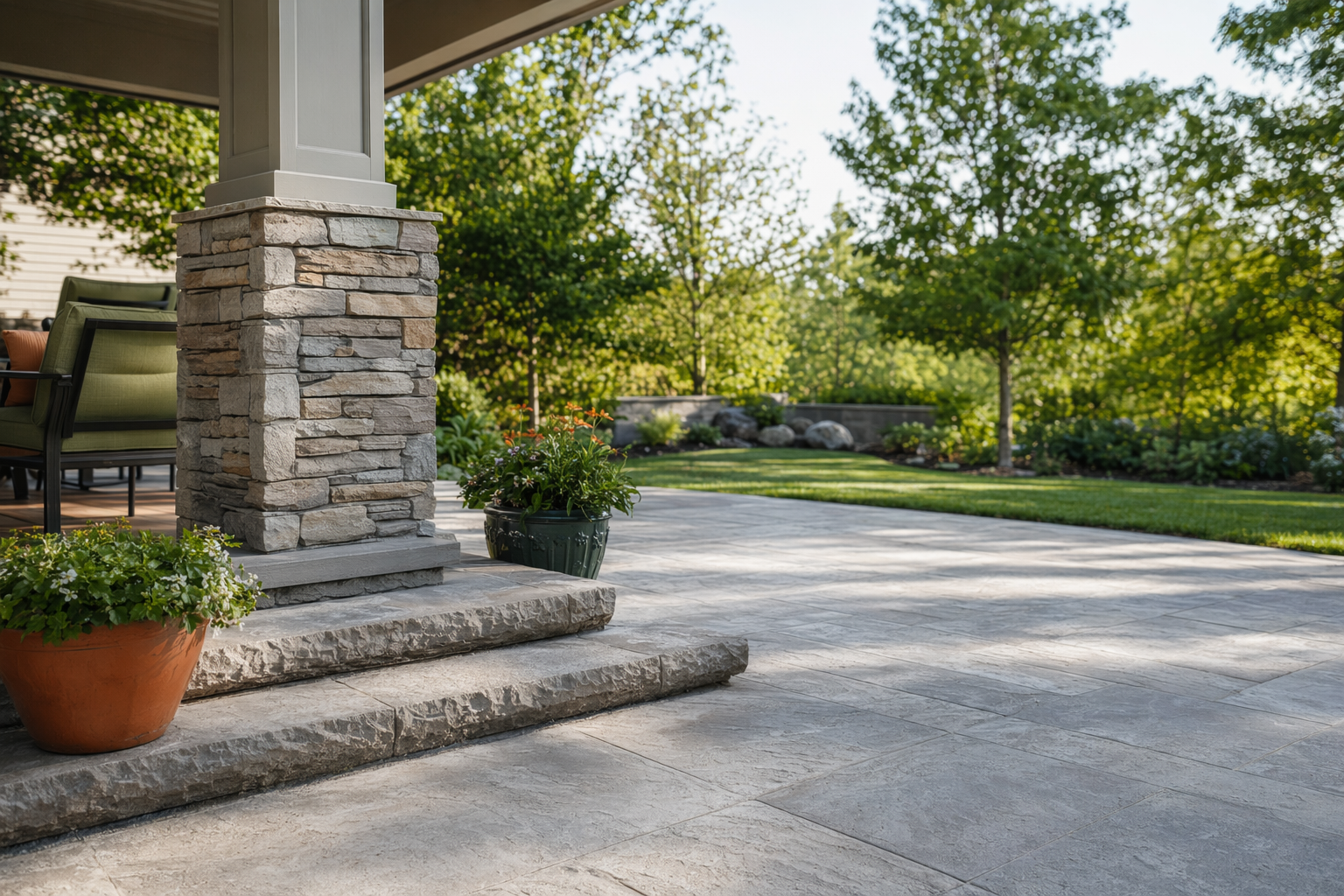
Quick answer: typical stamped concrete cost ranges
Stamped concrete commonly runs about $12–$25 per square foot for a basic stamped patio or walkway.
If your site is more difficult (steep slope, tricky access, drainage work, or heavier base prep), pricing can be higher—often $18–$35 per square foot or more.
These numbers are broad “planning ranges,” not quotes. The real cost depends on your project size, the concrete thickness and prep needed, the stamp pattern, site conditions, and your area’s labor/material rates.

What you’re paying for (the big cost drivers)
Stamped concrete isn’t just “pour and stamp.” You’re typically paying for prep and finishing work that affects how it looks and how long it lasts.
The biggest price drivers usually include:
- Size and shape (simple rectangles cost less than curves, borders, steps, or multiple levels)
- Site conditions (slope, soil, existing concrete to remove, drainage considerations)
- Sub-base and base work (better prep can raise cost, but it often helps prevent problems later)
- Pattern and finish (some stamp textures and finishes cost more)
- Color system (integral color vs. color hardeners and release agents)
- Edges, borders, and custom features (picture-frame edges, small inlays, bands, or “seamless” transitions can add up)
If you’re trying to compare bids, make sure each quote includes the same scope—especially prep, thickness, base layers, reinforcement (if required for the site), and the finish/coating.
Material and style trade-offs (what changes the look and upkeep)
Stamped concrete can look like stone, brick, or even wood textures, but it’s still concrete. The trade-off is that you’re getting a “designed look” at a cost advantage versus many natural materials—while relying on proper prep, sealing, and drainage.
A few practical trade-offs to consider:
- Color fades differently over time depending on the system used and how much sun exposure it gets
- Sealing helps with stain resistance, but it’s not forever—expect resealing on a schedule (often every few years, depending on product and wear)
- Cracks can happen in concrete over time; how they look and how you manage them matters
If you’re considering decorative borders, multiple colors, or a very detailed stamp pattern, ask how that will affect prep time and materials. Details usually increase labor, not just “materials.”
Extra costs homeowners often miss
Stamped concrete pricing is often quoted for the concrete surface area, but outdoor-living projects can include additional items that change the total.
Common add-ons or related scope items include:
- Site prep beyond “demo and pour” (grading, haul-away, or base repair)
- Removal and disposal of existing concrete or landscaping
- Forms, edging, and transitions (especially where it meets a house, garage, or walkway)
- Drainage solutions or grading adjustments (anything that affects water flow can require extra work)
- Steps, ramps, or changing elevations
- Accessibility needs (codes and local requirements can affect design choices)
For gas/electrical elements like outdoor kitchens, lighting, or fire features, plan on licensed pros and permits—those costs are separate from stamped concrete.
How to get reliable quotes (and avoid the red flags)
Because stamped concrete pricing depends heavily on prep and finishing scope, you’ll want quotes that read like a checklist—not a single number.
Ask for these basics in writing:
- Total square footage and the exact area included
- Materials and finish details (color method, stamp type/pattern, release agent, any stain or topcoat)
- Prep scope (what’s being removed, what base prep is included, and whether any drainage/grading is part of the job)
- Sealer/coating type and whether it’s included in the price
- Timeline of key steps (demo/prep, pour, stamping/finishing, curing time, final seal)
- Warranty details, if offered—and what’s excluded
Red flags to watch for:
- Large cash-only deposits or refusal to sign a written contract
- No license/insurance or vague claims like “we do good work” without proof
- Quotes that don’t break down scope (for example, “stamped patio—$X” with no details)
- Pressure to decide on the spot or “only today” pricing
- No written plan for changes if you add features later
Before you sign, confirm the scope and price in your contract. If anything is unclear, ask the builder to explain and update the written quote.
How Slate & Sod helps you get matched with a local builder
Slate & Sod is a FREE matching service. We don’t build or install anything—we help homeowners across the US plan an outdoor-living project and connect with licensed, insured local outdoor-living and hardscape builders.
If you share your ZIP, project type (like “stamped concrete patio” or “stamped walkway”), a rough budget range, and your preferred language, we can help route your request to suitable local pros.
Start here:
1. Get matched with a local builder
2. Read our cost guide basics to help you compare quotes
3. Check help for homeowners for practical questions to ask
You stay in control: you choose the builder, compare written scopes and prices, and confirm everything before work starts.
Stamped concrete often lands around $12–$25 per square foot, but real costs change a lot based on prep, site conditions, and the finish—so get clear written quotes from licensed, insured builders.
Common questions
Does stamped concrete cost more than regular concrete?
Usually, yes—stamping, coloring, and extra finishing steps add cost. Regular concrete may be cheaper per square foot, but the “real” comparison depends on your design details, prep needs, and how much of the project includes decorative features.
What’s the cheapest way to get the stamped look?
Keeping the shape simple (fewer edges, fewer curves), choosing a standard pattern, and planning clear access for crews can help control cost. Site prep needs—like slope and drainage—can still affect the final total a lot.
How long does stamped concrete last?
With solid prep, proper curing, and routine maintenance (especially sealing), stamped concrete can last many years. Exact lifespan varies by climate, sun exposure, and how heavy the traffic is, so ask builders what maintenance schedule they recommend.
Do I need permits for a stamped concrete patio or walkway?
It can depend on your city/county and project details. Local building codes and HOA rules (if you have one) may apply, so check with your local building department before work starts.
How do I compare two stamped concrete quotes that look very different?
Compare scope first: included prep/base work, thickness, color system, type of sealer/coating, and whether transitions/edges are included. If the quotes don’t cover the same items, the lower price may not be a true apples-to-apples comparison.