Quick answers
How much does an outdoor kitchen cost?
Outdoor kitchens can fit many budgets, but the total cost depends a lot on size, materials, appliances, and site conditions. Below are honest cost ranges and what to ask for—plus a free way to get matched with a licensed, insured local builder.
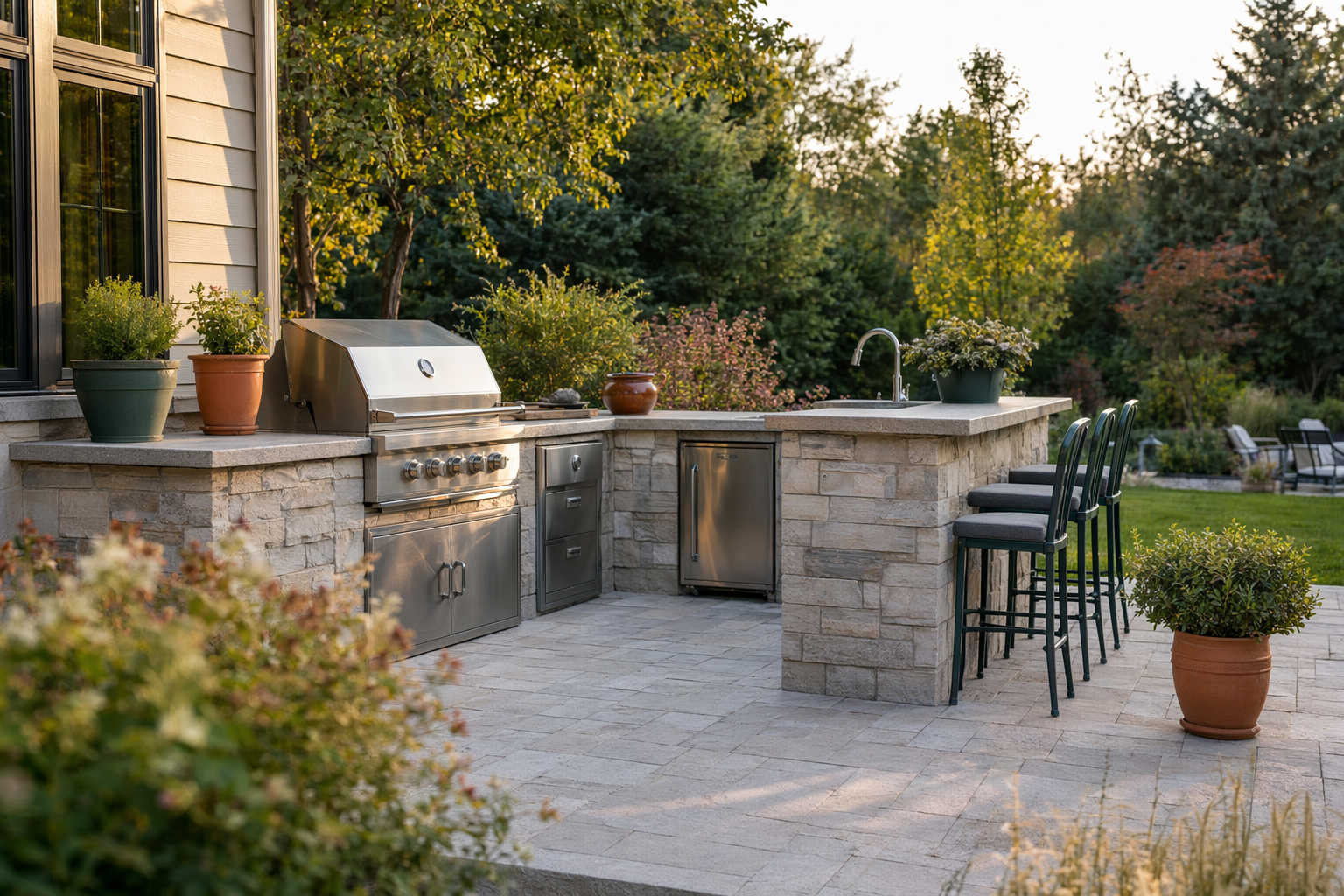
First: a realistic outdoor kitchen cost range
Most outdoor kitchens land somewhere around $8,000 to $40,000 for a basic-to-mid setup, assuming standard access and typical backyard conditions.
If you want higher-end finishes, built-in appliances (like a refrigerator, ice maker, or larger grill systems), or more cabinetry and countertop space, costs can go from about $40,000 to $100,000+.
These are not quotes. Your final price depends on the exact layout, materials, appliance brands, distance to utilities, and whether the site needs extra prep (like slope, drainage, or hard access for deliveries).
- Basic: a grill plus a simple counter and minimal storage.
- Mid-range: more counter space, some storage/cabinet-style areas, and a couple appliance upgrades.

What you’re really paying for (the big cost drivers)
Outdoor kitchens aren’t just countertops. The price usually comes from a few buckets: design/layout, hardscape materials, structure/cabinet-style components, utility connections, and appliances.
Here are the most common things that push the cost up or down:
- Countertop material (stone, tile, concrete-style surfaces, etc.) and how it’s finished
- Cabinet/storage style (open base vs. enclosed cabinetry look)
- Built-in appliances vs. separate/moveable units
- Grill size and the fuel type (gas is common; electric is different)
- Run length for water, gas, or electrical and how far they must travel
- More built-in features = more labor and more utility work.
- Long utility runs and tricky access usually raise the price.
Material trade-offs: what to choose and what you give up
Most outdoor kitchens use a mix of weather-friendly surfaces. The “best” choice depends on your climate, how often you cook, and how much maintenance you’re willing to do.
Countertops: You can see big swings here. Natural stone (like granite or similar) is durable but typically costs more upfront. Tile can be budget-friendly or mid-range, but the overall look depends on workmanship and grout/edge details. Man-made surfaces can be consistent in price and appearance, but some options still need proper sealing and care.
Cabinet-style areas and surfaces: The more enclosed and “finished” the look, the more you may pay for framing, waterproofing-friendly materials, and details that help resist moisture and temperature changes. Open shelving bases may cost less, but they offer less protection from weather and might require more frequent cleaning.
- Outdoor durability matters more than indoor aesthetics.
- Ask what’s sealed, sealed how, and how often maintenance is recommended.
Appliances: upgrades that change both cost and day-to-day use
A grill is often the centerpiece, but the rest of the kitchen is where costs can climb. Many homeowners start with a solid grill and add gradually.
Common appliance add-ons that often increase cost:
- Built-in grill with more burners or a larger cooking area
- Outdoor refrigerator/freezer (keeps food cold, but it adds electrical needs and cost)
- Sink with hot/cold water (usually means plumbing + permits in many areas)
- Trash/recycling storage and prep drawers (more built-in components)
- Lighting and fans (for night use and airflow)
Also think about how you’ll cook. If you plan to host often, more counter space for prep and a comfortable workflow can be worth more than a few extra decorative features.
- Start with how you cook, then choose appliances that match your routine.
- Confirm electrical and gas plans with licensed pros—permits are often required.
Typical pricing examples (so you can budget without guessing)
To help you picture it, here are example “levels” many homeowners use when budgeting. Your actual project can land above or below these ranges.
- Roughly $8,000–$18,000: smaller footprint outdoor kitchen, simple counter, basic storage look, and fewer built-in features.
- Roughly $18,000–$40,000: more counter space, better weather-resistant cabinetry-style components, a built-in grill setup, and a couple of extras (like lighting or a small storage area).
- Roughly $40,000–$100,000+: bigger layout, premium finishes (stone/tile/certain top materials), multiple built-in appliances (especially refrigeration), longer utility runs, and more complex site conditions.
These are broad ranges. Size, layout, and materials drive most of the variation—especially the distance and complexity of getting water, gas, or power to the location.
- Bigger layout usually adds both materials and labor.
- Long utility runs can be a surprise cost.
How to get real answers: questions to ask + get-it-in-writing
When you request bids or estimates, you want apples-to-apples information. An outdoor kitchen quote can look comparable on paper while hiding major differences (materials, appliance inclusions, and what’s actually connected).
Ask each builder for a written scope that clearly lists:
- What’s included (grill? sink? refrigerator? lights? storage?)
- Countertop and base material types (and finish/edge details)
- Appliance allowance vs. exact appliance models
- Electrical, gas, and plumbing responsibilities (and who handles permits)
- Site prep expectations (access, slope, drainage, demolition if any)
Red flags to watch for:
- Large cash-only deposits or pressure to pay before you’re comfortable
- No license/insurance proof
- Vague quotes that don’t list materials or appliance inclusions
- No written contract/scope, or unwillingness to put changes in writing
- Pressure to decide on the spot
Because gas/electrical/plumbing often require licensed professionals and permits, avoid anyone who wants you to “skip the paperwork.” Your local building department and required permits vary by area.
- Get scope + price in writing before anyone orders materials.
- Compare at least 2–3 written bids whenever possible.
Outdoor kitchen costs usually range from about $8,000 to $40,000 (and can go higher for premium finishes and multiple built-in appliances), and the best way to budget is to compare written scopes from licensed, insured local builders—free—with Slate & Sod.
Common questions
Does an outdoor kitchen cost more if I want a sink and water?
Usually, yes. A sink often means additional plumbing work, and in many places that requires permits and licensed plumbing/electrical connections for outdoor-rated components. The cost can also depend on how far your water and drainage need to travel.
Is it cheaper to buy appliances separately and let the builder build the rest?
It can be, but not always. You may reduce “appliance allowance” markup, yet the builder still needs to design around your exact appliance sizes and connections. Ask how the quote handles appliance models, installation responsibilities, and warranties.
What material is best for outdoor counters?
There isn’t one single “best” for every yard. Natural stone is durable, tile can look great but depends heavily on workmanship, and other outdoor-rated surfaces vary in maintenance needs. Ask how the material is sealed and what care is recommended for your climate.
Why do quotes for outdoor kitchens vary so much?
Even with a similar layout, prices can differ based on materials, appliance inclusions, utility run lengths, site access, drainage/slope, and how detailed the cabinetry-style areas are. Written scope details are the only way to compare fairly.
Can I keep the outdoor kitchen budget under control?
Yes. Many homeowners do it by choosing a smaller footprint first, starting with the grill and one or two key upgrades, and selecting durable but budget-friendly materials. You can also ask for phased options (built now, upgrades later) if the builder can plan the utilities and layout accordingly.