Quick answers
How much does a pool deck cost?
A pool deck usually costs more than a basic patio because it has to handle traffic, moisture, and—often—stairs, edges, and drainage. Below are honest cost ranges and what changes the price, plus a free way to get matched with licensed local builders.
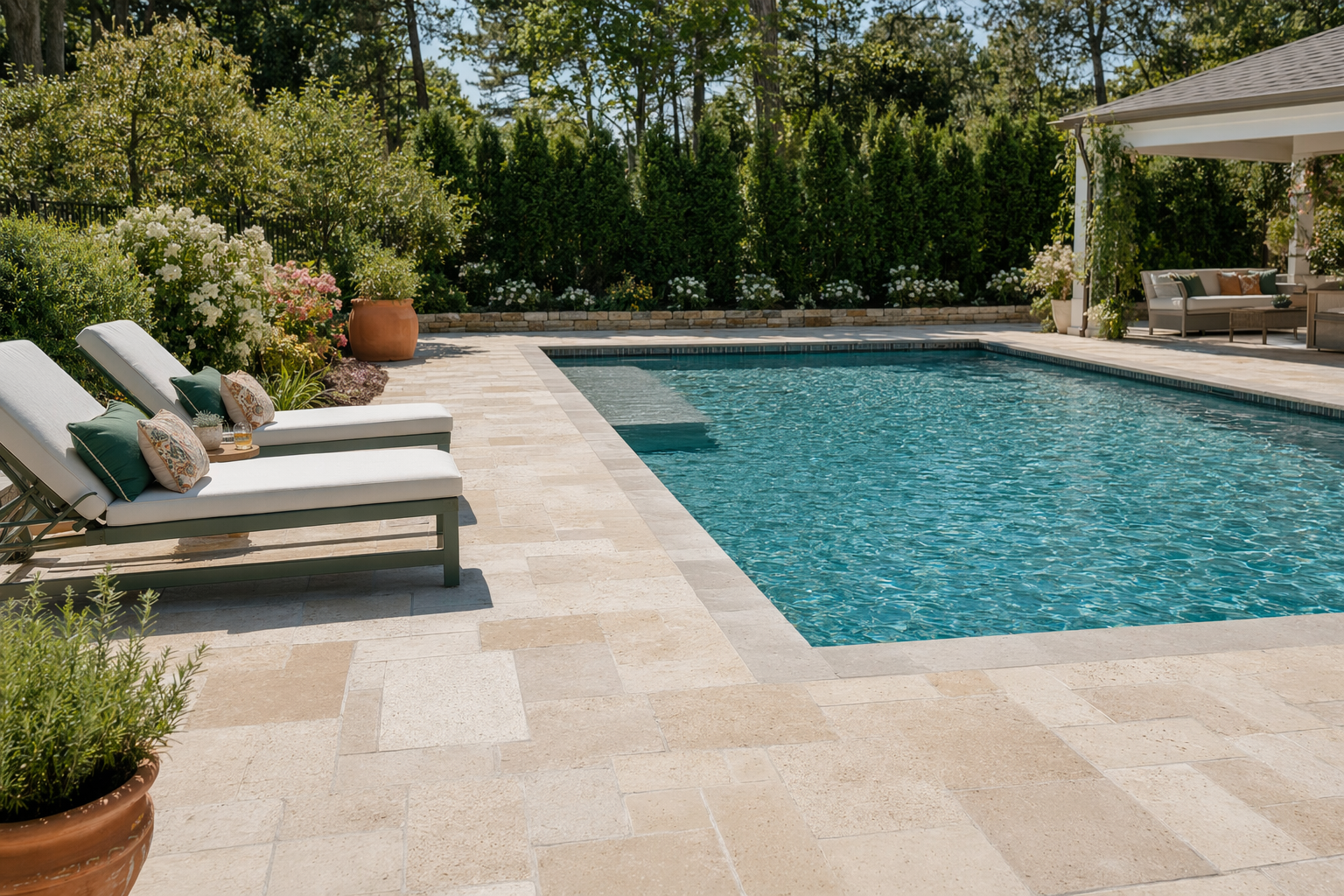
Quick answer: typical pool deck cost ranges
Most pool deck projects in the US land in roughly these ranges (not quotes):
- Concrete (basic finish): about $15–$35 per sq. ft.
- Concrete (decorative options like stamped/stained): about $20–$45 per sq. ft.
- Pavers: about $20–$50 per sq. ft.
- Stone/flagstone (often more variable): about $25–$70 per sq. ft.
The final total depends a lot on deck size, shape, how much of the existing area you’re replacing, and site conditions (slope, access for materials, drainage, and soil).
If your deck includes steps, coping/edge details, lighting, or a more complex layout around the pool, expect the per-square-foot range to skew higher.

What drives the price up or down (the real cost drivers)
Pool decks are rarely “just a flat slab.” Costs typically change based on what you’re adding and what the site needs.
Common factors that raise the cost:
- Deck size and shape: curves, multiple levels, and odd angles take more labor and layout time.
- Prep work: if removal and leveling are significant, pricing can jump.
- Drainage and grading: water management around pools matters; unclear drainage usually means more work.
- Accessibility: stairs, handrails (where required), and safe transitions can add cost.
- Edges and details: borders, copings, and coordination with pool equipment increase complexity.
Factors that can lower cost:
- A simpler rectangular layout.
- Good existing base conditions (less demo/extra prep).
- Choosing a standard finish with fewer upgrades.
Because site conditions vary, ranges are helpful for planning—but the only way to know your number is to get written quotes after a site visit.
Material trade-offs: what you’re really paying for
Different materials can look similar from far away, but they feel and behave differently under pool conditions (wet feet, sun heat, algae risk, and cleaning chemicals).
Concrete
- Pros: often the most straightforward option, usually faster to build, and can be finished in basic or decorative styles.
- Cons: more surface cracking risk over time (normal with concrete), and the look depends on workmanship. Decorative finishes may require extra care.
Pavers
- Pros: flexible and visually customizable; individual pavers can sometimes be replaced if something shifts.
- Cons: weeds/grout lines (maintenance matters), and the overall cost can be higher—especially with thicker systems, borders, or complex shapes.
Stone/flagstone
- Pros: natural look with lots of design character.
- Cons: can be expensive, installation complexity is higher, and “flat enough for wet feet” needs careful selection and layout.
Comfort and safety tip: wet pool decks can be slippery. Ask builders what surface finish is best for traction and how they plan for water flow. For any gas/electrical features (like deck lighting), use licensed pros and permits as required by your local code.
Budgeting the “whole project,” not just the surface
A pool deck quote should reflect more than the walking surface. Many homeowners are surprised when they add stairs, corners, and drainage needs after the fact.
When you talk to builders, consider planning your budget around these categories:
- Demo/removal (if replacing an existing deck)
- Base prep and leveling
- The deck surface material and finish
- Edging/borders and transitions
- Steps and handrail details (where applicable)
- Drainage/grading work
- Coordination with the pool area (keeping surfaces and transitions safe)
- Optional add-ons: lighting, built-in seating, planters, coverings
General rule: if you want upgrades (decorative finishes, complex layout, extra details), budget for the time and materials those add. If you want to keep costs down, prioritize a safe, durable layout first and save extras for a second phase.
How to get reliable numbers (and avoid headaches)
The cheapest quote on paper can end up costing more if the scope is unclear. You’ll get better results by comparing like-for-like.
To get quotes you can actually compare:
1. Measure your deck area (even rough is fine to start) and share a simple sketch with the builder.
2. Decide what “finished deck” includes for you (edges? steps? drainage?).
3. Ask each builder for a written scope: material type, finish level, and what’s included/excluded.
4. Request pricing in writing (labor + materials + any prep/demo line items).
5. Confirm they’re licensed and insured for your area.
Pool deck red flags to watch for:
- Cash-only deposits or big upfront money with no clear plan.
- No written contract or vague “we’ll figure it out later” language.
- Pressure to sign quickly or decide on the spot.
- No proof of license/insurance.
- Quotes that don’t list what they’re actually building.
For safety and compliance, remember: building rules, permits, and HOA requirements (if you have one) vary by city and county. Your local building department can tell you what’s required. For any work involving electricity or gas, hire licensed pros and follow permit rules.
Get matched with a local, licensed builder (FREE for homeowners)
Slate & Sod is a free matching service that helps you plan an outdoor-living project and connect with licensed, insured local outdoor-living and hardscape builders. We don’t build or quote construction work.
If you’d like help comparing options, you can start here: get matched.
To make matches more useful, share:
- Your ZIP code
- Project type (pool deck)
- Rough budget range
- Preferred language
- A few details about the deck size and any steps/edges you want
If you’re still deciding materials, browsing cost and planning guidance can help. See costs for general budget thinking, and guides for step-by-step planning.
Pool deck costs vary widely by size, layout, material, and site prep, so use written scope-and-price quotes and—if you want—start free matching to licensed, insured local builders.
Common questions
How much does a 400 sq. ft. pool deck cost?
Using the rough ranges above, a 400 sq. ft. deck commonly lands around $6,000–$20,000 depending on material and complexity. Concrete basic finishes tend to be lower, while pavers, decorative concrete, complex shapes, and stairs often push the total higher. Your actual price depends heavily on site prep, drainage needs, and finish level.
Is a paver pool deck more expensive than concrete?
Often, yes. Pavers commonly cost more per square foot than basic concrete, especially when you add borders, thicker build-ups, or a complicated layout. But the “best value” depends on how long you want it to last, your maintenance comfort, and your local material and labor pricing.
Do I need a permit for a pool deck?
Rules vary by location. Many decks require permits or code compliance checks, especially if you’re changing drainage, adding stairs, or doing significant replacement. Check with your local building department and follow HOA rules if applicable.
What maintenance should I expect?
Concrete typically needs periodic cleaning and can require repairs if cracking occurs over time. Pavers may need regular cleaning and attention to weeds or joint material depending on the system used. Any deck near a pool should be cleaned with care to protect surfaces and keep traction safe—ask builders what they recommend for your chosen material.
How can I tell if a quote is missing something?
Look for a written scope that lists the material, finish level, base prep, edge details, steps (if any), drainage/grading assumptions, and what’s excluded. If details are vague or the quote doesn’t clearly break out demo/removal and prep work (when relevant), you may be comparing apples to oranges.
What should I share with builders when I request quotes?
Share your ZIP code, rough deck size, the shape (square/curved/multi-level), what you’re replacing (if anything), and whether you want steps, borders, lighting, or decorative finishes. Also include your rough budget range so builders can steer you toward options that match your goals.