Quick answers
How much does a pergola cost?
A pergola can be a simple shade feature or a custom outdoor room, so the price can vary a lot. For most homeowners, the real cost is driven by size, materials, and whether it’s attached, freestanding, or built with extras.
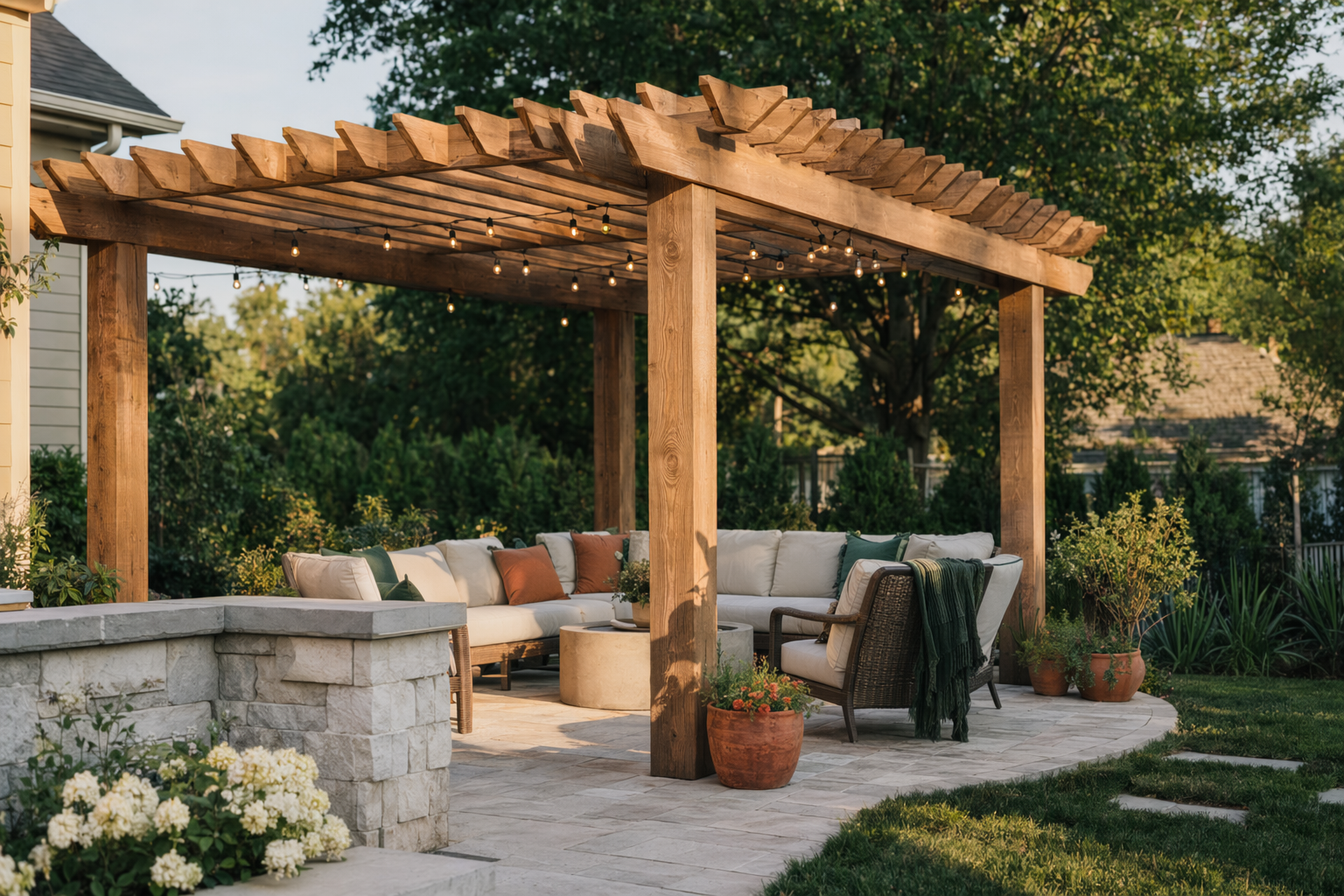
How much does a pergola cost?
A basic pergola often starts around $2,000 to $6,000 for smaller, simpler builds, while many mid-range projects land around $6,000 to $15,000. Custom pergolas with upgraded materials, lighting, a roof cover, or a larger footprint can run $15,000 to $30,000+.
Those are only general ranges, not quotes. The real number depends on your yard, the size you want, the material you choose, and how much prep work is needed before the pergola can be built.
If you want a more exact number for your home, it helps to compare a few written quotes from licensed, insured local builders. You can start that process through get matched.
- Small, simple pergola: often lower cost
- Mid-size pergola with better materials: middle range
- Large custom pergola with extras: higher range

What changes the price most?
Material is a big one. Pressure-treated wood is usually the lowest-cost choice, cedar and redwood usually cost more, and vinyl or aluminum can be more expensive up front but may need less upkeep. Each option has trade-offs in look, maintenance, and lifespan.
Size and design matter too. A larger pergola needs more material and labor. A freestanding pergola usually costs more than a very simple attached one, and custom details like curved beams, decorative ends, built-in seating, or a shade canopy can add to the price.
Site conditions can raise the price as well. Sloped ground, tight access, poor soil, drainage issues, or the need for a stronger base can all make the job more involved. Costs also vary by region, permit rules, and local labor rates.
- Wood: often more affordable, but usually needs more upkeep
- Aluminum/vinyl: often less maintenance, but higher upfront cost
- Custom size and difficult site conditions: usually cost more
Wood, aluminum, or vinyl: what’s the trade-off?
Wood looks warm and classic, and many homeowners like how natural it feels in a backyard. The trade-off is upkeep: wood may need staining, sealing, or periodic repairs depending on your climate.
Aluminum can be a good fit if you want a cleaner look and less maintenance. It often costs more than basic wood, but many people like that it resists rot and insects.
Vinyl can also reduce maintenance, though some homeowners prefer the look and feel of real wood. It may cost more than a simple wood pergola, but it can be easier to care for over time. A local builder can help you compare these options based on your weather and budget.
- Wood: lower upfront cost, more maintenance
- Aluminum: durable, often lower maintenance
- Vinyl: easier care, but style may not suit everyone
What should you ask before hiring a builder?
Ask for the scope, materials, and total price in writing. A good quote should say what is included, what is not included, and whether permits are needed. If the pergola will include electrical work, lighting, fans, or other powered features, ask for a licensed electrician and the right permits.
It also helps to confirm that the builder is licensed and insured in your area. That protects you if something goes wrong on the job.
Watch for red flags like a large cash-only deposit, no license or insurance, a vague estimate, pressure to decide right away, or no written contract. It is smart to compare a few quotes before you choose.
- Get the scope and price in writing
- Verify license and insurance
- Compare a few quotes before signing
How Slate & Sod helps
Slate & Sod is a free matching service, not a contractor or design firm, and we do not do the construction work ourselves. We help homeowners connect with licensed, insured local outdoor-living builders who can quote a pergola project.
When you reach out, we collect only contact details and project intent, such as your name, phone number, optional email, project type, ZIP code, rough budget, and preferred language. You stay in control: you choose the budget, compare written quotes, and decide who to hire.
If you want to keep planning first, our cost guides and help center can give you a better sense of the options before you speak with a builder.
- Free for the homeowner
- You compare builders and choose who to hire
- Start with your budget, size, and style goals
A pergola can cost a few thousand dollars or much more, depending on size, material, and site conditions, so get a few written quotes from licensed, insured local builders and compare them carefully.
Common questions
Is a pergola cheaper than a patio cover?
Often, yes, but not always. A pergola can be a simpler structure, while a patio cover or roofed structure may need more materials, labor, and permits.
Do I need a permit for a pergola?
Sometimes. Permit rules vary by city, county, HOA, and project size, so check with your local building department and your builder before work starts.
What is the biggest red flag when getting pergola quotes?
A quote that is vague, cash-only, or not written down. Also be careful with anyone who pressures you to sign right away or refuses to show license and insurance.
Can Slate & Sod give me a pergola price?
No. Slate & Sod is a free matching service, not a contractor, so we do not give construction quotes. We can help connect you with local licensed, insured builders for pricing.