Quick answers
How much does a paver patio cost?
A paver patio typically runs in the mid to high range compared with simple concrete, but the “real” cost depends mostly on size, layout, materials, and site conditions. Below are honest ranges and what to ask for before you hire anyone.
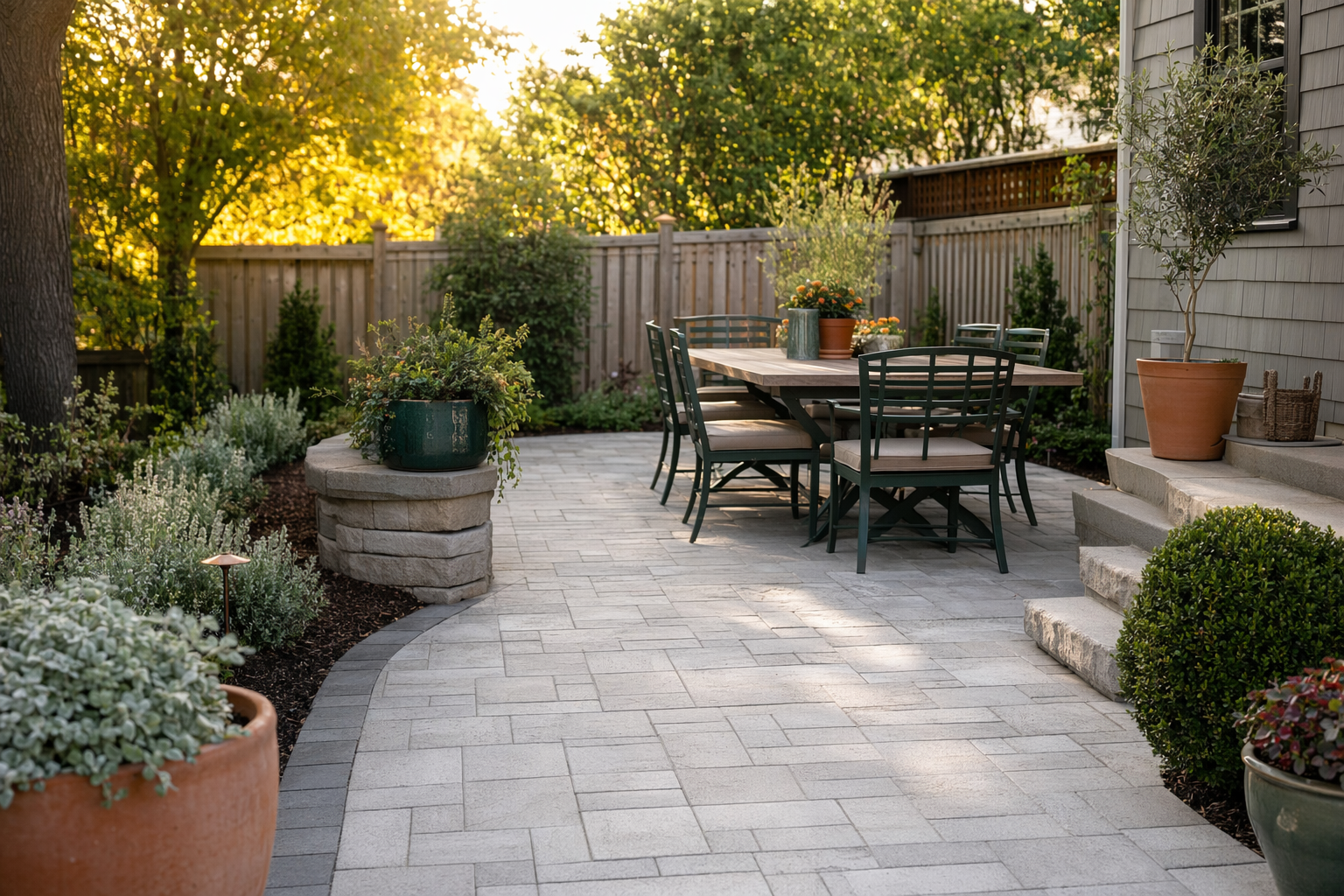
Quick answer: common paver patio cost ranges
Most homeowners in the U.S. spend somewhere around $15–$30 per square foot for a basic paver patio installed, with many projects landing closer to $20–$25/sq ft.
For a small patio (about 250–400 sq ft), a common total range is roughly $4,000–$12,000. For medium patios (about 400–800 sq ft), many totals fall around $8,000–$25,000.
Larger or more complex patios (cuts, curves, custom borders, multiple levels, or difficult access) can cost more. Always treat these as broad estimates—not quotes—because your site and design choices can move the price a lot.
- Ranges are not quotes—your exact cost depends on your patio size, materials, and site conditions.
- If you’re new to the U.S., ask the builder to explain what “site prep” includes, because that’s often where surprises happen.
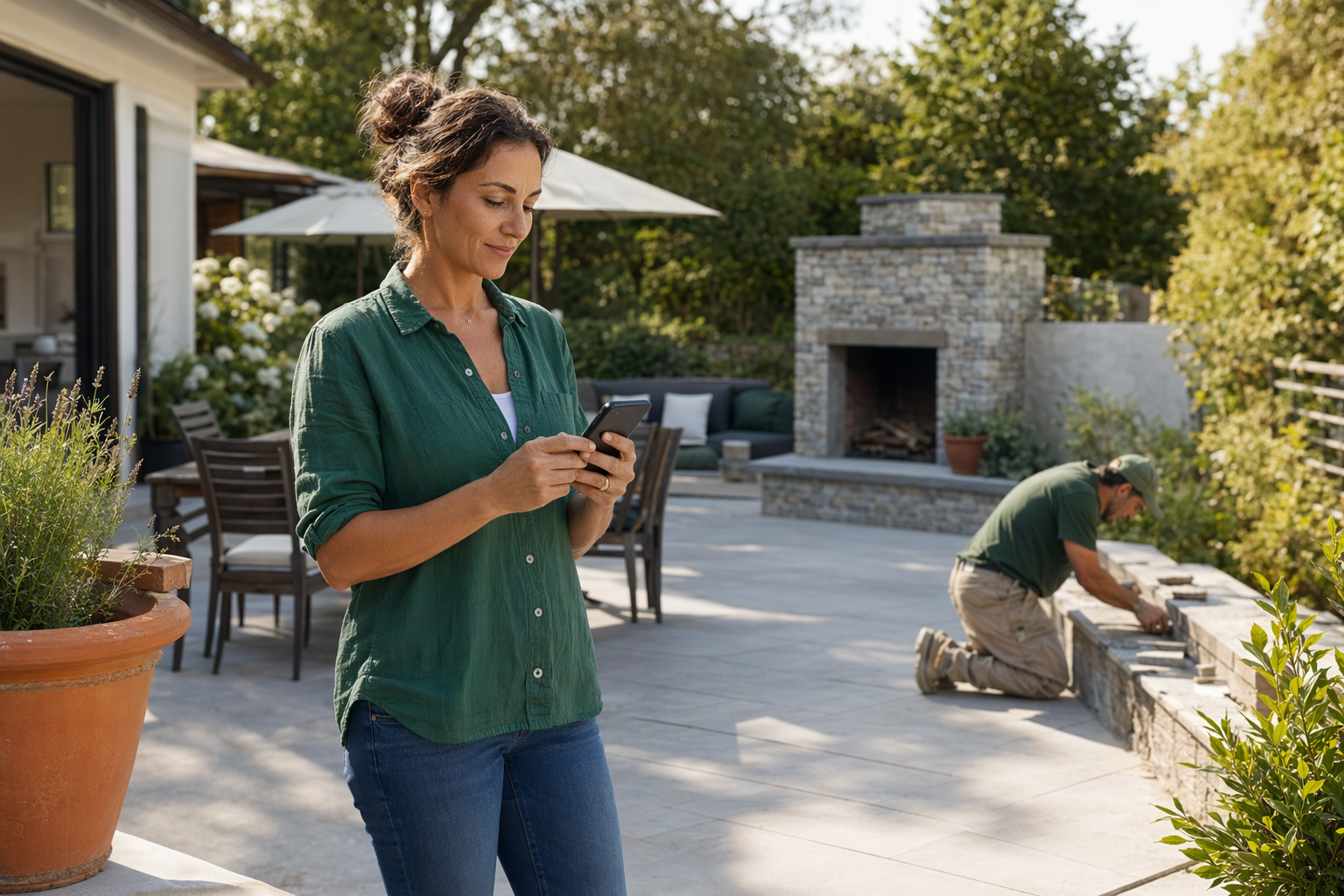
What’s usually included (and what isn’t)
A patio quote can cover different things depending on the company. Some bids include only the pavers and labor; others include key groundwork like base prep, edge restraints, and bedding material.
Before comparing prices, ask for a line-by-line scope. The goal is to know exactly what you’re paying for—not just the final number.
Also clarify what’s not included: removal of an old patio, hauling/disposal, moving sprinklers/landscaping, steps, borders, electrical outlets, gas lines, or drainage improvements. Gas and electrical work requires licensed pros and permits where required.
- Get the scope in writing so “paver patio” means the same thing in every bid.
- Ask who handles permits (if needed) and what the permit process looks like in your city.
Big cost drivers for paver patios
1) Patio size and shape: Square layouts are usually easier and cheaper. Curves, diagonal layouts, and lots of cutting add labor and waste.
2) Paver material and thickness: Higher-end pavers (or thicker/stronger options) cost more. You may also see different warranties and surface finishes that affect price.
3) Base and site prep: This can be the biggest swing factor. Sloped yards, poor soil, drainage concerns, tree roots, or limited access can increase prep work.
4) Borders and patterns: Borders, picture-framing, soldier courses, and multi-size patterns often add cost. Simpler patterns can lower it.
5) Edges, steps, and upgrades: Steps, landings, retaining elements, edging stones, built-in seating, or connecting to an outdoor kitchen/fire pit can raise the budget.
6) Removal and haul-off: If there’s an old slab, patio, or dense landscaping to remove, expect additional labor and disposal costs.
- If two quotes look far apart, it’s often because one includes more site prep or a higher-end paver.
- Ask whether the patio will need special drainage attention—this may require a licensed engineer for certain situations.
Material trade-offs: what you gain (and what you give up)
Pavers are popular because they look great and can be repaired in sections if a problem happens later. You can often replace individual stones rather than tearing out the whole surface.
But pavers aren’t “set it and forget it.” Over time, you’ll want good maintenance: keeping debris out of joints, addressing weeds, and monitoring settlement. Drainage matters—if water can’t move the way it should, problems can show up faster.
Here’s how common choices can change the trade-offs:
- Style/finish: Textured or darker finishes may hide stains better, but can cost more and may show wear differently than simpler finishes.
- Pattern complexity: Complex patterns look high-end, but they increase cutting and installation time.
- Base depth/quality: A stronger, well-prepped base can help the patio stay level longer, but it costs more upfront.
How to avoid red flags and get fair bids
A good builder will talk through options, show a clear scope, and answer questions without pressure. If someone won’t put details in writing, that’s a warning sign.
Watch for red flags:
- Large cash-only deposits with no clear payment schedule
- No license/insurance (or they can’t provide proof)
- Vague quotes like “paver patio complete” with no quantities or materials listed
- Pressure to sign on the spot, or refusing to compare written bids
- Promises like “guaranteed perfect drainage” or fixed pricing regardless of site conditions
Get it in writing before you sign:
1. Total price and what it includes
2. Patio size (sq ft) and design (shape, pattern, borders)
3. Paver brand/type and thickness (or equivalent)
4. Base prep scope (what’s removed, what’s added, and why)
5. Edge restraints and how edges will be finished
6. Drainage responsibilities and what (if anything) changes your yard’s water flow
7. Timeline expectations and payment schedule
If you’re considering gas/electrical features (outdoor kitchen, lighting, fire pit controls), make sure permits and licensed pros are planned. Don’t let a general quote blur that responsibility.
- Compare at least 3 written bids when you can—then compare scope, not just price.
- You stay in control: set your budget, choose your materials, and confirm the plan and cost before any work starts.
How Slate & Sod helps you get matched with a local, licensed builder (free)
Slate & Sod is a free matching service. We help you PLAN your outdoor-living project and connect you with licensed, insured local outdoor-living and hardscape builders. We do not build or install patios ourselves.
To get matched, share a few details—your ZIP code, the type of patio you want, your rough budget, and your preferred language (name + phone, optional email). We’ll use that to help route your project to builders who can help.
If you want the simplest next step, start with our paver patio cost guide and then use get matched when you’re ready. You can also browse patio planning help for a sensible way to think about size, materials, and upkeep.
- No cost to you—participating builders pay a flat fee for leads.
- You choose the contractor and confirm the written scope and price before work starts.
A paver patio usually costs thousands of dollars more or less depending on patio size, paver quality, and how hard your yard is to prepare, so get a clear written scope from licensed, insured builders and use Slate & Sod to find local options for free.
Common questions
Does a paver patio cost more than stamped concrete?
Often, pavers can cost about the same or more than stamped concrete, depending on materials and how much site prep your yard needs. The best comparison is to get written scopes for both options and compare what’s included, especially base prep and drainage.
What makes paver patio prices jump up fast?
Prices often increase for complex shapes and patterns, thicker/higher-end pavers, lots of cutting, removal and haul-off of an old surface, and challenging site conditions (slope, roots, drainage concerns, or limited access). Always check what “site prep” includes.
How do I know if I’m being quoted for the right patio size?
Ask for the patio square footage and whether the quote includes the full footprint, steps, and any landings. If the design includes borders or multiple elevations, make sure quantities reflect those details—not just a simple rectangle.
Do I need permits for a paver patio?
It depends on your city and the scope of the project. Smaller patios may have different requirements than patios that alter drainage, connect to structures, or include gas/electrical components. Ask your builder what permits apply in your area and verify with your local building department.