Quick answers
How much does a fire pit cost to build?
A simple backyard fire pit can be a modest project, but the cost can climb fast with gas lines, built-in seating, premium stone, and tricky site work. The real price depends on size, materials, access, drainage, and your area.
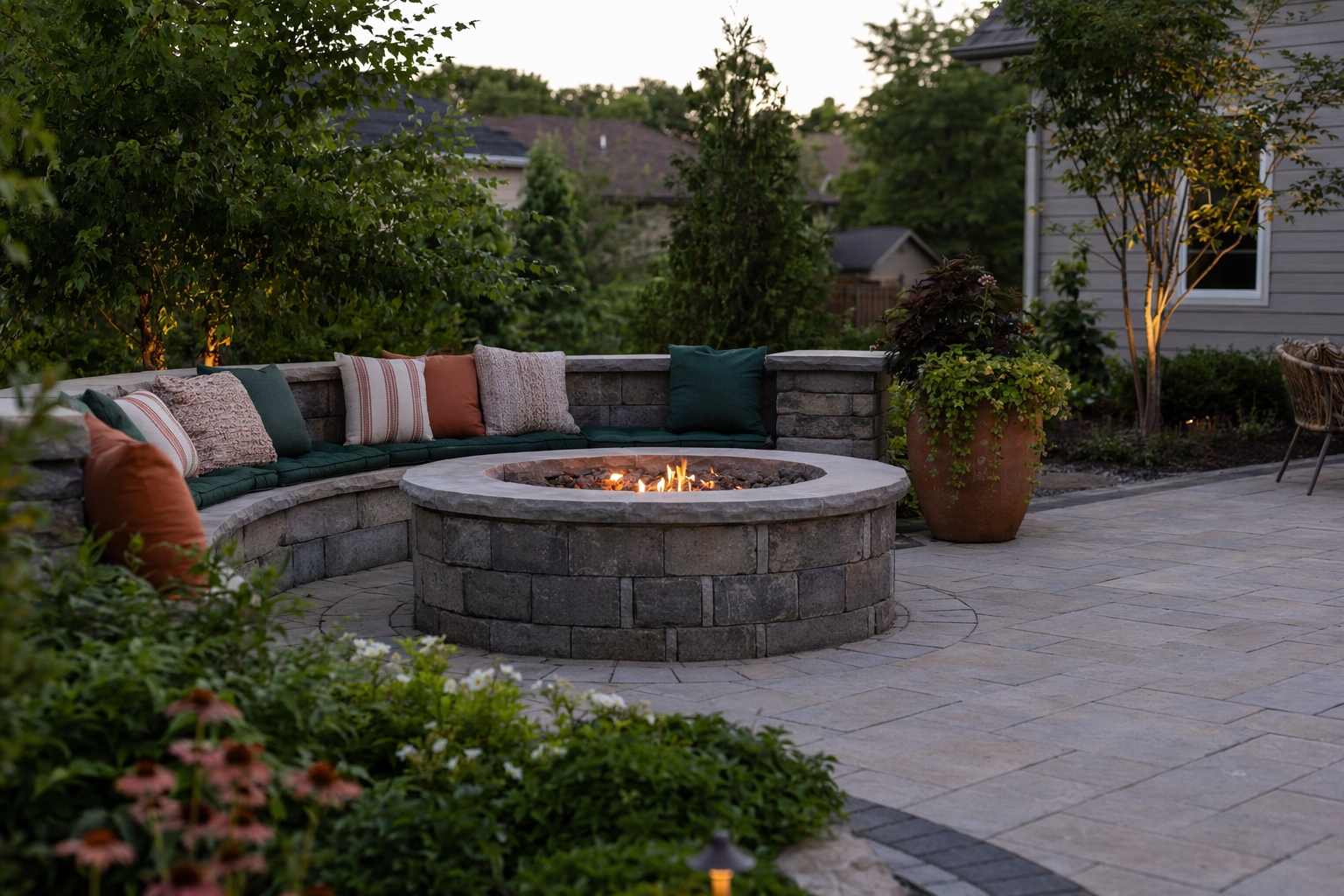
Short answer: most fire pits land somewhere from about $1,500 to $10,000+
For many homeowners, a basic wood-burning fire pit in a simple patio area may cost around $1,500 to $4,000. A built-in gas fire pit usually costs more, often around $3,500 to $10,000 or more, especially if it needs a new gas line, ignition, stone veneer, or extra seating walls.
If you are picturing a full fire-pit area — paver patio, seat walls, lighting, steps, and landscaping — the total can move well beyond the pit itself. That is why online numbers can feel confusing: some prices are for just the fire feature, while others include the whole outdoor space.
These are general ranges, not quotes. Your actual number depends on project size, the materials you choose, site conditions like slope or drainage, how easy the yard is to access, and local labor and permit costs.

What changes the price the most
The biggest cost drivers are the fuel type, how custom the build is, and what has to happen around the pit. A small kit-style wood-burning pit set on gravel costs much less than a custom gas unit wrapped in natural stone and tied into a new patio.
Gas and electrical work raise the budget because they need licensed pros and usually permits. If your project needs trenching, a long gas run, an electrical igniter, drainage work, demo of old concrete, or retaining walls nearby, the total can rise quickly.
Material choice matters too. Concrete block with a clean finish is often more budget-friendly than natural stone. Premium caps, metal inserts, larger diameters, and built-in seating all add cost.
- Wood-burning usually costs less up front than gas
- Natural gas or propane setups usually cost more than simple wood pits
- Custom masonry costs more than prefab or kit-style options
- Adding a patio, seat wall, pergola, or lighting can double or triple the project
Typical fire pit cost ranges by type
A basic prefabricated or simple masonry wood-burning fire pit is often the lowest-cost path. Many homeowners choose this when they want a casual gathering spot without adding utility lines. A rough national-style planning range is about $1,500 to $4,000 for a straightforward install, though some very simple projects may come in lower and custom ones can go higher.
A built-in gas fire pit often starts around $3,500 and can easily reach $7,000 to $10,000 or more. That range is common when the pit is permanently built with pavers, block, stucco, or stone veneer and connected to propane or natural gas. If the gas source is far from the install area, trenching and line work can be a major part of the budget.
High-end custom fire features can cost more than $10,000 when they include premium stone, electronic ignition, custom seating walls, large patios, drainage corrections, or complex yard access. In some backyards, getting materials and equipment in is a real cost issue.
For a broader look at outdoor-project budgeting, you can also browse our cost guides and other backyard planning guides.
Material and design trade-offs to think through
Wood-burning pits usually feel more traditional and can cost less to build, but they create smoke, ash, and more cleanup. In some areas, air-quality rules, burn bans, HOA rules, or local codes may limit wood fires. Gas fire pits are cleaner and easier to start, but they cost more to install and depend on proper gas work by a licensed professional.
For the outside finish, concrete block systems with caps can give a clean look at a lower cost than full natural stone. Natural stone can be beautiful, but it is usually more expensive in both material and labor. If you want the fire pit to match an existing patio, wall, or outdoor kitchen, ask for that in writing because matching older materials can affect cost.
Think about how you will really use the space. A smaller pit with comfortable patio space around it is often better than a giant feature with little room for chairs. If you have kids, pets, or a tight yard, spacing and traffic flow matter just as much as the fire pit itself.
This is general information only, not construction, engineering, or legal advice. A licensed, insured local builder can tell you what makes sense for your yard, and your local building department can tell you what is allowed in your area.
Watch for red flags before you hire anyone
A fire pit may look simple, but poor planning can create expensive problems. Be careful with any builder who gives a vague one-line price, asks for a large cash-only deposit, cannot show license and insurance, or pressures you to decide the same day.
If the project involves gas or electrical work, make sure a licensed professional handles it and that permits are pulled where required. For drainage issues, slope concerns, or nearby retaining walls, extra review may be needed. In some cases, a licensed engineer may be required by local rules.
Always get the scope and price in writing before work starts. Your written quote should say what is included, what materials will be used, who handles permits, how utility work is done, what is excluded, and what happens if hidden site problems are found.
How to plan the project without overpaying
Start with a realistic total budget, then decide what matters most: wood or gas, simple or custom, pit only or a larger patio area. If the budget is tight, it may be smarter to build the fire pit and patio first and save lighting, walls, or a pergola for later.
Then compare a few written quotes from licensed, insured local builders. Ask each one to price the same general scope so you can compare fairly. You stay in control: you set the budget, review the options, choose who to hire, and confirm the scope and price before work begins.
Slate & Sod is a free matching service for homeowners — not a contractor, builder, or design firm, and we do not perform construction work. We can help you get connected with licensed, insured local outdoor-living builders for your project. You can get matched or learn more at Help. We only collect basic contact and project intent details like your name, phone, optional email, project type, ZIP code, rough budget, and preferred language.
A basic fire pit may be fairly affordable, but gas lines, custom stone, and site problems can raise the price fast, so compare written quotes and verify license and insurance.
Common questions
Is a gas fire pit more expensive than a wood-burning fire pit?
Usually yes. Gas fire pits often cost more because of the burner system, possible ignition components, and licensed gas work, plus permits where required.
How much does it cost to add a gas line for a fire pit?
It varies a lot by distance, access, trenching, and local rates. A short, simple run may be manageable, while a long or difficult run can add a significant amount to the project cost.
Do I need a permit for a backyard fire pit?
Sometimes. Rules vary by city, county, and HOA, and gas or electrical work often requires permits. Always check local requirements before work starts.
What is the cheapest way to build a fire pit?
A small, simple wood-burning pit with basic materials and no utility work is often the lowest-cost option. Costs go up with custom masonry, gas service, premium finishes, and surrounding patio work.
Should I get more than one quote for a fire pit project?
Yes. Comparing a few written quotes helps you understand the real price range, spot missing items, and avoid overpaying.
Can Slate & Sod build my fire pit?
No. Slate & Sod is a free matching service, not a contractor or builder. We help connect homeowners with licensed, insured local outdoor-living builders.