Quick answers
How long does an outdoor kitchen take to build?
Outdoor kitchens are very doable, but the timeline can swing based on permits, site conditions, and how complex your setup is. Here’s a plain, realistic way to think about “how long,” plus how to plan it without overpaying.
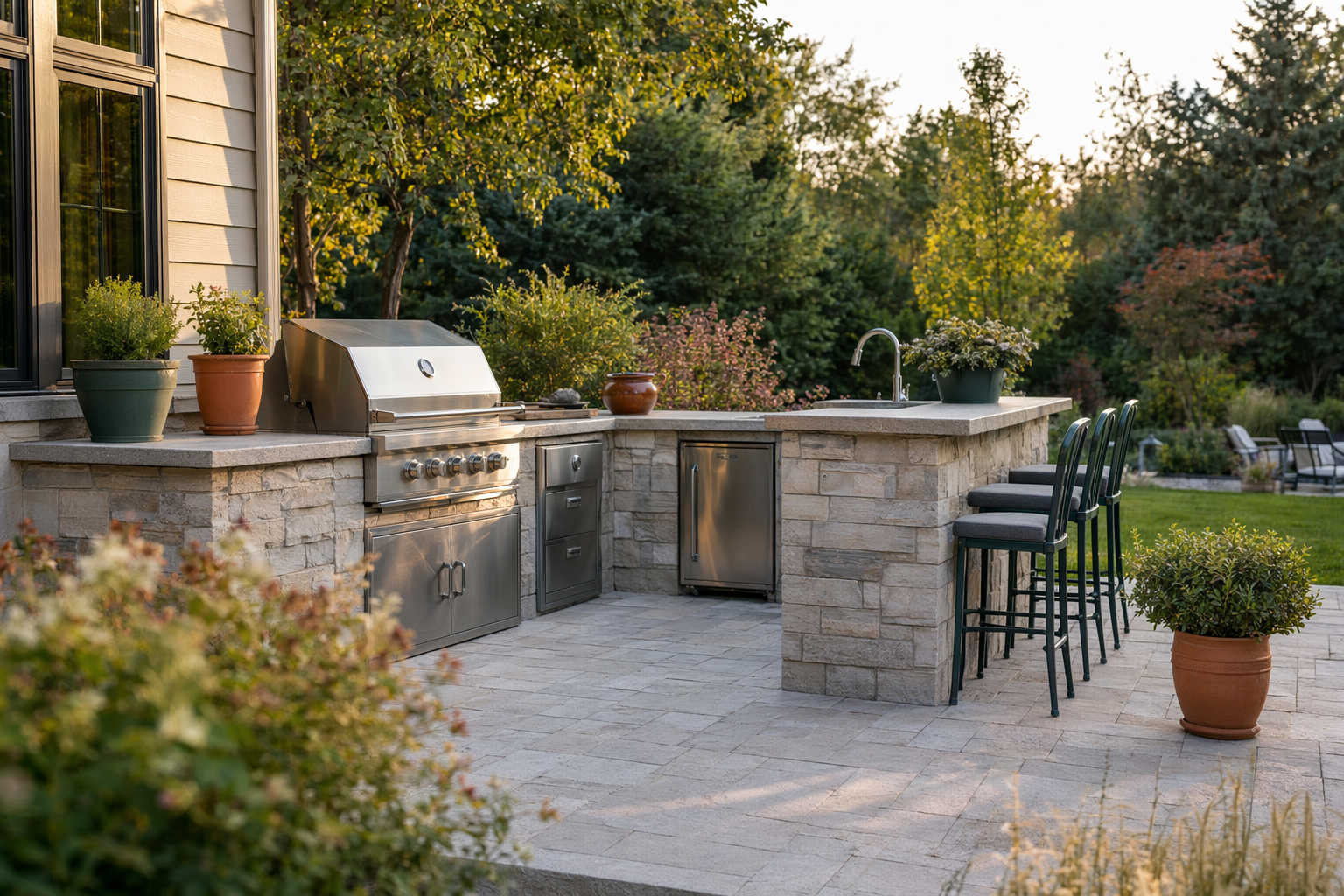
Typical timeline (the honest answer)
Most outdoor kitchen projects take about 2–6 weeks from start to finish. Smaller builds (simple countertops, a couple of appliances, basic plumbing) may land closer to the low end, while larger layouts or heavy site work can take longer.
A big reason is that outdoor kitchens aren’t just “building.” They often involve multiple steps that can’t all happen at once—design choices, permits, material ordering, and utilities (gas/electric/water/drainage) approvals.
It’s also normal for timelines to shift if the weather is rough, if deliveries are delayed, or if the site needs extra prep (uneven ground, tight access, or drainage concerns).
- Small/basic outdoor kitchen: often ~2–3 weeks
- Average-size with a few appliances and some utility work: often ~3–6 weeks
- More complex layouts, lots of stonework, or major site/drainage issues: can be 6+ weeks

What adds time (and what shortens it)
Your schedule is usually driven by four things: permits, utilities, materials, and site prep. If you’re already sure about your appliance list and finishes, you can avoid “waiting on decisions,” which quietly stretches timelines.
Permits can be a bottleneck. Many areas require permits for gas lines, electrical outlets, and plumbing/drainage. Even when work is allowed, the permit review and inspection scheduling can add days to weeks.
Materials and lead times matter too. Stone, pavers, cabinets/enclosures, grills, burners, and specialty items may be backordered. If the installer builds a plan around what’s actually in stock, the timeline is smoother.
- Adds time: permit review/inspections, gas/electrical/plumbing steps, delayed stone/cabinet/appliance deliveries
- Adds time: slope/uneven ground, poor access for trucks, drainage surprises
- Shortens time: clear appliance/finish choices up front, “like-for-like” replacements, materials that are readily available
Step-by-step: where the weeks usually go
While each crew works differently, a typical outdoor kitchen flow looks like this. Exact sequencing depends on your site and local requirements.
- Planning & choices: confirming layout, appliances, finishes, and where utilities connect.
- Scheduling & site visit: measuring, checking access, and discussing any drainage or grading needs.
- Permits (if required): submitting paperwork and waiting for approval.
- Rough utilities (as needed): gas/electric/plumbing steps handled by licensed pros with required permits.
- Build-out: framing/enclosures, base work, and installing counters and stone/brick elements.
- Finishes & connections: final countertop sealing/finishing (if applicable), appliance installation, and cleanup.
- Final inspection: if your area requires it, and any last adjustments.
If you want the most realistic timeline, ask the builder what parts of the process are “waiting” steps versus “work” steps in your specific area.
- Weather can affect outdoor work—ask how they protect unfinished areas.
- Utility work can’t always be done last; it may need to happen before the countertop/finish surfaces go in.
Materials trade-offs that affect time and cost
Different materials can change both timeline and upkeep. It’s not just about the look—think about how they behave outdoors and how long they take to order.
Here are common trade-offs homeowners run into:
- Natural stone (popular for countertops and surrounds): durable and beautiful, but lead times vary by slab availability, and installers may need time for templating and finishing.
- Concrete countertops/pavers: can be faster if materials are stocked, but you may still need cure/seal time depending on the finish system.
- Brick/block or masonry enclosures: strong and long-lasting, but more layers and detailed work can add days.
Appliance choices also matter. Premium grills, built-in refrigeration, or specific burner configurations may take longer to ship than standard options.
- Ask if your countertop is templated (made-to-fit) or more “standard-size.” Templated work often adds time.
- Sealing/finishing requirements can add downtime—plan around cure times.
Cost reality check (timeline often follows budget choices)
Outdoor kitchen costs vary widely, and “how long it takes” often shifts with how much scope you include. A small, appliance-forward setup can cost less than a full masonry build with custom counters and extensive hardscaping.
As a very rough planning guide, many homeowners spend about $8,000–$25,000 for smaller outdoor kitchens, and about $25,000–$60,000+ for more complete builds with higher-end appliances, more stonework, and better utility integration. These are not quotes—your real number depends on project size, materials, site conditions (slope, access, drainage), and your local area.
If a contractor suggests a timeline that doesn’t match the scope (or keeps changing the plan), that’s a sign to slow down. Timeline and price should line up with the work that’s actually being proposed.
- Site complexity (slope, drainage, hard access) can add both cost and schedule time.
- Permits and licensed utility work can affect both budget and sequencing.
How to get the right builder and avoid delays (with red flags)
Slate & Sod is a FREE matching service—we don’t build or install anything, and we’re not a design firm. We help you connect with licensed, insured local outdoor-living and hardscape builders near you.
Before you sign anything, ask for a written scope and written price, including what’s included (and what’s not): appliances, countertop type, enclosures, countertop sealing (if applicable), electrical/gas/plumbing steps, cleanup, and the number of visits. Then make sure they provide a start date estimate and a schedule outline for your steps.
Red flags to watch for:
- Large cash-only deposits or refusing to put the agreement in writing
- No proof of license and insurance
- Vague quotes that don’t list materials and appliance models
- Pressure to decide on the spot
- Promises that sound too certain (especially around permit timelines or “guaranteed delivery dates”)
Best next step: get matched (free) and ask the timeline questions
If you’d like, tell us your ZIP, rough budget, project type (outdoor kitchen), and preferred language—then we’ll connect you with suitable local builders. It’s always free for you, and you stay in control of who you hire.
When you speak with builders, bring these questions so you get a realistic timeline—not a guess:
- “What’s your estimated duration for a project like mine in my area?”
- “What permit(s) are likely, and how do you handle inspection scheduling?”
- “What utilities are needed (gas/electric/water/drainage), and which steps require licensed pros?”
- “What materials/appliances typically have lead times, and what’s in stock?”
- “What does the written scope include, and what would change the schedule?”
- “How do you protect the site if weather delays work?”
You’re planning a space you’ll enjoy for years—so it’s worth taking a little time now to align scope, materials, and a sensible schedule. That’s the fastest way to reduce surprises later.
- Use [get matched](/get-matched/) when you’re ready to connect with local builders.
- If you want more planning help, check [guides](/guides/) and [costs](/costs/).
- Need general help on the process? Visit [help](/help/).
Most outdoor kitchens take about 2–6 weeks, and the timeline usually depends on permits, utility work, material lead times, and site prep—plan for delays and get everything in writing before work starts.
Common questions
Can an outdoor kitchen be built in 1 week?
Sometimes, but it’s usually only for very small projects that don’t require major permits or complex utility work and where materials/appliances are already available. For many homes, the permit and utility steps alone make 1 week unlikely.
Do permits slow down outdoor kitchen projects?
Often, yes. Many areas require permits for gas, electrical, and plumbing/drainage. Even after work is scheduled, inspections and permit approvals can add days or weeks.
What causes the longest delays?
Common causes are backordered appliances/stone, unexpected site prep needs, and inspection scheduling for permitted utility work. Weather can also pause outdoor tasks if the crew can’t safely proceed.
How can I get a more accurate timeline?
Ask for a written scope and a step-by-step schedule outline, including what decisions you must make before construction starts. Also confirm material and appliance lead times and which utility steps need licensed pros and permits.
Is the builder responsible for the timeline if permits take longer?
It depends on the contract and local permitting process. That’s why it’s important to get the scope, responsibilities, and timeline assumptions in writing and review how delays are handled.