Quick answers
How long does it take to build a patio?
A patio often feels “quick,” but the real timeline depends on size, materials, site conditions, and how complex your design is. Here’s a realistic range and what to ask so you can plan your project without surprises.
First: the typical patio timeline (realistic ranges)
Most simple patios take about 1–3 weeks from start to finish, including setup and cleanup. If you’re doing a larger patio, adding steps, a retaining edge, or more drainage work, it can take closer to 3–6+ weeks.
A big factor is not just building day(s)—it’s prep, material lead times, and weather. Patio work also often requires inspection or scheduling around other trades (like hauling, utility locating, or permits).
Because every yard is different, the only honest way to estimate your timeline is to get a local builder to look at your site and confirm the scope in writing. If someone won’t discuss details, ask more questions or get another quote.
If you want to compare budgets alongside time, see our patio cost guide so you can understand what usually drives both price and schedule.
- Simple patio (basic shape, standard access): often ~1–3 weeks
- Larger patio or more features: often ~3–6+ weeks
- Weather, permits, and material availability can add time

What makes a patio take longer (or go faster)
Here are the most common timeline drivers. Think of your patio as “prep + build + cure/finish + cleanup,” and any step can add days.
Site and prep: Sloped yards, poor drainage, tree roots, thick soil, narrow access, or needing more base work can slow things down. If there’s an existing slab, old pavers that must be removed, or complicated grading, expect more prep time.
Design complexity: A straightforward rectangular patio generally goes faster than a patio with curves, multiple levels, steps, borders, or tying into existing hardscape (like a driveway apron, walkway, or pool deck).
Permits and inspections: In many areas, permits are required. Even if the build is quick, inspections can affect the calendar. Gas/electrical features (like outdoor kitchens with gas lines, lights, or outlets) require licensed pros and permits—this can add time. Always follow local code requirements.
Weather: Rain, freeze/thaw, and extreme heat can delay certain steps. Builders sometimes pause work to avoid ruining the base or finishes.
For a better planning checklist, browse patio planning tips and help resources before you request quotes.
Material choices: how they affect schedule
Material options can change how long things take, mostly due to availability, layout complexity, and any “wait” time between steps.
Pavers vs. natural stone: Both can look beautiful, but natural stone sometimes involves more cutting, fitting, and sorting. That can add labor time. Pavers often come in standard sizes, which can make installation smoother if the design is simple.
Concrete and stamped concrete: If your project includes stamped concrete, the schedule can depend on curing time and weather windows. That doesn’t always mean “slow,” but it can affect when the area can be used.
Sand-set vs. mortar-set (general idea): Some patio styles are installed in a way that requires careful base preparation and correct bedding materials. If the builder needs more time for precision, the schedule can stretch.
Delivery and backorders: Even if installation would be fast, unusual colors, larger sizes, or premium stone can take longer to arrive. If you’re not flexible on materials, ask about lead times early.
If you’re comparing options, remember: the “fastest” material isn’t always the “best match” for your yard conditions and long-term upkeep.
A sample timeline (what “weeks” usually include)
Every job is different, but a typical patio schedule often looks like this. Use it as a planning tool, not a promise.
1. Site walk + measurements: A builder checks your yard, access, drainage, and any existing features. You should also review what’s included (removal? haul-off? edging? bonding to house?).
2. Materials ordered + permits (if needed): Some approvals and deliveries can take days to weeks depending on your area and the product.
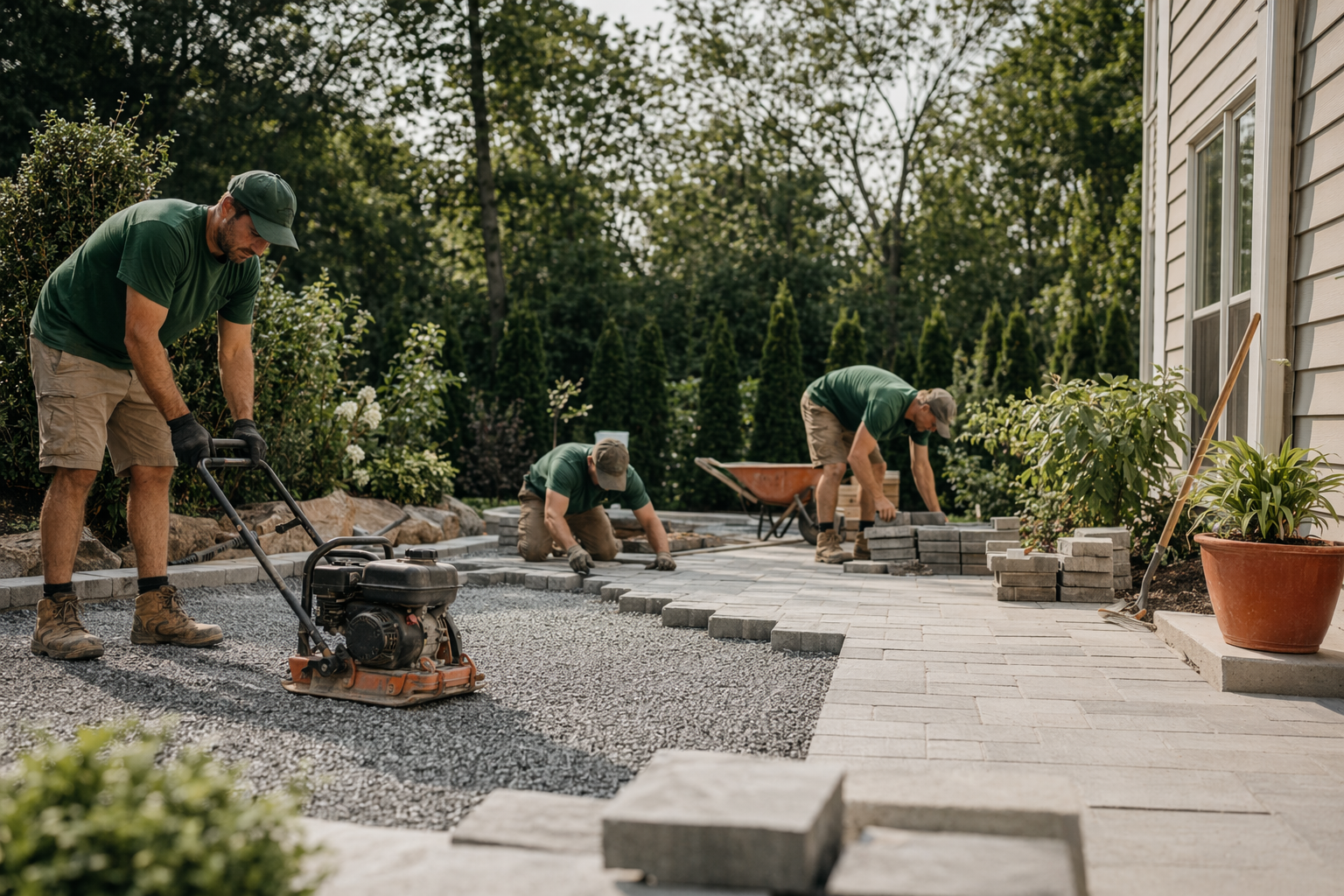
3. Prep and base work: This is where most of the “time” goes—layout marking, excavation/removal if needed, base layers, and leveling.
4. Install: Setting pavers/stone or forming/pouring (for concrete), plus borders/edges and finishing details.
5. Cleanup + final walk-through: The builder should leave the site clean and explain maintenance basics.
If you’re building alongside other projects (fence, landscaping, a driveway repair), coordinate so trades don’t undo each other’s work. The patio may be the foundation for what comes next.
Cost and time are linked (but not the same thing)
It’s normal to wonder, “If it costs more, does it take longer?” Sometimes yes, sometimes no. Labor intensity, material type, and site conditions can affect both, but timeline can also be driven by permitting and material delivery.
A smaller patio might still take time if the area is hard to access or if permit approvals aren’t ready. A larger patio might go faster if the site is simple and materials are in stock.
To estimate your planning range, look at what drives patio cost in your area: size, material, base prep needs, removal/haul-off, edging and steps, patterns/complex shapes, and any drainage work required by the site.
If you want a practical breakdown, use our patio cost guide. It’s not a quote—just a way to understand what commonly changes your price and your schedule.
How to get a trustworthy timeline from a builder (and protect yourself)
When you request quotes, ask for the timeline in plain language and make sure it matches the scope. A good estimate should be based on your actual yard, not generic guesswork.
Red flags to watch for:
- Vague timeline like “soon” without dates or steps
- Large cash-only deposits or pressure to decide immediately
- No written contract or unclear scope (“we’ll figure it out later”)
- They can’t explain what’s included (removal, leveling, edging, cleanup, maintenance)
- No proof of licensing/insurance when required in your state and city
What to ask for (timeline + scope):
- “What exact work is included from start to finish?”
- “How long is the prep step, the install step, and the final cleanup?”
- “What permits are required here, and what’s the inspection schedule like?”
- “Are materials available now or is there a lead time?”
- “What happens if it rains—do you pause, reschedule, or adjust methods?”
- “Can you put the schedule and the scope in writing?”
Get-it-in-writing reminder: Always ask for a written scope of work and a written price. Confirm the estimated start date, estimated duration, and any allowances for change orders. Also ask about what “substantial completion” means for payment.
Slate & Sod can help you get matched with licensed, insured local outdoor-living/hardscape builders. It’s free for homeowners, and you stay in control—you choose who to hire after you compare written quotes. Start here: get matched.
Patios often take about 1–3 weeks, but your yard conditions, permits, material delivery, and weather can stretch that—so get a timeline and scope in writing from a licensed, insured local builder via Slate & Sod (free for homeowners).
Common questions
Can a patio be built in a weekend?
Sometimes a very small, simple patio can be installed quickly, but most projects still need prep, leveling/base work, and proper finishing steps. If permits, material delivery, or bad weather are involved, it usually takes longer.
How long after installation can we use the patio?
It depends on the material and installation method. Some patio types can be used fairly soon after completion, while others may need additional time for setting/curing and for proper settling. Ask the builder for the specific “ready for use” timeline in writing.
What should I do if my builder’s timeline keeps changing?
Request the reasons in plain language—permits, inspections, material lead times, weather, or missing scope items. Then ask for an updated written schedule. If the changes are frequent without clear explanations, consider getting another quote.
Will rain ruin the schedule or the finished patio?
Rain can delay steps and can also affect base preparation if work can’t be done properly. Good builders plan weather windows and may pause work. Ask what the plan is for wet conditions and whether they protect the site during delays.
Do I need permits for a patio?
Rules vary by city and state. Some patios need permits or inspections, especially if there’s drainage work, a significant structure (like a tall retaining wall), or gas/electrical features. A local licensed builder can tell you what typically applies, but always check local building department requirements.