Quick answers
Gas vs wood-burning fire pit?
Choose gas if you want quick, clean, easy evenings outside. Choose wood if you love real flames, crackle, and smoke smell — and you have space, time, and local rules that allow it.
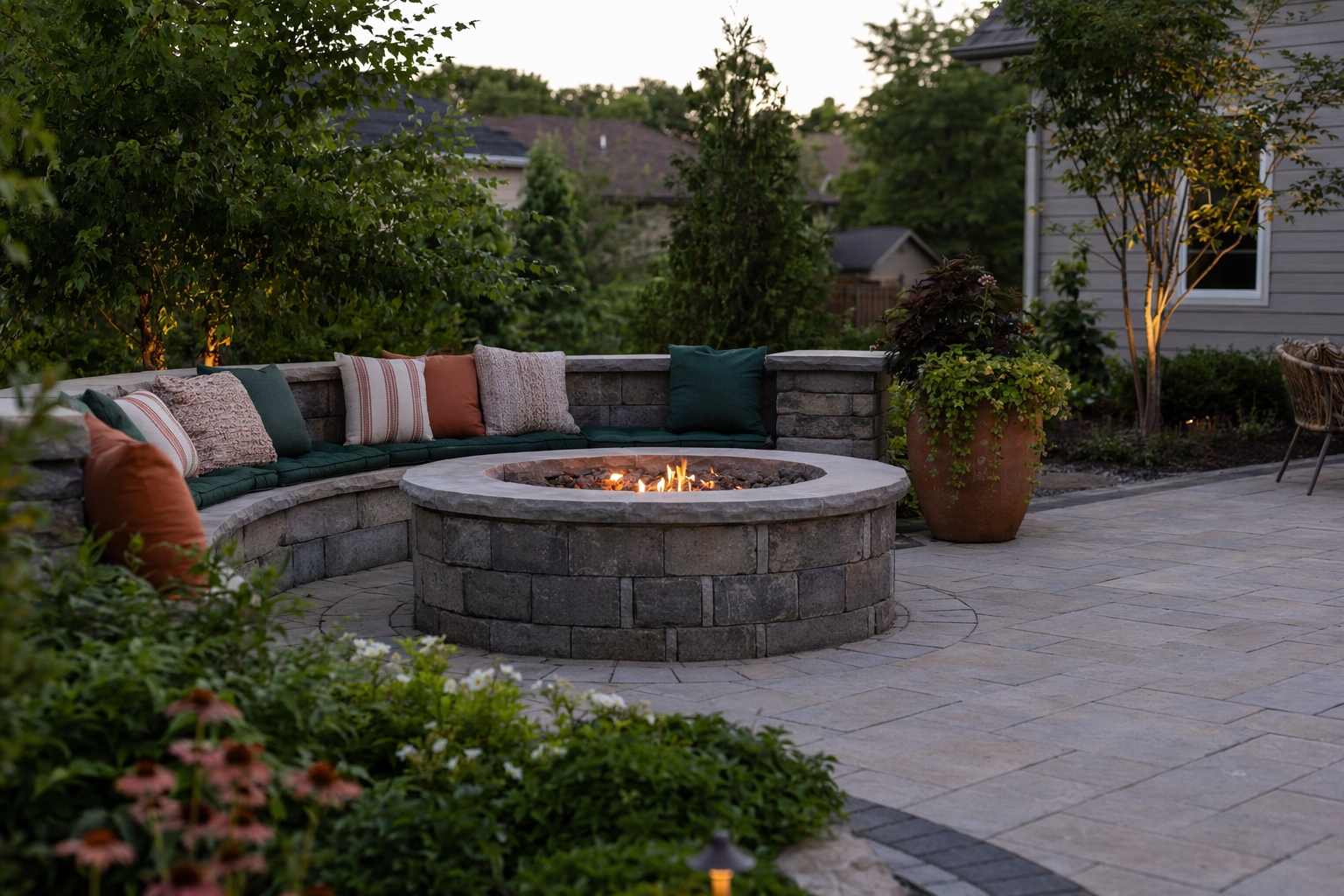
The short answer
For most busy homeowners, a gas fire pit is easier to live with. It starts fast, turns off fast, makes little mess, and is simpler for guests and family to use.
A wood-burning fire pit feels more traditional. You get the real flame, the sound, and the campfire smell many people love. But you also get smoke, ash, wood storage, more cleanup, and often more rules.
Neither option is "best" for every yard. The right choice depends on how you plan to use it, your budget, your local fire rules, and how much maintenance you want.

When gas makes more sense
Gas is a good fit if you want a backyard feature that feels easy and predictable. Many homeowners choose it for patios where people sit close together, eat outside, or want a cleaner look.
A gas fire pit usually lights with a switch or ignition, burns evenly, and shuts off quickly. That makes it appealing for families with limited time, people who entertain often, and anyone who does not want to deal with wood, sparks, or leftover ash.
Gas can also be a better choice in places with smoke-sensitive neighbors, HOA rules, or local burn restrictions. Rules vary by city, county, and state, so always check local requirements before planning the project.
- Fast start and fast shutoff
- Little ash, soot, or smoke
- No firewood to haul or store
- Often easier for frequent entertaining
When wood makes more sense
Wood-burning fire pits are for people who want the full campfire experience. If the smell of burning wood, popping sounds, and larger natural-looking flames matter most to you, wood may feel more satisfying.
Wood can also be appealing if you have a larger yard and more separation from neighbors. Some homeowners simply enjoy tending a real fire and do not mind cleanup.
The trade-off is effort. You need dry wood, a safe place to store it, time to start and manage the fire, and a plan for ash disposal. Smoke can bother guests, drift toward the house, or annoy neighbors. In some areas, wood burning may be limited or not allowed during certain seasons.
- Most natural campfire feel
- Crackle, smell, and real wood flames
- Usually more smoke and cleanup
- May face stricter local restrictions
Cost differences and what changes the price
In general, a simple wood-burning fire pit often costs less up front than a gas fire pit. A basic built-in wood-burning setup may land around $1,500 to $5,000+, while a built-in gas fire pit often starts around $3,500 and can run $12,000+ for larger or more finished projects. These are broad US ranges, not quotes.
Why the gap? Gas projects usually need more parts and more skilled trade work. If you need a new gas line, longer trenching, upgraded utility connections, ignition systems, or a more custom stone surround, the total can rise quickly. Gas and electrical work require licensed pros and permits.
For wood-burning pits, the cost can still climb based on size, stone choice, site prep, drainage, seating walls, nearby patio work, and access to the yard. Difficult slopes, poor drainage, tight side-yard access, and premium materials push both types upward.
Operating cost matters too. Wood may cost less to build, but you keep buying or gathering firewood. Gas may cost more up front, but some homeowners like the simpler ongoing use. Local fuel prices vary, so the long-term difference depends on how often you use it. For broader planning ranges, see cost guides.
Materials, design choices, and safety questions to ask
Most built-in fire pits use concrete block, stone veneer, natural stone, brick, or poured concrete details. The material affects the look, price, and upkeep. Natural stone can look rich and timeless but often costs more. Concrete-based systems can be more budget-friendly and easier to match with modern patios. Brick can fit traditional homes well, but style preference matters.
Think about the fire pit as part of the whole backyard, not a stand-alone object. How many people should fit around it? Will you want seat walls, movable chairs, a larger patio, lighting, or an outdoor-living plan that connects the fire pit to a walkway, pergola, or kitchen area?
Ask practical questions early: How close can it be to the house or roof overhang? What surface will be around it? How will smoke or heat affect seating? How will water drain away? Those answers depend on your local code, the product, and the site.
This is general information only, not construction, engineering, or legal advice. A licensed, insured builder should review the site, and where required, a licensed engineer and the local building department should guide setbacks, drainage, and code issues.
Red flags and how to hire carefully
A fire pit seems simple, but it still needs good planning and safe installation. Be cautious if a contractor pushes a low verbal price without details, wants a large cash-only deposit, cannot show license or insurance, or pressures you to sign the same day.
For gas projects, be especially careful. Gas lines, burners, shutoff locations, ignition systems, and any electrical parts should be handled by properly licensed professionals with permits as required locally. Do not rely on a handshake or vague promise that it will be "to code."
Get the scope and price in writing. That written quote should clearly say what is included: materials, size, fuel type, finish, site prep, cleanup, utility work, permits, and who is responsible for each part. Compare a few quotes so you can see real differences in scope, not just the total number.
You stay in control. You set the budget, compare written quotes, choose who to hire, and confirm the scope and price before work starts.
How Slate & Sod can help
Slate & Sod is a free matching service for homeowners — not a contractor, builder, or design firm. We do not perform construction work. We help you plan the project in plain language and get connected with licensed, insured local outdoor-living and hardscape builders.
If you want help getting started, you can get matched with local builders in your area. The service is free for homeowners. We only collect basic contact and project details like your name, phone, optional email, project type, ZIP code, rough budget, and preferred language.
If you are still deciding between options, start with our help center or browse more guides so you can compare materials, costs, and project ideas before asking for quotes.
Gas is easier and cleaner, wood feels more natural, and the right pick depends on your budget, your yard, and your local rules.
Common questions
Is a gas fire pit safer than a wood-burning one?
Gas can be easier to control because it lights and shuts off quickly and does not throw ash or sparks the way wood can. But neither is automatically safe without proper design, clearances, permits where required, and licensed installation for gas and electrical work.
Does a wood-burning fire pit add more backyard value?
Either type can make a backyard more enjoyable, but resale value is not guaranteed. What matters most is whether the fire pit fits the yard well, looks finished, and was built properly with materials and features buyers in your area actually want.
Can I build a gas fire pit myself?
For gas lines and any electrical parts, hire licensed professionals and follow local permit rules. This page is general information only, and a builder plus your local building department can tell you what is allowed in your area.
Why are quotes for fire pits so different?
Two quotes may look far apart because the scope is different. One may include utility work, permits, drainage, better materials, seat walls, or cleanup while another leaves those out, so always compare line by line and get everything in writing.
What if I am not sure which fuel type fits my yard?
That is normal. Start with how you want to use the space: quick weeknight sitting, or full campfire experience. Then compare local rules, maintenance, and budget, and talk with a licensed, insured builder who can look at your site.