Quick answers
What are the best pavers for a patio?
The “best” pavers depend on how your yard is used, your weather, and what you want to maintain. This guide explains common patio paver types, real-world trade-offs, typical costs, and how to get matched with a licensed, insured local builder.
First: the best patio pavers are the ones that fit your climate and lifestyle
In most homes, the best patio pavers are the ones that handle your freeze/thaw cycles (if you get winter), don’t stain easily, and match how you’ll use the space—kids, pets, grilling, or just relaxing.
Two patios can look similar, but last very differently. Durability isn’t only the paver “type”—installation quality, drainage, and site conditions (like slope and soil) matter a lot.
If you’re comparing options, start with your region and maintenance comfort level, then move to thickness/size, surface texture, and color choices. A good local builder can help you pick what’s appropriate for your area—don’t rely on online photos alone.
- Choose based on your weather (especially freeze/thaw), not just looks.
- Ask what happens with drainage and how the patio stays stable over time—get answers in writing.

Common patio paver materials (and the trade-offs)
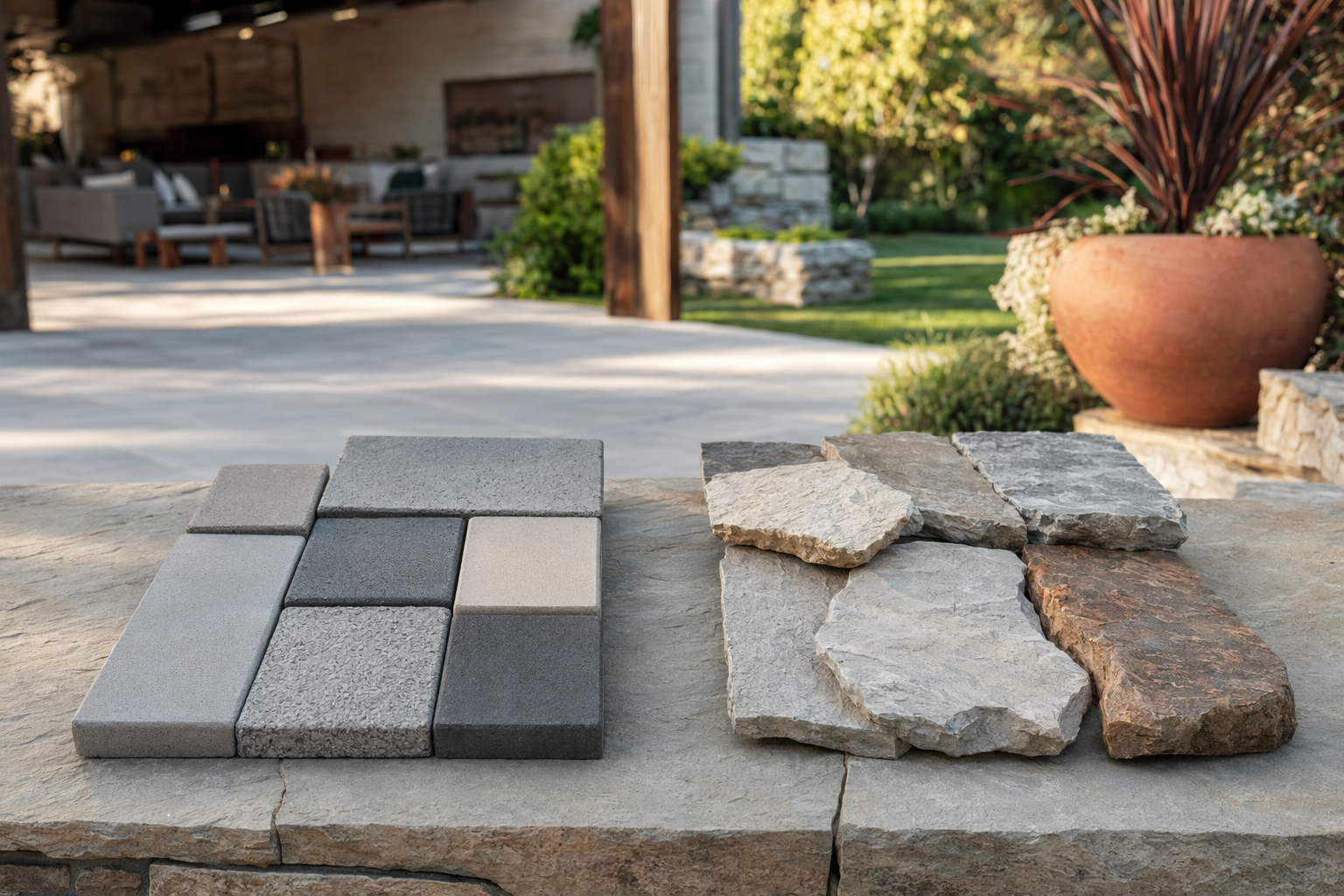
Most residential patios use either concrete pavers or natural stone. Both can look great. The “right” choice usually comes down to cost, maintenance, and how consistent you want the look to be.
Here’s a practical way to think about it: concrete pavers are often more predictable and budget-friendly, while natural stone can offer unique character but may vary more and can be pricier depending on the stone.
No matter what you choose, ask your builder about slip resistance for your area (especially if your patio gets wet) and how the surface will age.
- Concrete pavers: often a strong value; many styles and colors; usually consistent in shape.
- Natural stone: one-of-a-kind look; can vary lot to lot; sometimes higher material cost.
Concrete pavers vs natural stone: which is “best” for you?
Concrete pavers are typically made in molds, so the color and shape can be very consistent. Many homeowners like them because there are lots of patterns (including “random” looks), and it’s usually easier to find matching pieces later.
Natural stone (like flagstone, slate, or bluestone types) can give a more organic look that many people love. The trade-off is that stone pieces can vary, and the final cost depends heavily on the stone type, thickness, and how it’s quarried and installed.
If you’re unsure, an easy rule is: if you want the most predictable results for a set budget, concrete pavers are often a safe bet; if you want natural variation and are comfortable with a wider range of pricing, stone can be beautiful.
- Want consistent color/pattern and easier matching later? Concrete often wins on predictability.
- Want natural variation and a “crafted” look? Natural stone may be worth the extra cost.
Brick pavers (clay): classic look, strong performance—check suitability
Clay brick pavers are known for a classic, warm look and long-lasting performance when they’re matched to the climate. They can hold up well, but they’re not always the cheapest option, and the best choice depends on your local freeze/thaw conditions and how the patio is built.
Brick pavers also tend to have fewer uniform “modern” styles than concrete, so you’ll want to choose a pattern that still looks good as it weathers.
Because brick and stone can be more sensitive to installation and drainage, it’s especially important to ask for details in writing: what paver thickness range they’re proposing, what base/drainage approach they plan to use, and how they’ll prevent standing water.
- Brick can be a great look, but choose with your climate in mind.
- Ask how they’ll address drainage and prevent puddles/ice in winter—get it in the scope.
What drives cost (real ranges) and what makes prices go up or down
A patio’s total cost depends on paver material, the pattern, the patio size, thickness, edging, and—big one—site conditions like slope, access for deliveries, and how drainage is handled. Installation complexity matters too (turns, steps, curved layouts, and tying into existing surfaces).
As a rough planning range (not a quote), many homeowners budget in the neighborhood of $15–$35 per square foot for basic patios, and higher if you choose premium stone, complex shapes, or extensive prep. A larger patio or one with major site work can land above those ranges.
To keep your budget from surprising you, ask for a line-item style estimate: materials, excavation/prep, base layer, pavers, edging, labor, and any drainage or leveling approach. Then compare apples-to-apples across quotes.
- Price up: natural stone, complex patterns/curves, extra edging/steps, tight access, drainage challenges, thicker/stronger pavers.
- Price down: simpler shapes, easier access, standard paver lines, and a flatter site with straightforward drainage.
How to choose a “best” patio paver with confidence (and avoid red flags)
Start with a short list of paver types and finishes, then confirm fit with your weather. Look for pavers labeled for outdoor use and appropriate slip resistance. Darker colors can show heat and dust differently than lighter ones, and some finishes age with a different patina than others.
Next, be clear about maintenance. Sealer choices, weed control in joints, and cleaning methods vary by material and surface texture. Ask what the recommended maintenance is for your exact paver option and whether sealing is included or optional.
Finally, protect yourself during hiring. Avoid red flags like large cash-only deposits, no license/insurance, vague quotes, no written contract, or pressure to decide immediately. Get the scope and pricing in writing, including paver type/color, approximate thickness, pattern, edging, and any drainage plan. You stay in control—your budget and the written scope should drive the decision.
- Red flag: cash-only deposits, no written contract, or vague “we’ll handle it” estimates.
- Get it in writing: paver material + color, layout/pattern, edging, what prep is included, and total price.
Get matched with a licensed, insured local builder (FREE)
Slate & Sod is a free matching service. We don’t build patios and we’re not a contractor or design firm—we help you connect with licensed, insured local outdoor-living and hardscape builders.
If you share a few details (your ZIP, the patio type—pavers/stone, a rough budget range, and your preferred language), we can match you with builders who serve your area.
Ready to talk to real pros? Start here: get matched. If you want to learn more first, browse our guides and costs pages for planning help and common questions.
- Homeowner stays in control—compare written scopes and prices before any work starts.
- For gas/electrical features (like outdoor kitchens or lights), request licensed professionals and permits where required.
The best patio pavers for you depend on your climate, look preferences, and maintenance comfort—match your paver type to your weather, get the scope in writing, and use Slate & Sod (free) to connect with a licensed, insured local builder.
Common questions
What paver size and thickness should I choose for a patio?
Many patios use standard sizes and thickness ranges that are appropriate for foot traffic and typical residential use. The best choice depends on your local conditions and how the patio will be used, so ask your builder what thickness they recommend for your project and confirm it in the written scope.
Are concrete pavers or natural stone better?
Neither is universally “best.” Concrete pavers are often a strong value with consistent shapes and easier matching, while natural stone can offer unique character but can vary in appearance and cost. Choose based on your budget, weather, and how much maintenance and variation you’re comfortable with.
Will sealed pavers look better?
Sealers can change the look (often making colors deeper) and may reduce staining, but they also add maintenance considerations. Ask what sealer (if any) is included, how long it typically lasts, and the recommended re-application timeline for your specific paver material.
How do I prevent weeds and weeds growing between pavers?
Weed control usually starts with the right base and joint material, plus good installation and proper joint filling. Ask what the builder uses for joint sand and what maintenance is expected for your chosen pavers.
What are the biggest patio paver mistakes homeowners make?
Common issues include choosing a material that doesn’t fit the climate, underestimating drainage and site prep, and skipping clear written details. Always request the scope and pricing in writing, including the exact paver type/color and the maintenance plan.