Guides
Pavers vs natural stone vs concrete
If you want the short answer: pavers are the most flexible choice for many patios and walkways, natural stone gives the richest look, and concrete can cost less up front but may show wear and cracks sooner. The right pick depends on your budget, the look you want, your climate, and how much upkeep you can live with.
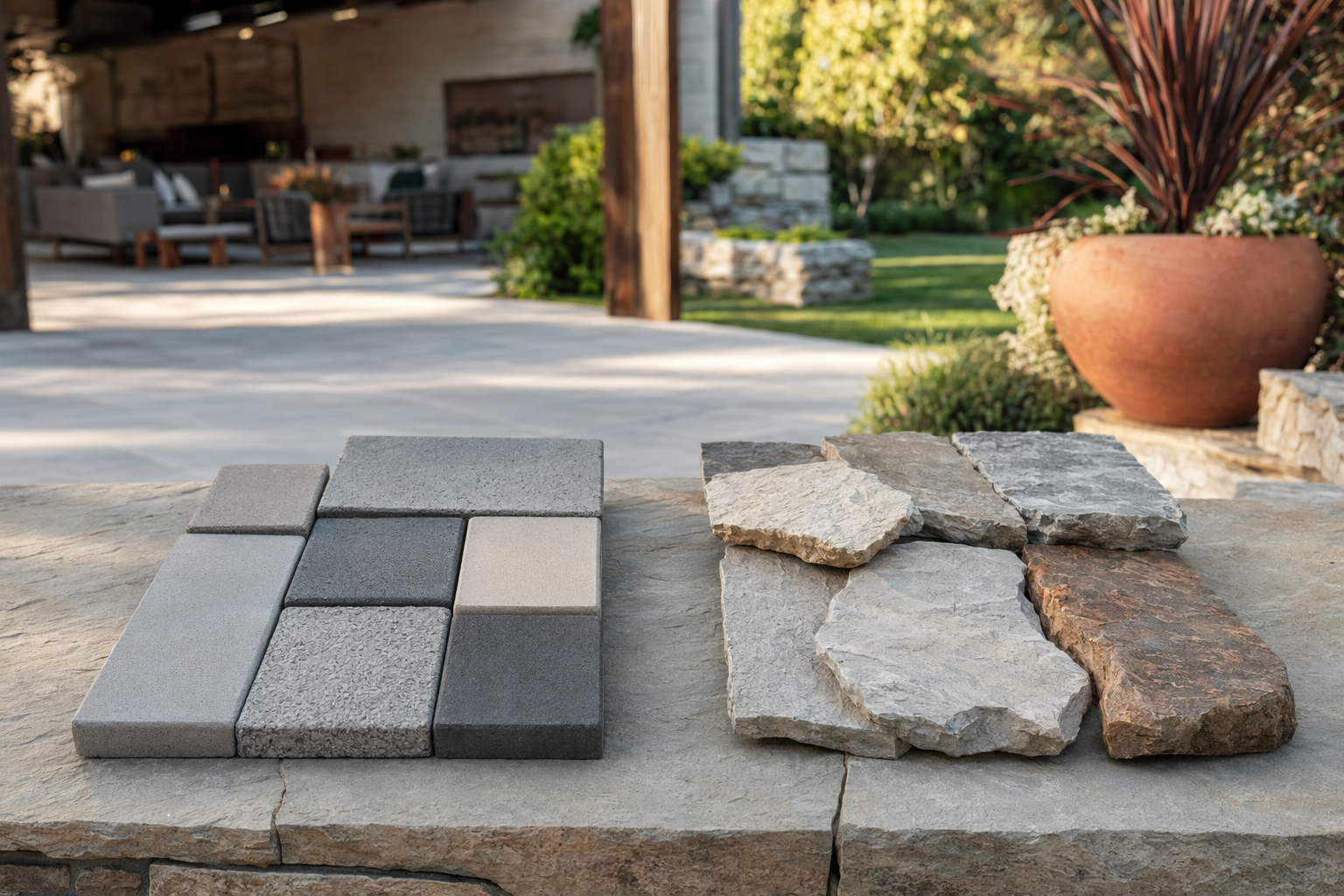
Start with the simple version
Homeowners usually compare these three because they can all make a nice patio or walkway, but they do not behave the same over time. Pavers are individual units set together, natural stone is cut or broken from real stone, and concrete is usually poured as one slab or finished with a stamped pattern.
If you want a clean, durable, easy-to-repair surface with lots of color and pattern options, pavers are often the safest middle-ground choice. If you care most about a high-end, natural look and are comfortable paying more, natural stone is hard to beat. If your main goal is a lower up-front price for a simple patio or walk, poured concrete may make sense.
There is no one best material for every yard. Slope, drainage, freeze-thaw weather, tree roots, access to the backyard, and the skill of the installer all matter. A beautiful material installed poorly can become a problem fast.
Slate & Sod is a free matching service, not a contractor or design firm. We do not build patios or walkways, but we can help you get connected with licensed, insured local outdoor-living builders so you can compare written quotes and choose what fits your budget.

Pavers: flexible, repairable, and popular for a reason
Concrete pavers are one of the most common choices for patios, walkways, and pool decks in the US. Many homeowners like them because they come in many shapes, colors, and laying patterns, so you can make the space feel modern, traditional, or somewhere in between.
A big advantage is repairability. Because pavers are individual pieces, a builder can often lift and reset a small area if it settles, or replace stained or damaged pieces without tearing out the whole patio. That makes pavers appealing in yards where soil movement, drainage issues, or future access could matter.
The trade-off is that pavers need a properly prepared base, edge restraint, and drainage plan. If that part is rushed, you may see shifting, low spots, weeds in joints, or uneven edges. Some paver surfaces also need periodic joint sand touch-ups and occasional cleaning or sealing, depending on the product and the look you want.
As a very general range, many basic paver patios and walks land around $15 to $35+ per square foot installed, with premium products, complicated patterns, steps, curves, borders, and difficult sites pushing higher. These are not quotes. Your real cost depends on size, materials, site access, slope, drainage, soil, and your area.
Natural stone: beautiful and durable, with a higher price tag
Natural stone is often the choice for homeowners who want the most custom, organic, and high-end look. Bluestone, travertine, flagstone, limestone, and granite all create a different feel. Some look formal and clean-cut. Others feel rustic and relaxed.
Stone can last a long time when the right material is chosen for the climate and installed well. It can also stay cooler underfoot than some darker manufactured materials, which matters on sunny patios and pool areas. Many people simply love that no two pieces look exactly the same.
The main trade-offs are price, availability, and consistency. Natural stone usually costs more than pavers and basic concrete, and some stone types vary in thickness, color, and texture. Certain stones may stain more easily, need sealing, or perform differently in freeze-thaw weather. A licensed, insured local builder can help you understand what tends to hold up best in your area.
A broad installed range for natural stone patios and walkways is often around $25 to $60+ per square foot, and premium stone or complex layouts can go well beyond that. Again, these are not quotes. The final number depends heavily on the stone type, thickness, layout, cuts, waste, access, and local labor costs.
Concrete: lower up front, but know the limits
Poured concrete is often the simplest and most budget-friendly way to create a patio or walkway. It can be broom-finished for a plain look, colored, or stamped to imitate stone or pavers. For some homeowners, that lower starting price is enough to make it worth serious consideration.
Concrete can look good, especially on modern homes or for straightforward rectangular spaces. But it is important to be honest about the trade-offs. Concrete slabs can crack. That does not always mean the whole patio failed, but cracking is common enough that you should go in expecting some risk over time, especially with ground movement, roots, drainage problems, or harsh weather.
Repairs can also be less forgiving than with pavers. A patch may show. A crack may remain visible. Color and stamped patterns can be hard to match later. Some surfaces can also become slippery when wet if the finish is not chosen carefully.
A general installed range for basic poured concrete is often around $8 to $18+ per square foot, with stamped or decorative concrete commonly around $12 to $25+ per square foot. Site prep, reinforcement choices, demolition, grading, drainage work, and access can raise the cost. These are ranges, not quotes.
How to choose based on your yard, budget, and upkeep
If you are stuck, start with your real budget first, then your tolerance for maintenance and repairs. Many homeowners fall in love with a photo before they think about what the surface will need after two summers, one winter, and a few backyard parties.
Here is a practical way to narrow it down:
1. Decide your budget range before talking materials.
2. Think about the look you want: clean and uniform, natural and organic, or simple and affordable.
3. Consider your climate, drainage, and whether your yard has slope, roots, or difficult soil.
4. Ask how repairs are handled if part of the surface settles, stains, or cracks.
5. Ask what maintenance is expected each year and what that costs.
6. Compare written quotes for the same scope, not just the lowest number.
If you want a backyard surface that is easier to repair and customize, pavers often win. If visual character matters most and the budget allows it, natural stone may be worth it. If you need a simpler, lower-cost starting point, concrete may be enough.
You can also browse more planning help in our guides, explore common backyard projects, and review general costs before you talk to builders.
Red flags to watch for before you hire anyone
No material will save you from a bad install. A lot of patio and walkway problems come from poor prep work, weak drainage planning, vague scope, or a builder who disappears when something settles or cracks.
Watch for these red flags:
- large cash-only deposits
- no proof of license or insurance
- vague quotes with no material details
- no written contract
- pressure to sign today
- promises that a surface will never crack, shift, stain, or need upkeep
Ask each builder to put the scope and price in writing. That should include the material, approximate size, demolition if needed, base prep, edging or restraint, drainage items, pattern or finish, cleanup, and what is excluded. If electrical or gas work is part of a larger outdoor project, use licensed pros and expect permits.
Rules, permits, and HOA requirements vary by area, and this page is general information only, not construction, engineering, or legal advice. For your own project, compare a few written quotes, verify license and insurance, and confirm what your local building department requires. If you want help finding local companies to quote your job, get matched through Slate & Sod for free. You stay in control of the budget, the scope, and who you hire.
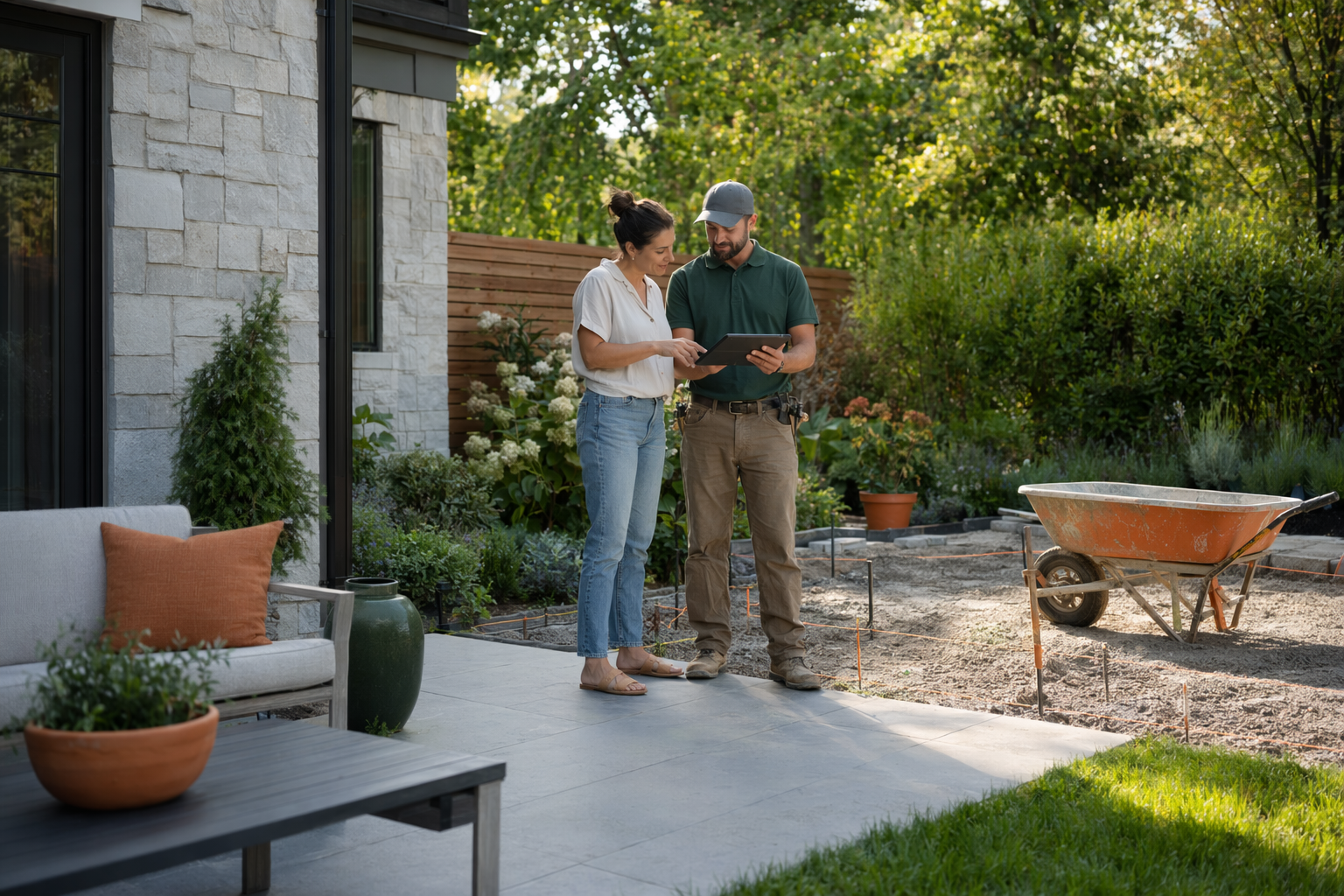
Pavers are often the best all-around choice, natural stone gives the nicest look for more money, and concrete can cost less up front but may be harder to repair later.
Common questions
What lasts longer: pavers, natural stone, or concrete?
All three can last a long time if they are installed well and fit the site, but pavers and many natural stones are often easier to repair over time than poured concrete. The real lifespan depends on base prep, drainage, climate, use, and maintenance.
Are pavers better than stamped concrete?
Many homeowners prefer pavers because individual pieces can often be reset or replaced if a section moves or gets damaged. Stamped concrete can cost less up front, but cracks and repairs may be more visible.
Is natural stone worth the extra money?
It can be, if you care a lot about appearance and want a more custom, high-end feel. But it is not automatically the best value for every home, especially if the budget is tight or the yard has conditions that make installation more complex.
Which option needs the least maintenance?
There is no zero-maintenance option. Concrete may seem simple at first, but repairs can be harder if cracks appear; pavers may need joint sand touch-ups; natural stone may need cleaning or sealing depending on the type. Ask each builder what routine upkeep to expect.
How do I compare quotes fairly?
Make sure each quote covers the same scope, size, material, prep work, drainage, finish, and cleanup. Get everything in writing, verify license and insurance, and be careful with vague low bids or pressure to decide on the spot.