Guides
How to vet an outdoor-living contractor
Hiring the right outdoor-living contractor is mostly about paperwork, proof of past work, and clear written details. Use this checklist to reduce surprises—especially on patios, outdoor kitchens, retaining walls, and walkways.
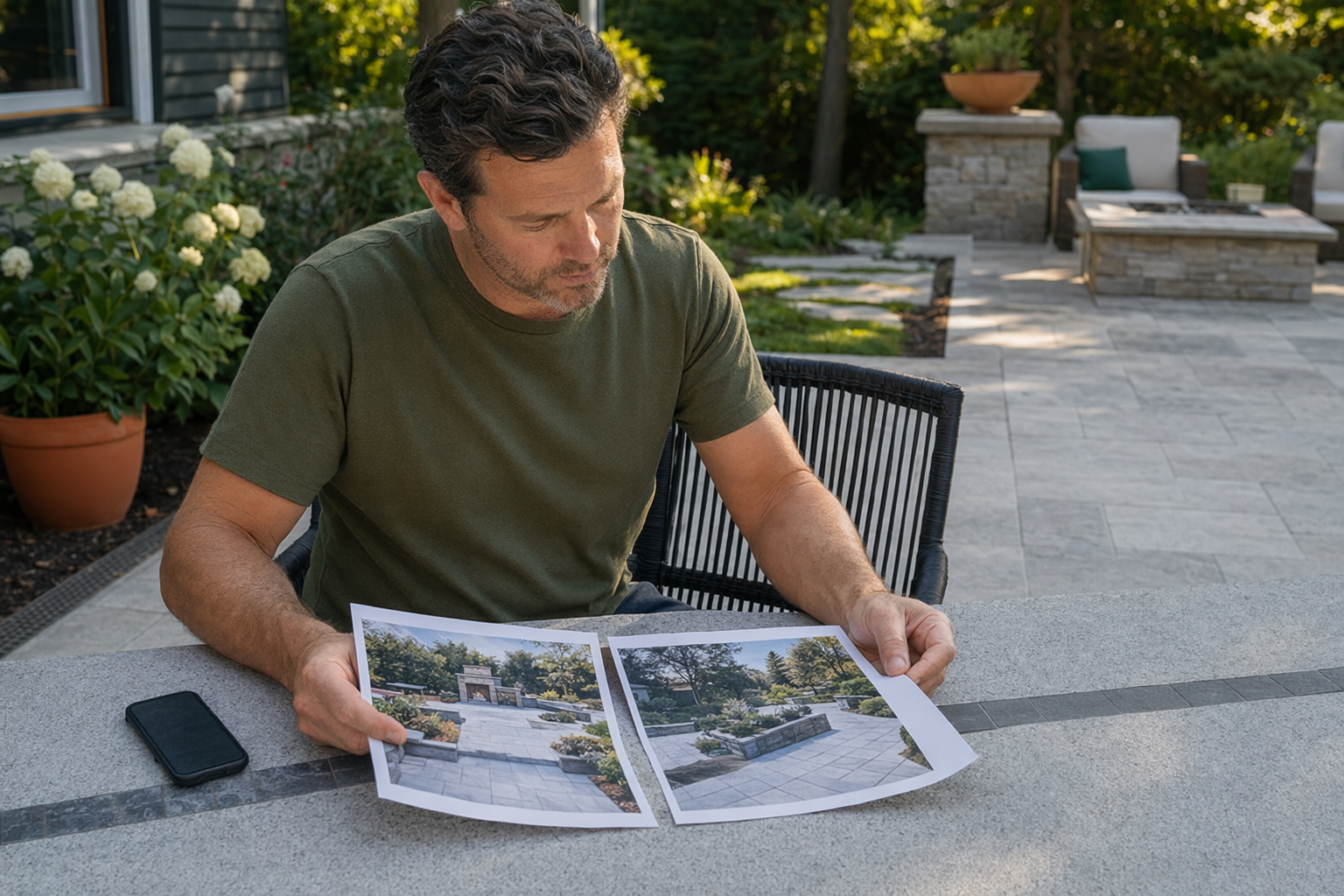
Start here: the “must-check” basics
Before you talk about design or price, verify the basics. A real, accountable contractor should be able to show you they’re licensed (if required), insured, and willing to put the scope and price in writing.
If a contractor can’t provide proof quickly, or they talk like you “just trust us,” slow down. You’re hiring for a project on your home, and reputable builders plan their work and paperwork the same way every time.
Slate & Sod is a FREE matching service—we don’t build, design, or take payment. We help you connect with licensed, insured local outdoor-living and hardscape builders, but you stay in control of who you hire.
If you want help getting matched with local pros, start with getting matched.

Verify license + insurance (and know what you’re looking for)
Ask for documentation for licensing and insurance. Requirements vary by city and state, but you generally want:
- A valid license number (or confirmation you’re not required to have one for that work type)
- General liability insurance
- Workers’ compensation (often required if they have employees)
Also ask whether they pull the right permits when permits are required. Permit rules differ by location, and outdoor work sometimes triggers code review—especially electrical or gas work, and some retaining walls.
If anything is unclear, ask again in writing. For gas/electrical, hire a licensed pro and confirm permits—don’t let the outdoor-living contractor improvise.
Check past work in a way that tells you if it’s a good fit
A portfolio is useful, but only if you look for consistency. Focus on projects similar to yours (patios, steps/walkways, pool decks, retaining walls, pergolas, outdoor fireplaces, etc.).
Ask to see photos of finished work in daylight and different seasons if possible. Look for even surfaces, clean edges, consistent joints, and drainage-aware design (where water goes matters).
If you can, ask for references from homeowners and confirm what was done, how changes were handled, and whether the timeline was realistic. Reviews on their own can be misleading; pairing reviews with real, similar project photos is smarter.
Helpful next step: read our general guides on planning and avoiding common problems.
Read the quote like a homeowner: clarity beats promises
A fair quote is specific. Vague estimates are a common cause of surprise costs later. Make sure the quote includes what you’re paying for—not just a lump sum.
Ask for the quote in writing and confirm:
- Scope: exactly what’s included (demo, excavation, base prep, materials, leveling, cleanup)
- Materials: what brands/types of pavers/stone/stone veneer/asphalt-free base (whatever applies)
- Drainage approach: what they’ll do to keep water from pooling
- Layout/measurements: the basic dimensions and where items will land
- Timeline: start date/estimated duration (no guarantees—just an estimate)
- Payment schedule: when deposits are due and when final payment happens
Cost tip: check out outdoor-living costs for realistic price ranges and what typically moves the price up or down. Ranges aren’t quotes, but they help you spot wildly low or unusually high numbers.
Ask the questions that prevent “scope creep”
A good contractor will answer plainly and doesn’t mind you asking for details. You’re not being difficult—you’re being thorough.
Consider asking:
- What’s included in site prep (including grading and base work)?
- How will you protect landscaping and structures during the job?
- What happens if you find unexpected conditions (like poor soil, buried debris, or water issues)?
- Who is responsible for permits and inspections, if needed?
- What’s the material warranty (and what voids it)?
- How are change requests priced and approved?
If their answers are unclear, if they blame “the customer” for normal site surprises, or if they skip documentation, that’s information. Your goal is a builder who explains trade-offs and keeps decision-making transparent.
If you’re visualizing the end result first, explore outdoor-living projects for ideas and planning prompts.
Red flags to watch (and what to do next)
Some behaviors are consistent across bad deals. If you see these red flags, pause and compare other contractors:
- Large cash-only deposits or pressure to pay more than you expected
- No license/insurance proof, or “it’s not needed” without a clear reason
- Vague quotes that don’t list what’s included
- No written contract or no written change process
- Pressure to decide immediately “today”
- Refusing to communicate in writing
What to do next:
- Ask for the full scope and price in writing
- Compare at least 2–3 written quotes
- Confirm the project specifics before any work starts
- Keep a simple folder with the quote, contract, proof of insurance, and any approved changes
You’re the homeowner. You set the budget, you compare written quotes, and you choose the builder—then you confirm scope and price again before construction begins.
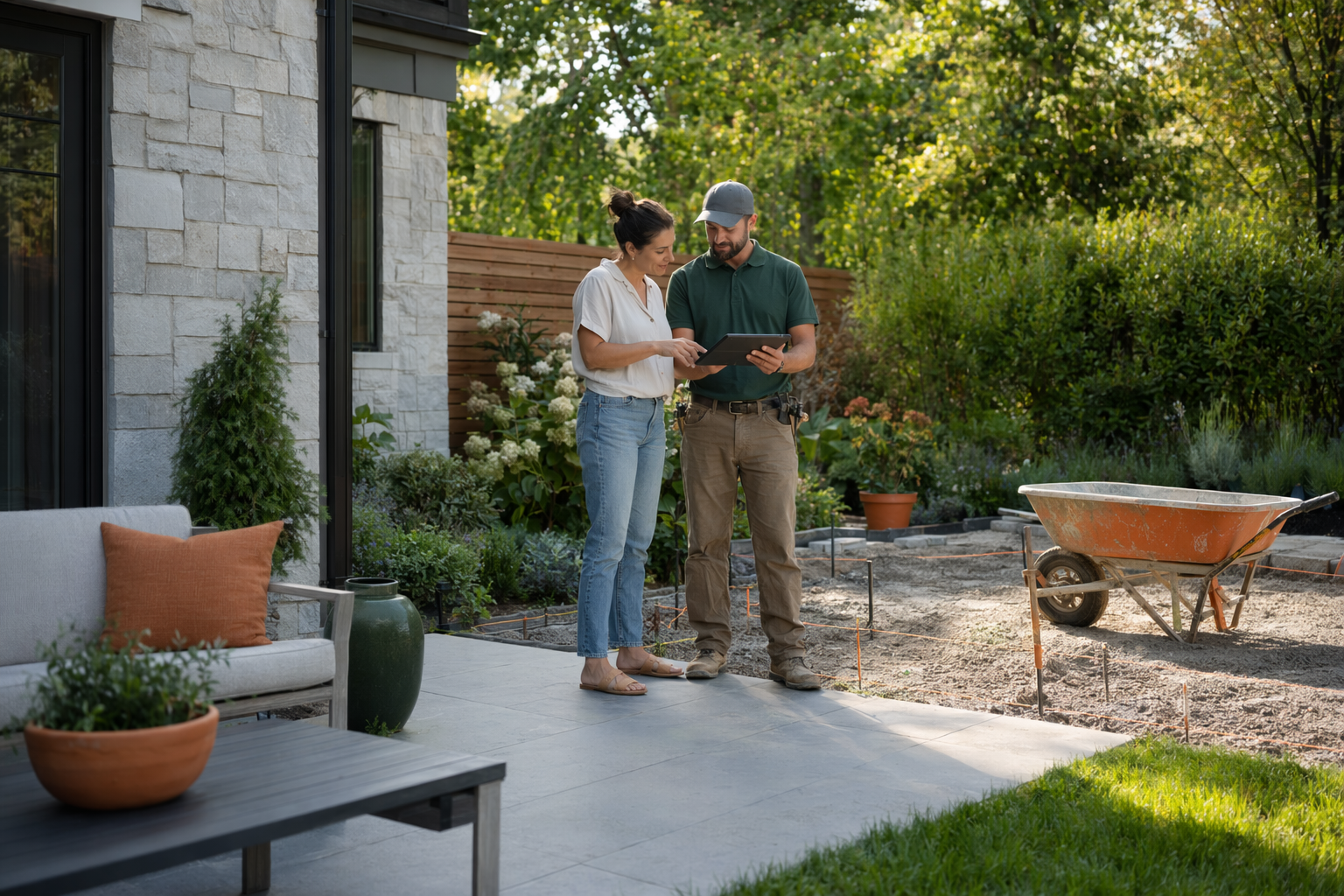
To vet an outdoor-living contractor, confirm license and insurance, review similar past work, and require a detailed written scope so you can compare quotes without hidden surprises.
Common questions
How much should I pay upfront to start an outdoor-living project?
There isn’t one “correct” number that fits every job, but beware of very large cash-only deposits or schedules that don’t match the work being performed. Ask for a clear written payment schedule tied to milestones, and make sure the contract explains what happens if the project doesn’t go as planned.
Do I need a permit for a patio, walkway, or fire pit?
Often you might, but it depends on your city/county rules, the size, and whether there’s gas/electrical involved. The contractor should tell you what applies and help coordinate permits when required—still, confirm with your local building department so you’re not guessing.
What’s the safest way to compare quotes?
Compare apples to apples. Make sure each quote includes the same scope, similar materials, and the same site prep assumptions. If one quote is much lower, ask what they’re excluding—base prep, drainage work, disposal, materials grade, or changes.
Can I rely on online reviews?
Reviews can help, but they’re not enough on their own. Look for reviews mentioning similar project types, check the date range, and balance what you read with a portfolio of comparable work and clear written details in the quote.
If the contractor finds unexpected issues on-site, will the price go up?
Sometimes, but it should be handled transparently in the contract. Ask how they price unexpected conditions and require a written change approval before any added work. A good quote includes a process for surprises, even if they can’t predict everything.