Guides
Pavers vs a concrete patio
Pavers and concrete can both make a good patio. The better choice depends on your budget, the look you want, your climate, and how much upkeep you are comfortable with.
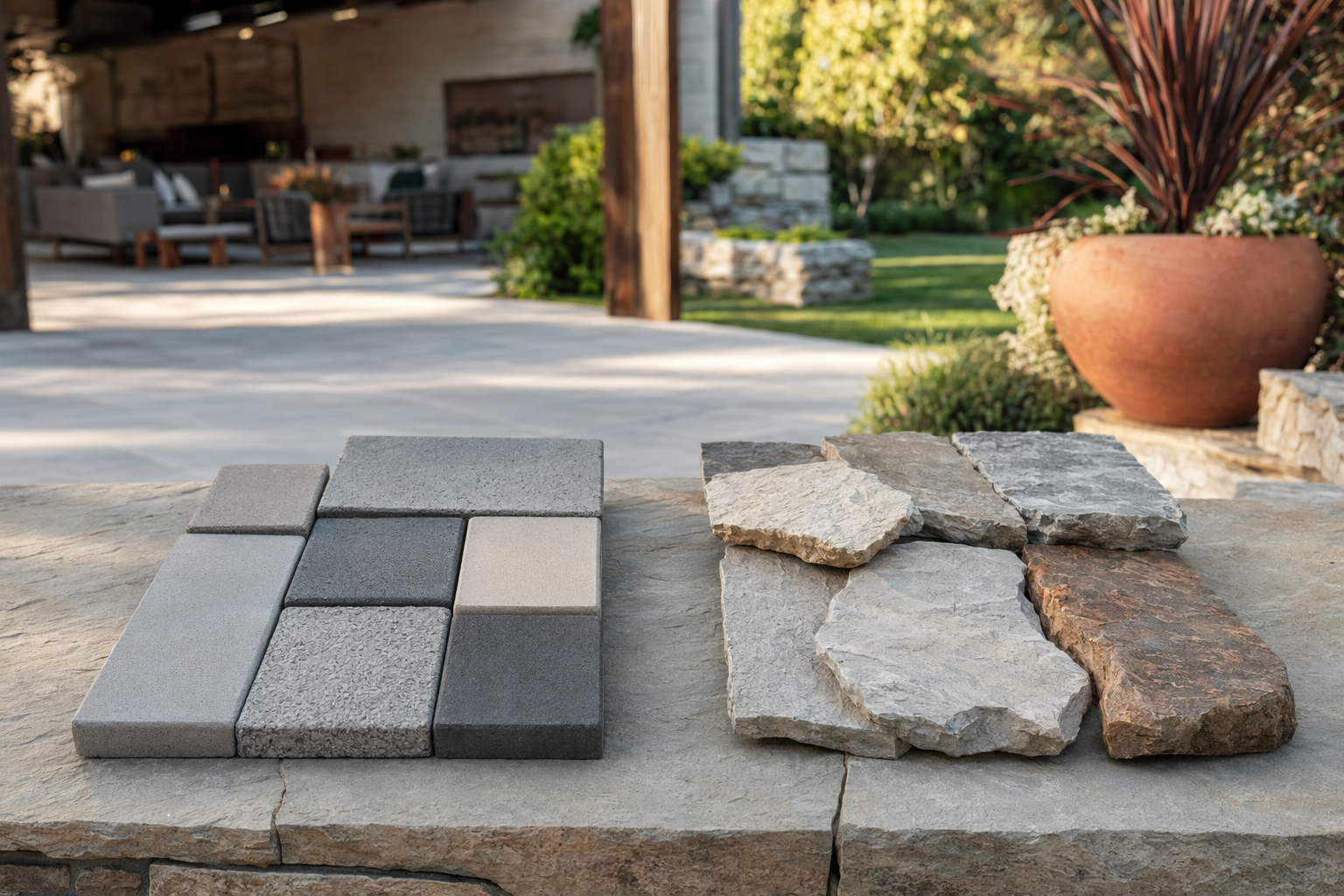
Two common ways to build a patio
If you are planning a backyard sitting area, outdoor dining space, fire pit zone, or a larger outdoor-living project, pavers and poured concrete are two of the most common patio surfaces in the US. Both can work well. They just solve different problems.
Pavers are individual pieces set together to create a patio surface. Concrete patios are usually one slab that is poured in place. From a distance, both can look clean and finished, but they feel different underfoot, age differently, and have different repair and budget trade-offs.
This is general information only, not construction, engineering, or legal advice. Slate & Sod is a free matching service, not a contractor or design firm, and we do not perform construction work. A licensed, insured local builder can help you compare options for your yard, soil, drainage, access, and local code requirements.
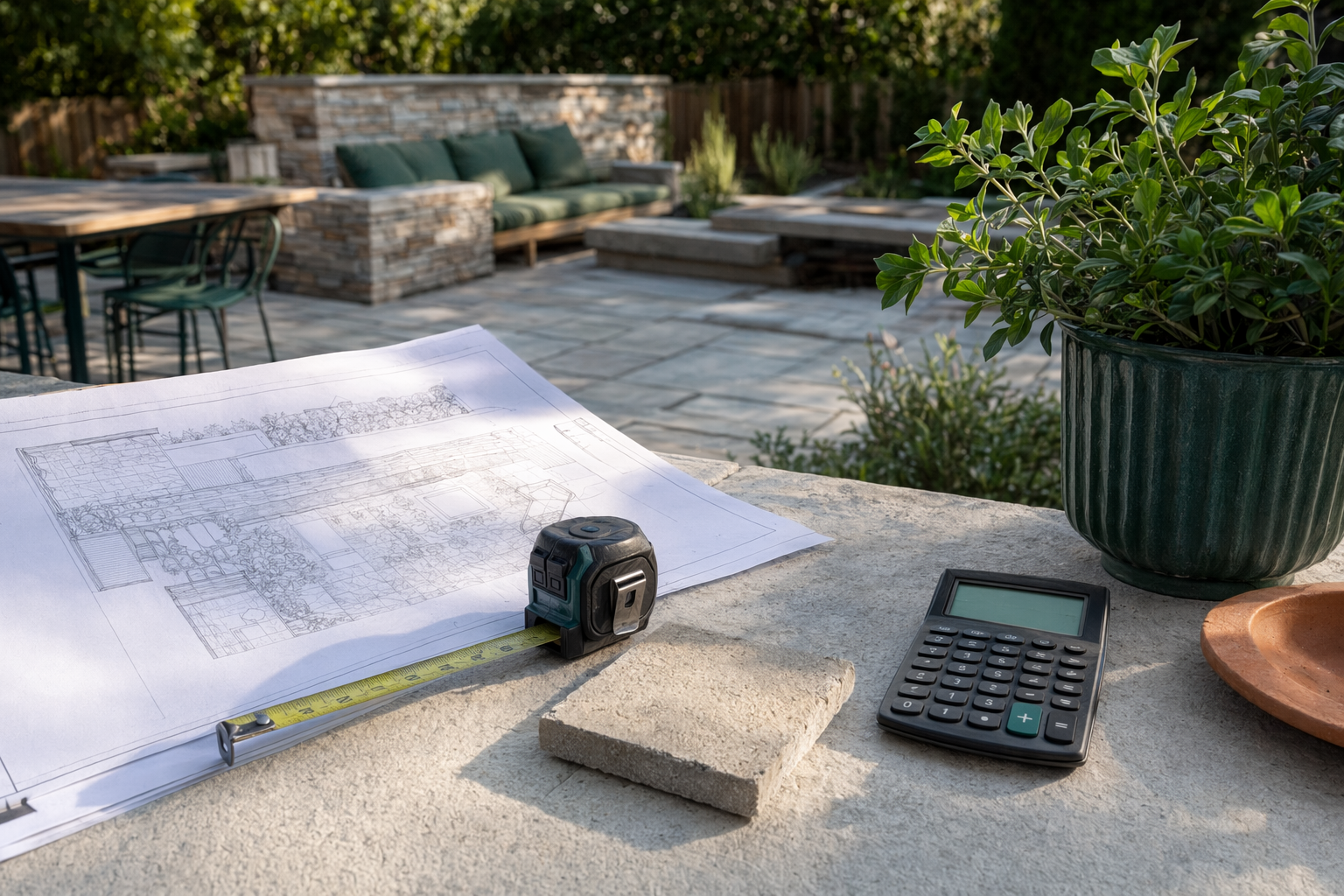
How they look and feel
Pavers usually give you more design flexibility. You can choose from many colors, shapes, patterns, and edge styles. Some homeowners like the more detailed, higher-end look, especially for patios that connect to walkways, pool decks, retaining walls, or an outdoor kitchen. If you want a patio that feels more custom, pavers often make that easier.
Concrete usually gives a simpler, more uniform look. A standard broom-finish slab is clean and practical. It can also be colored, stamped, or textured to change the appearance, though the finished look still tends to read as one continuous surface rather than many individual pieces.
Underfoot, pavers can feel a little more textured because of the joints between pieces. Concrete feels smoother and more continuous. Some families prefer that cleaner slab feel for furniture placement, while others like the visual detail of pavers around planting beds or curved patio layouts.
Durability, cracking, and repairs
Both materials can last a long time when they are installed well, but they usually age in different ways. Concrete commonly develops cracks over time. Small cracks may be mostly cosmetic, but larger movement can affect appearance and function. Climate, soil movement, drainage, tree roots, freeze-thaw cycles, and installation quality all matter.
Pavers can also shift, settle, or separate if the base is not prepared well, but one advantage is that individual areas can sometimes be lifted and reset instead of replacing a large slab. That is one reason some homeowners like pavers for yards where repairs may be needed later.
Concrete repairs can be harder to hide because patching one section may not match the rest. With pavers, replacing a few damaged pieces can be more straightforward if matching materials are available. On the other hand, weeds in joints, ant activity, or edge movement can become an annoyance with pavers if upkeep is ignored.
Drainage matters with either option. If your yard has slope issues, pooling water, soft soil, or erosion concerns, have a licensed, insured builder evaluate the site. In some cases, drainage design or engineering may be needed, especially if the patio connects to retaining walls or other structures.
Upkeep and day-to-day life
Concrete is often chosen because it feels simple to live with. A basic patio can be easy to sweep and wash down. Some homeowners seal concrete, and some do not, depending on the finish and local climate. Over time, stains, surface wear, and visible cracks can change the look.
Pavers may need more occasional attention, especially in the joints. Depending on the system used and your climate, you may need joint sand touch-ups, weed control, cleaning, or resealing. That said, many homeowners feel the look is worth it, especially when the patio is a major feature of the backyard.
Furniture, grills, kids, pets, and entertaining matter too. If you expect heavy use and want the easiest possible surface to clean and maintain, concrete may feel more practical. If your patio is part of a larger design where appearance matters as much as function, pavers may be worth the extra cost and upkeep.
Honest cost ranges
In many US markets, a basic poured concrete patio often starts around $8 to $18 per square foot. Decorative concrete, such as stamping, coloring, or higher-end finishes, may run roughly $15 to $30+ per square foot. Paver patios often start around $15 to $35+ per square foot, with premium materials, borders, patterns, demolition, drainage work, or difficult access pushing the cost higher.
Those are general ranges, not quotes. Your real number depends on project size, materials, site conditions, slope, soil, drainage, demolition needs, access to the yard, edge details, and your area. A small patio can cost more per square foot than a larger simple one because setup and labor still take time.
If your budget is tight, plain concrete may be the easiest way to add usable outdoor space. If you are building a full backyard with walkways, seat walls, lighting, a pergola, or an outdoor kitchen, pavers may fit the overall project better. You can read more planning tips in our guides and browse backyard ideas in projects.
Whatever surface you choose, get the scope and price in writing and compare a few quotes. Watch for red flags like large cash-only deposits, no license or insurance, vague pricing, no written contract, or pressure to decide right away.
When each option makes sense
Pavers often make sense when you want a more custom look, easier spot repairs, curves or detailed borders, or a patio that ties into other hardscape features. They are common in projects where design matters a lot and the patio is one part of a bigger outdoor-living plan.
Concrete often makes sense when you want a simpler surface, a lower starting cost, and a practical place to sit, grill, or gather without spending as much on materials. It can be a good choice for straightforward backyard upgrades where function comes first.
A licensed, insured local builder can help you compare both options based on your yard and budget. Slate & Sod can get you matched for free with local outdoor-living and hardscape builders. You stay in control: you set the budget, compare written quotes, choose who to hire, and confirm the scope and price before work starts.
- Pavers: more design flexibility, usually higher cost, easier section repairs
- Concrete: simpler look, lower starting cost, cracks can be harder to hide
- Best choice depends on budget, climate, yard conditions, and the look you want
Pavers usually cost more and look more custom, while concrete usually costs less and looks simpler, and the right pick depends on your yard, budget, and priorities.
Common questions
Is a paver patio better than a concrete patio?
Not always. Pavers often offer more design flexibility and easier spot repairs, while concrete usually has a lower starting cost and a simpler look. The better choice depends on your budget, style, site conditions, and how much upkeep you want.
Do pavers last longer than concrete?
They can both last a long time if installed well, but they age differently. Concrete often cracks over time, while pavers may shift or need joint maintenance. Local climate, drainage, soil movement, and installation quality matter a lot.
Is concrete cheaper than pavers?
Usually, yes at the starting point. Basic concrete is often less expensive than a paver patio, but decorative concrete can narrow the gap. Actual cost depends on size, materials, access, drainage, demolition, and your area, so ranges are not quotes.
Which is easier to maintain?
Concrete is often simpler for routine cleaning, but cracks may become visible over time. Pavers may need joint sand touch-ups, weed control, or occasional resetting, though repairs to small areas can be easier.
Do I need permits for a patio?
Sometimes. Permit rules, setbacks, drainage requirements, and HOA rules vary by area. Your local building department and a licensed, insured builder can tell you what applies to your project.
How does Slate & Sod help?
Slate & Sod is a free matching service for homeowners. We do not build patios or perform construction work. We collect basic contact and project details only, then help connect you with licensed, insured local builders so you can compare written quotes.